Fireshine Games, a publisher known for championing indie titles with potential, has thrown its weight behind ITER-8, a new entrant in the crowded roguelite gaming space. The announcement generated a wave of cautious optimism among genre enthusiasts, given the publisher’s track record and the inherent appeal of the roguelite formula. However, after extensive hands-on time with the game, it becomes clear that ITER-8 struggles to translate its promising premise into a compelling and cohesive gameplay experience. The game’s execution falters on several fundamental levels, leaving it feeling more like a collection of disparate ideas than a polished, engaging title.
The Core Gameplay Loop and Its Shortcomings
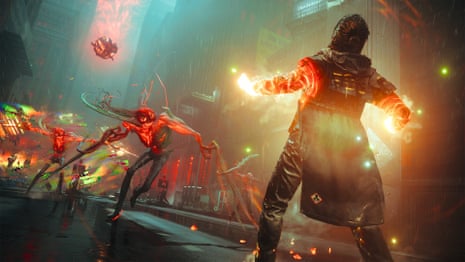
At its heart, ITER-8 presents a familiar structure: players embark on repeated runs through a series of challenging rooms, collecting temporary power-ups and permanent meta-progression unlocks between attempts. The core combat, which should be the bedrock of any action roguelite, feels unrefined. Character movement lacks the precise, responsive feedback that defines genre standouts. Attacks, whether melee or ranged, carry an unsatisfying weightlessness, undermining the visceral thrill of combat. Enemy design, while visually varied, often relies on predictable patterns and spongy health pools rather than intelligent, challenging behaviors that encourage strategic adaptation.
Progression Systems and the Lack of Meaningful Choice
Where successful roguelites like Slay the Spire or Hades excel is in offering players agonizingly meaningful choices that define each run. ITER-8 stumbles significantly in this department. The power-ups, or “iterations” as the game calls them, frequently feel incremental and uninspired. Many offer simple statistical bumps—a slight increase in damage or a marginal boost to defense—rather than transformative effects that radically alter playstyle. This leads to a progression curve that feels flat; unlocking a new ability rarely provides the “eureka” moment of discovering a powerful new synergy. The meta-progression between runs, intended to give players a sense of overarching advancement, is similarly underwhelming, often gating basic quality-of-life features rather than exciting new mechanics.
Visual and Audio Presentation
Visually, ITER-8 adopts a clean, sci-fi aesthetic that is initially appealing but quickly reveals its limitations. Environments lack distinctive personality, cycling through similar-looking metallic corridors and chambers that fail to create a memorable world. While the user interface is functional, it does little to enhance the experience or clearly communicate critical information during fast-paced combat. The audio design is perhaps the game’s most significant technical failing. Sound effects are generic and lack impact, while the musical score is forgettable and fails to build tension or excitement. In a genre where atmospheric immersion can significantly enhance the repetitive loop, ITER-8’s presentation does little to support its gameplay.
Comparison to Established Genre Titans
It is impossible to evaluate a new roguelite without acknowledging the titans that define the genre. Games like Balatro, with its ingenious card-based mechanics, or Slay the Spire, with its deep strategic deck-building, set a remarkably high bar. They succeed by offering near-infinite combinatorial possibilities and a razor-sharp focus on their core mechanics. ITER-8, by contrast, feels diluted. It attempts to blend real-time combat with light strategic elements and meta-progression, but none of these systems feel deep or well-integrated enough to stand out. The game seems caught between trying to appeal to multiple sub-genres without mastering any single one, resulting in a jack-of-all-trades, master-of-none experience.
The Publisher’s Role and Market Context
The involvement of Fireshine Games adds a layer of intrigue to ITER-8’s release. The publisher has a history of identifying and nurturing unique projects, making this particular outing feel like a missed opportunity. In today’s saturated market, a roguelite needs a clear, compelling hook to capture player attention. Whether it’s the narrative depth of Hades, the pure puzzle-solving of Balatro, or the brutal simplicity of Vampire Survivors, standout titles have a defining identity. ITER-8’s identity remains frustratingly vague. It lacks the signature mechanic or artistic vision that would make it memorable amidst a sea of competitors, raising questions about the development direction and editorial oversight during its production.
Technical Performance and Polish
Beyond design philosophy, ITER-8 exhibits technical issues that further hinder the experience. Frame rate hitches can occur during intense combat sequences, breaking player immersion at critical moments. Menu navigation can feel sluggish, and there were occasional bugs observed, such as power-up descriptions not displaying correctly or environmental hitboxes being inconsistent. While not game-breaking, these polish issues compound the feeling that the game was rushed to market before reaching a state of refinement expected from a title with professional publishing backing.
The Potential for Post-Launch Improvement
The story of a roguelite’s launch is rarely its final chapter. Many games in this genre have evolved dramatically through post-launch support, with developers listening to community feedback and iterating on core systems. This represents ITER-8’s most plausible path to relevance. The foundational framework is present; with significant reworks to combat feel, a complete overhaul of the power-up system to emphasize wild synergies, and an injection of personality into its world and audio, the game could theoretically be reshaped into something worthwhile. However, such a transformation would require a substantial and committed development effort.
The Verdict for Players
For the seasoned roguelite fan constantly seeking the next addictive fix, ITER-8 in its current state is difficult to recommend. It offers none of the strategic depth, satisfying progression, or polished execution that defines the genre’s best. Newcomers to the genre would be better served by any of the established classics, which provide a far more complete and rewarding introduction to the roguelite loop. The game exists in a crowded field where player time is a precious commodity, and it simply does not do enough to justify that investment over its myriad competitors.
The release of ITER-8 serves as a reminder that a compelling genre and reputable publisher are not guarantees of success. The alchemy of a great roguelite lies in the meticulous balancing of challenge, reward, and endless variability—a formula that remains elusive. While the game’s core concept of iterative enhancement is thematically appropriate, the execution lacks the spark of innovation and the polish necessary to make those iterations feel meaningful for the player on the other side of the screen.