It has been a decade since No Man’s Sky launched to a reception so hostile it nearly cratered the studio behind it. That same studio, Hello Games, is now releasing the Cosmos update, a free patch that fundamentally reworks how players interact with the space between planets. The timing is deliberate, arriving alongside other major survival game releases, but the scope is what demands attention. Where previous updates focused on ground-level gameplay, base building, and creature discovery, Cosmos turns the camera upward and refuses to look back.
How the Cosmos Update Redefines Space Travel in No Man’s Sky
For years, space in No Man’s Sky functioned primarily as a loading screen between planets. Players would pulse jump from one atmosphere to another, occasionally stopping to fend off pirates or mine a few asteroids. The Cosmos update dismantles that design philosophy entirely. The star map has been rebuilt from the ground up. After warping into a system, players can now scan for new points of interest that populate the void with meaningful destinations. These are not simply decorative waypoints. Each point of interest offers distinct missions, resource opportunities, and exploration challenges. Space is no longer a corridor. It is a destination.
Scanning and Decision-Making in a Living Star System
The new scanning mechanic changes the fundamental loop of space travel. Instead of choosing a planet and committing to a long journey through empty space, players now survey a system’s orbital volume before choosing their next move. The scan reveals derelict structures, asteroid fields with unique properties, and the new space outposts that dot the void. Each of these locations presents a different kind of gameplay. One might offer a trading opportunity. Another might trigger a combat encounter. A third might lead to a resource extraction puzzle. The system encourages deliberate exploration rather than blind navigation.
Space Hulks and the Physics-Based Salvage System
Among the most dangerous additions to the Cosmos update is the space hulk. These massive wrecks drift through systems as remnants of unknown conflicts or disasters. Players can approach them, dock, and begin stripping valuable materials from the hull. The extraction process relies on a new physics gravity gun that pulls metal plates and structural components from the wreckage. These materials are then transferred to a tractor beam mounted on the player’s ship.
The tension in this activity comes from instability. Each piece of material removed from the hulk reduces its structural integrity. Take too much, and the entire wreck destabilizes, triggering a meltdown that forces a desperate escape. The system rewards careful judgment and risk assessment. Do you extract aggressively and accept the danger, or do you take a conservative haul and leave profit on the table? It is a small but meaningful decision that adds texture to what could have been a straightforward mining loop.
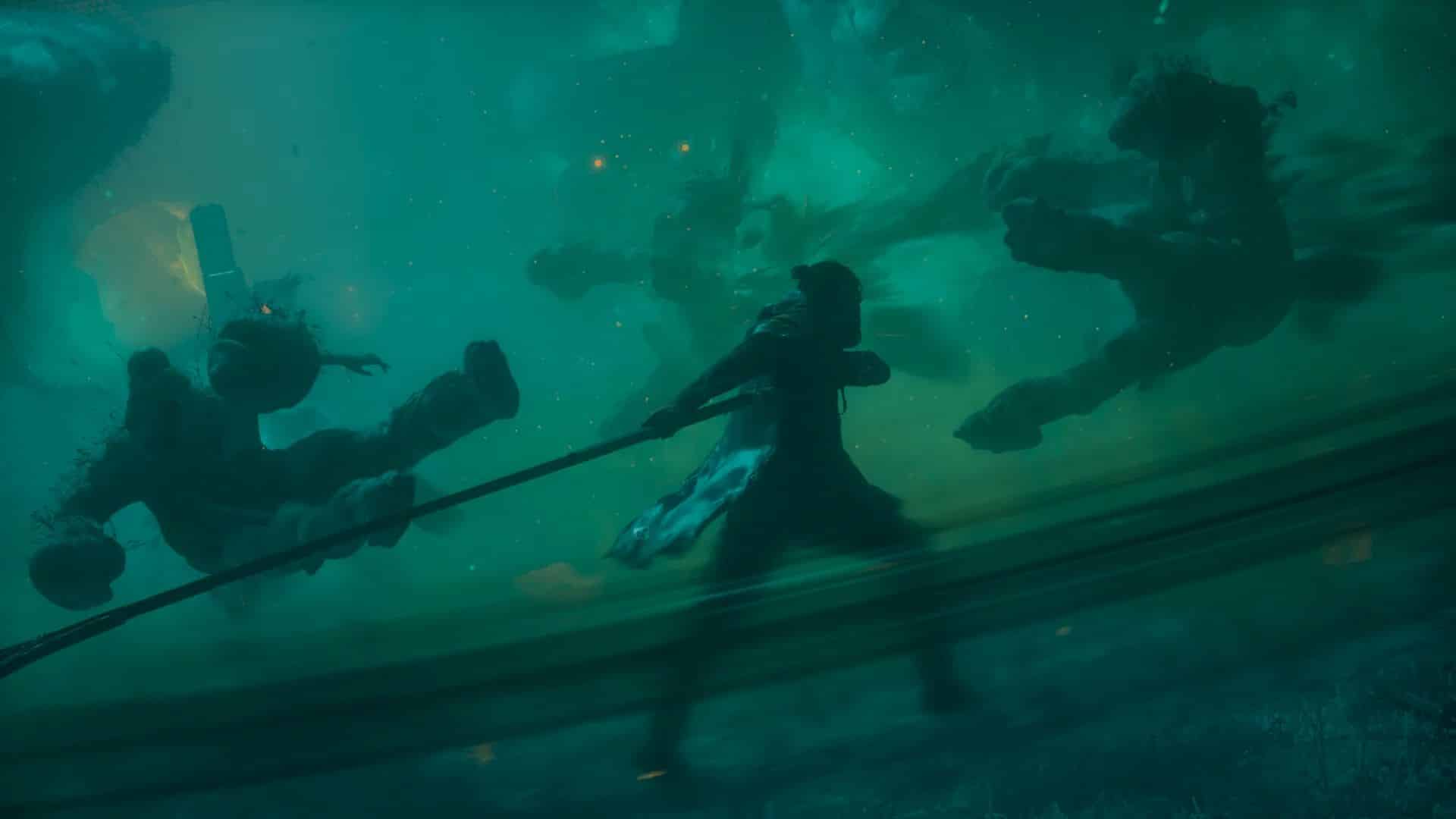
Space Outposts: Trading, Information, and Biological Hazards
Not every structure in space is derelict. Cosmos introduces space outposts that function as orbital hubs for trade, information gathering, and mission distribution. These outposts are inhabited by NPCs who offer maps of the surrounding system, local lore, and contracts. For players who prefer to remain in orbit rather than descend to planetary surfaces, these outposts provide a complete gameplay loop without ever touching dirt.
Some outposts have been compromised by biological hazards. Infested stations present a combat and survival challenge that shifts the tone from commerce to horror. The atmosphere in these locations is thick with tension, and the game’s audio design leans heavily into it. The reference to a certain iconic sci-fi film’s panic is unavoidable, and it lands well. Players who survive these encounters are rewarded with unique salvage and access to restricted vendor inventories.
Orbital Bases and Station Ownership: Building in the Void
The Cosmos update introduces two tiers of space construction: free-floating orbital bases and full space station ownership. Orbital bases are modular structures that players can build anywhere in space. They are not tethered to a planetary body or an asteroid. They float. This design choice opens up strategic possibilities. A player could build a refueling stop at the edge of a system, a restaurant overlooking a gas giant, or a military installation that controls access to a valuable trade route.
Station ownership takes this concept further. Players can purchase entire space stations, customize their exterior appearance, and decorate the interior to suit their needs. These stations become persistent hubs that other players can visit. The level of customization extends beyond cosmetics. Station owners can configure trade terminals, set landing fees, and establish automated defenses. The economic implications are substantial, especially when combined with the new alliance system.
What Is the New Alliance System in No Man’s Sky?
The alliance system allows players to form societies that collectively own and operate networks of space stations. Groups of players can invite others to join their alliance, pool resources, and coordinate station placement across star systems. Alliances compete on leaderboards that track metrics such as total stations owned, collective wealth, and prominence within the galaxy. This system transforms No Man’s Sky from a solitary or small-group experience into something approaching a persistent multiplayer economy. The leaderboard competition adds a layer of long-term motivation that has been absent from the game’s social features.
Asteroid Belts Become Playable Terrain
The visual and gameplay overhaul of asteroid belts is one of the update’s most immediately noticeable changes. Rock and ice formations now contain valuable crystals that can be mined with the new physics tools. Some asteroids are large enough to land on, transforming them into miniature planets with their own gravity wells. Players can construct star bases on these unusually large asteroids, creating fixed points within a moving environment. The visual density of asteroid belts has also been increased dramatically. Flying through one now feels dangerous in a way it never did before.
Reach Stars and the Our Journey Continues Expedition
Cosmos introduces a new challenge called Reach Stars, which tasks players with traveling toward the center of a solar system. This is not a simple navigation exercise. The journey requires careful fuel management, threat avoidance, and navigation through increasingly dense debris fields. It is a test of both piloting skill and preparation.
Alongside Reach Stars, the Our Journey Continues expedition serves as a retrospective on the game’s evolution. Players revisit milestones from all 40 major updates, unlocking rewards and developer commentary along the way. For new players, this expedition provides a curated tour of everything No Man’s Sky has become. For veterans, it is a nostalgia trip that acknowledges the decade-long redemption arc that defines the game’s legacy.
Platform Availability and Free Update Access
The 7.0 update, which is what Hello Games is calling Cosmos internally, is available as a free release for all existing players on every platform where No Man’s Sky is sold. There is no paid expansion. There is no season pass. The update simply arrives, and players who already own the game can download it at no additional cost. This pricing model is consistent with Hello Games’s approach since the Atlas Rises update. The studio has funded years of free content through continued game sales and merchandise, and Cosmos continues that tradition.
How No Man’s Sky Compares to Other Survival Games in 2026
The timing of the Cosmos update is notable. It dropped alongside major updates for Valheim and other survival games, creating a crowded week for the genre. No Man’s Sky distinguishes itself through its scope and its willingness to rethink core systems almost a decade into its lifecycle. Most games in the survival genre add content incrementally, layering new items and enemies on top of existing frameworks. Hello Games has consistently rebuilt entire systems. The star map overhaul in Cosmos is not a tweak. It is a replacement. That willingness to discard its own design work is rare in the industry, and it explains why the game’s community remains active and engaged after ten years.
The Physics Gravity Gun and Its Implications for Gameplay
The addition of the physics gravity gun deserves specific attention because it changes the way players interact with the environment on a mechanical level. Previously, resource gathering in space was limited to shooting asteroids with ship weapons or using the terrain manipulator on planetary surfaces. The gravity gun introduces a precision tool for salvage operations. It allows players to pull specific components from structures, separate valuable materials from junk, and manipulate objects in zero gravity. This tool is not limited to space hulks. It can be used on any wreckage or debris field, and it opens up emergent gameplay possibilities that Hello Games will likely expand in future updates.
Why the Cosmos Update Matters for Long-Term Player Retention
No Man’s Sky has always struggled with one design problem: what do players do after they have seen everything? The procedural generation ensures that no two planets are identical, but the gameplay loops eventually converge. The Cosmos update addresses this by creating persistent, player-driven objectives that do not rely on exploration alone. Station ownership, alliance competition, and the Reach Stars challenge give players reasons to log in beyond simple discovery. These systems create stakes. When an alliance’s leaderboard position is tied to the performance of a station a player helped build, that player has a reason to defend it, improve it, and return to it regularly.
Technical Performance and Stability Considerations
Any update that adds physics-based manipulation, persistent player structures, and networked leaderboards raises questions about technical performance. Hello Games has not released detailed patch notes regarding frame rate targets or memory usage, but the studio has a track record of optimizing its engine with each major release. The 7.0 update includes changes to the game’s memory management and draw distance algorithms, which should help mitigate the performance impact of asteroid field density and orbital base complexity. Players on last-generation consoles should expect some compromises, particularly in systems with multiple player-owned stations.
What Are the Biggest Changes in the No Man’s Sky Cosmos Update?
The biggest changes are the redesigned star map with new scan-based exploration, the introduction of space hulks with physics salvage, orbital bases and station ownership, the alliance system with leaderboard competition, expanded asteroid belts with landable asteroids, and the Reach Stars challenge. These changes collectively shift the game’s focus from planetary exploration to orbital and deep-space gameplay.
No Man’s Sky has been rebuilt so many times that it no longer resembles the game that launched in 2016. The Cosmos update continues that tradition of radical reinvention. For players who left after the rocky launch, the game that exists today is unrecognizable. For players who stayed, Cosmos is another chapter in a redemption story that has no clear parallel in the industry. The update is available now on all platforms, and it is free. The only question that remains is whether this will be the update that finally brings lapsed players back into orbit. Given what Hello Games has delivered, the answer seems inevitable.