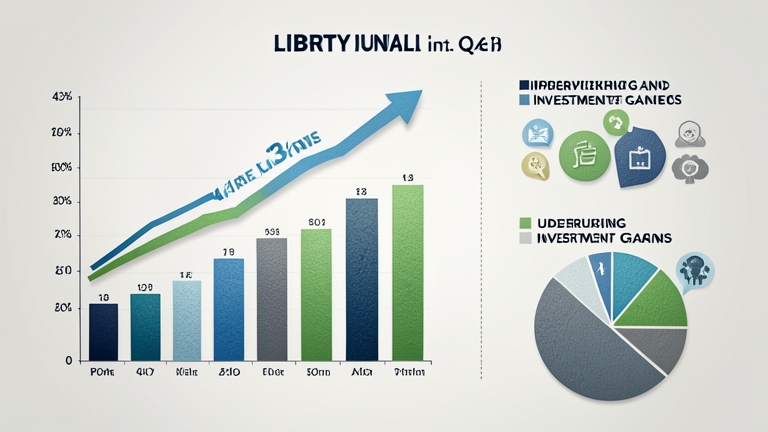
Liberty Mutual’s second-quarter 2026 financial results reveal a company executing with precision in a challenging insurance market. Net income surged 43 percent year over year to $2.63 billion, driven by sharp improvements in underwriting performance, a steep decline in catastrophe losses, and robust investment returns. The quarterly combined ratio improved to 86.4 percent from 87.2 percent, signaling stronger core operations. This earnings report provides a comprehensive look at how the insurer is balancing disciplined underwriting with strategic premium growth across its key business segments.
Underwriting Improvements Drive Margin Expansion
Liberty Mutual’s consolidated combined ratio of 86.4 percent in the second quarter reflects meaningful progress in underwriting profitability. The improvement from 87.2 percent in the prior-year period indicates better risk selection and pricing discipline. For the first six months of 2026, the combined ratio improved even more dramatically, falling to 87.3 percent from 91.9 percent in the same period of 2025. This 460-basis-point improvement in the first half demonstrates sustained execution across the organization.
Catastrophe Losses Decline Sharply
Catastrophe losses, a major driver of volatility in the property and casualty industry, fell significantly in both the quarter and the first half. In Q2 2026, catastrophe losses declined 44 percent year over year. For the first half of the year, the reduction was even steeper at 61 percent. This decline in natural disaster-related claims has provided substantial relief to the bottom line and allowed underwriting margins to expand. The combination of favorable loss trends and disciplined exposure management has been central to Liberty Mutual’s improved performance.
Premium Trends Show Mixed Performance Across Segments
Net written premiums for the quarter totaled $11.1 billion, a modest decline of 1.1 percent compared with the same period last year. However, the headline figure masks divergent trends across Liberty Mutual’s two major business units.
U.S. Retail Markets Contraction
Premiums in Liberty Mutual’s U.S. Retail Markets business fell 4.1 percent to $6.6 billion in the quarter. This decline likely reflects the company’s ongoing efforts to reprice risk and shed underperforming accounts. In a competitive personal lines environment, Liberty Mutual has prioritized margin over top-line growth, and the combined ratio improvement suggests this strategy is yielding results. The company appears willing to lose market share in segments where pricing does not adequately reflect risk, a disciplined approach that may compress revenue in the short term but strengthen profitability over time.

Global Risk Solutions Expansion Continues
In contrast to the retail business, Liberty Mutual’s Global Risk Solutions segment posted a 3.5 percent increase in premiums, reaching $4.4 billion in Q2. This growth indicates strong demand for commercial and specialty insurance solutions across international markets. The segment’s continued expansion demonstrates Liberty Mutual’s ability to compete effectively in the global commercial insurance arena, where risk complexity and premium pricing trends remain favorable. The divergence between the two segments highlights the company’s strategic pivot toward higher-margin commercial lines and global operations.
Investment Performance Provides Tailwind
Beyond underwriting improvements, Liberty Mutual’s investment portfolio delivered strong results in the second quarter. Limited partnership income more than doubled to $850 million, reflecting elevated returns from private equity and alternative investments. The broader investment portfolio benefited from favorable equity markets and higher interest rates, which boosted fixed-income yields. Pre-tax operating income increased nearly 30 percent to $3.26 billion, illustrating the combined impact of improved underwriting and stronger investment income.
The doubling of limited partnership income is particularly noteworthy. It signals that Liberty Mutual’s allocation to alternative assets is generating significant returns at a time when traditional fixed-income markets, while improved, still require active management for yield enhancement. The investment gains have provided an important supplementary earnings stream that has amplified the benefits of better underwriting performance.
First Half Results Show Sustained Momentum
For the first six months of 2026, Liberty Mutual reported net income attributable to the company of $4.69 billion, a 63 percent increase compared with the first half of 2025. This acceleration relative to the quarterly figure indicates that the company’s earnings momentum has strengthened as the year has progressed. The first-half combined ratio improvement from 91.9 percent to 87.3 percent represents a significant turnaround in underwriting profitability, while lower catastrophe losses and strong investment returns have provided additional tailwinds.
The 63 percent increase in first-half net income outperforms the 43 percent rise seen in the second quarter alone, suggesting that the first quarter of 2026 also delivered substantial gains. This consistency across multiple reporting periods reinforces confidence in Liberty Mutual’s strategic direction and operational execution.
Strategic Implications for the Insurance Market
Liberty Mutual’s Q2 2026 results offer several insights for the broader insurance industry. First, the company’s willingness to accept premium contraction in U.S. Retail Markets while expanding Global Risk Solutions reflects a strategic prioritization of profitability over market share. This approach is becoming increasingly common among large carriers as they navigate a hard market cycle. Second, the significant reduction in catastrophe losses, while partly influenced by weather patterns, also reflects improved risk modeling and exposure management. Third, the strong investment performance underscores the importance of asset diversification for insurers in a rising rate environment.
The combined ratio of 86.4 percent positions Liberty Mutual well above the industry average for profitability. With underwriting margins improving and investment income surging, the company is building a substantial capital buffer that could support future growth initiatives, including potential acquisitions or organic expansion in higher-margin lines. The results also signal that pricing discipline remains intact across the industry, at least among leading carriers.
Liberty Mutual’s second-quarter performance demonstrates how a focus on underwriting fundamentals, combined with strategic capital allocation and a favorable investment backdrop, can produce exceptional financial results even in a competitive insurance market. The 43 percent profit increase reflects a company that has successfully navigated recent headwinds and positioned itself for continued success through the remainder of 2026. With catastrophe losses trending lower, investment income accelerating, and the Global Risk Solutions segment expanding, the insurer has established multiple engines for earnings growth. While premium volumes in the U.S. Retail segment may continue to face pressure as the company optimizes its portfolio, the overall trajectory suggests Liberty Mutual is well positioned to sustain its momentum through the balance of the year and beyond.