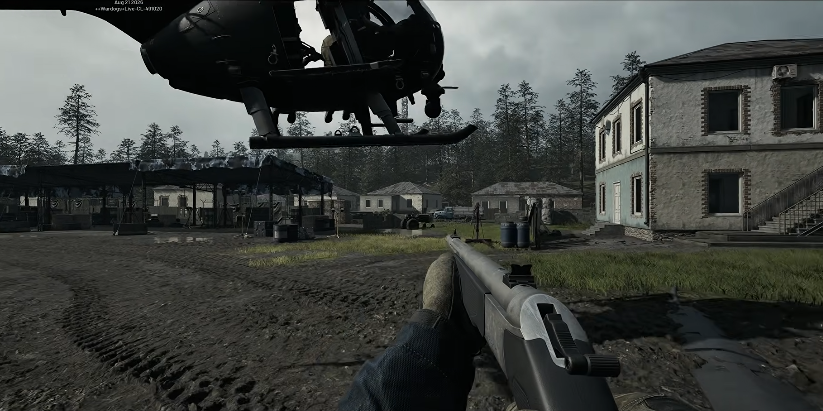
Progress in the expansive world of Crimson Desert often hinges on observation and a willingness to challenge first impressions. A prime example occurs during the “Where the Light Leads” quest, where the objective to ascend the Lioncrest Watchtower has led countless players into a frustrating cycle of failed parkour and depleted stamina. The immediate instinct is to treat the weathered stone structure as a sheer climbing challenge, leading to repeated falls and confusion. The solution, however, is not a test of vertical endurance but one of basic environmental interaction, fundamentally changing the player’s approach to traversal puzzles within the game.
The Misleading Challenge of Lioncrest Watchtower
The quest “Where the Light Leads” directs the player to the base of Lioncrest Watchtower, a solitary stone sentinel overlooking the surrounding landscape. The in-game instruction to “ascend” it, combined with the genre’s common emphasis on free-climbing mechanics, creates a powerful suggestion. Players naturally look for handholds, ledges, and a viable path up the exterior. This initial attempt is almost universally met with obstruction, primarily from thick, gnarled vines that choke the tower’s lower sections and block what appears to be a main entrance.
Attempting to scale the wall directly is an exercise in frustration. Stamina drains rapidly, the vines prevent clean grips on the stonework, and any progress is halting and unreliable. This design is intentional, steering the player away from brute force and toward a more thoughtful solution. It establishes a key principle in Crimson Desert: not every obstacle is meant to be overcome through physical prowess alone; some require the application of elemental logic and the use of the tools at your disposal.
Identifying the Correct Path Forward
The critical realization is that the tower is not initially a climbing puzzle. The primary barrier to entry is biological, not architectural. The dense curtain of vines covering the doorway must be removed before conventional access is possible. This shifts the player’s objective from “climb” to “clear.” Scouting the immediate area reveals clues to the method. Scattered around the watchtower’s base are fire pots, braziers, or other open flame sources, placed not as mere ambiance but as interactive elements central to the puzzle’s solution.
The presence of fire in proximity to dry, combustible plant matter is a classic environmental cue in adventure gaming. Crimson Desert leverages this established language, trusting players to make the connection between fire source and flammable obstacle. The game’s systemic interaction between fire, arrows, and objects allows for an elegant and intuitive resolution, rewarding players who pause to assess their surroundings rather than charging headlong at the most obvious challenge.

The Flaming Arrow Method for Clearing Vines
The most straightforward and reliable technique for removing the vines involves the use of a bow. This method is accessible to most character builds early in the game and requires no specific skill unlocks. The process is simple but requires precise execution.
First, equip your bow and nock an arrow. Carefully approach one of the nearby fire sources. Position your character so that the tip of the drawn arrow enters the flame. The game will provide a visual cue, typically the arrowhead becoming wreathed in fire. With the arrow ignited, aim at the mass of vines covering the watchtower entrance and release. A single well-placed shot is usually sufficient to set the entire growth ablaze.
It is important to allow the fire a moment to fully consume the vines. The animation will show the plants blackening and withering away, ultimately revealing the wooden door and stone archway of the watchtower’s true entrance. Once the path is clear, the previously insurmountable wall becomes irrelevant, as the intended route is now available.
Alternative Strategies for Vine Removal
For players who may not have a bow readily equipped or prefer a more melee-oriented approach, Crimson Desert offers alternative solutions, showcasing its flexible combat and interaction systems. One effective method utilizes the Blinding Flash ability, often associated with the sword’s light attack. By executing the correct button combination—typically involving a block or skill trigger followed by a light attack—the player can generate a flash of energy that can ignite flammable materials at close range. Positioning yourself near the vines and activating this ability can start the necessary fire.
Another creative, though less precise, option involves physics-based interaction. Some flame sources in the area may be attached to movable objects, like a burning bucket or brazier. Players can push or otherwise maneuver these objects closer to the vine-covered entrance, allowing the flames to lick at the vegetation until it catches fire. This method emphasizes the game’s simulated environment, where multiple logical approaches to a problem can yield the same result.
Accessing the Watchtower Interior
With the vines reduced to ash, the puzzle is effectively solved. The player’s goal shifts from external struggle to simple exploration. Walk directly to the now-visible front entrance of Lioncrest Watchtower and proceed inside. The interior consists of a straightforward series of stone staircases and landings leading to the top. This ascent is designed to be narrative- and exploration-focused, potentially containing lootable items, environmental storytelling, or notes that provide context for the area.
Reaching the summit completes the “ascend the watchtower” objective for the “Where the Light Leads” quest. The panoramic view from the top often serves as a reward in itself, revealing points of interest and expanding the player’s understanding of the game world’s geography. This moment underscores the lesson of the puzzle: efficiency and observation triumph over assumed difficulty.
Strategic Benefits of the Lioncrest Area
Successfully navigating the Lioncrest Watchtower challenge does more than advance a single quest. It opens up a small hub of early-game opportunities. The watchtower’s proximity to Lioncrest Manor and other landmarks makes it a useful reference point. Players who take the time to explore the cleared watchtower and its surroundings may find valuable resources, chests, or even clues leading to powerful early-game equipment, such as the sought-after Hwando blade, which can be acquired nearby with minimal conflict.
Mastering this type of environmental puzzle also builds a foundational skill set for the rest of the adventure. It trains the player to look for systemic interactions—fire spreading, objects being movable, abilities affecting the world—that will be crucial for solving more complex challenges, uncovering secrets, and gaining tactical advantages in combat later in the game. The time saved by solving the puzzle correctly can be invested in these surrounding opportunities, making efficient problem-solving a core component of successful progression.
The journey through Crimson Desert is filled with moments that test not just reflex and strength, but perception and ingenuity. The Lioncrest Watchtower stands as an early and memorable lesson in this philosophy. By resisting the urge to conquer the landscape through sheer force and instead engaging with it as a dynamic, interactive space, players unlock a smoother and more rewarding path forward, setting a precedent for the adventures that lie beyond its now-open door.