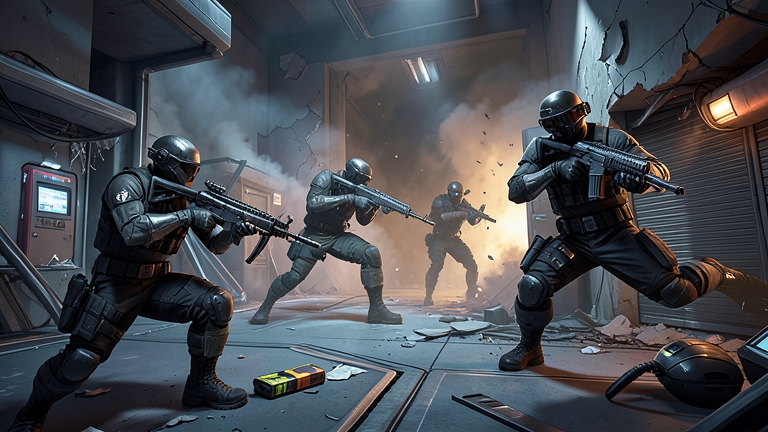
The tactical shooter landscape is bracing for a seismic shift with the arrival of Rainbow Six Siege’s upcoming season, Operation Split Fire. While the community eagerly awaits the debut of the new defender Nøkk and his game-changing flamethrower gadget, the true narrative of this season lies in a controversial balance overhaul that is set to redefine weapon viability. From the devastating nerfs to the SMG-12 and the Defender DMR class to a revamped Kali that might finally bring the sniper into the ranked meta, Ubisoft is signaling a clear move away from the recent trend of continuous buffs. Alongside these weapon adjustments, the introduction of the exclusive Legend Division, a new Villa map update, and a promising drone-racing event, this season is packed with content that promises to appeal to both competitive veterans and casual players alike.
The Nøkk Deep Dive: A Flamethrower That Rewrites Defense
The headline addition to Operation Split Fire is undoubtedly Nøkk, the new defender whose gadget is less about stealth and more about raw area denial and shield countering. Unlike traditional trap operators, Nøkk equips a miniature flamethrower that fires a stream of fire, capable of interacting with the environment and enemy gadgets in ways we haven’t seen before.
Early analysis suggests his gadget is not just a damage tool but a utility powerhouse. He can burn through deployable shields, destroy barricades faster than melee, and even clear out barbed wire and other deployable gadgets. This makes him an exceptional anchor, as he can hold tight angles and force attackers to reposition or risk taking burn damage. However, his kit provides flexibility; while classified as a two-speed anchor, the Commando 9 submachine gun offers enough mobility for a shallow roam. With access to the AUG, the Bailiff revolver for soft destruction, and barbed wire, Nøkk is poised to become a staple pick for defenders looking to counter the increasingly aggressive shield-heavy pushes.
Weapon Nerfs Exposed: The SMG-12 and DMRs Get Decimated
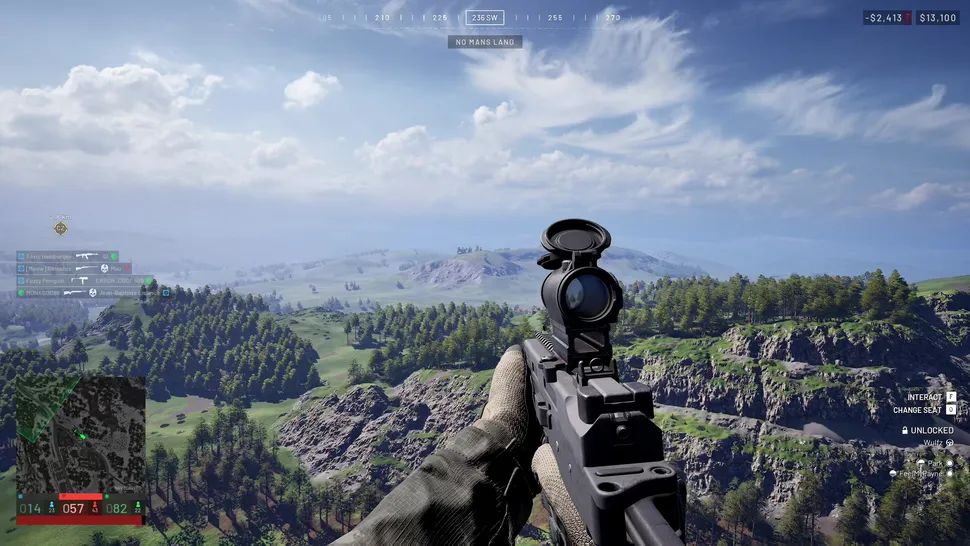
This season’s balance changes are the most aggressive we have seen in recent memory. The SMG-12, once a dominant pocket sniper due to its high fire rate and manageable damage, has been effectively turned into a “headshot or bust” weapon. The damage reduction from 28 to 16 is a staggering 43% decrease, meaning body shots will no longer secure quick kills. This is compounded by a magazine capacity reduction from 32 to 22 rounds, punishing players who rely on spray-and-pray tactics. This nerf is clearly designed to elevate the skill ceiling and force players to prioritize precision over volume of fire.
Simultaneously, the Defender DMRs have received a brutal blow. Operators like Rooney and Tubarão are losing the ability to equip the Muzzle Brake, which previously reduced recoil by 50%. This alone would have been significant, but Ubisoft went further by increasing the “first-shot multiplier” on the MK14 and AR-1550. Since DMRs are semi-automatic, every shot is effectively a “first shot,” meaning the recoil is now exponentially harder to control on both PC and console. The damage nerfs (MK14 from 60 to 56; AR-1550 from 67 to 59) further reduce their viability at medium range. This shift signals Ubisoft’s intent to push the DMR class back into a niche, long-range role rather than allowing them to dominate close-quarters engagements.
Kali’s New Lease on Life: From Niche to Nightmare
While DMR users are suffering, Kali is receiving a suite of buffs that might catapult her into the S-tier. The most significant change is the zoom reduction on her CSRX 300 sniper scope; the 5x option is now 3.5x, and the 12x is reduced to 8x. This makes her viable in medium-range skirmishes for the first time, eliminating the tunnel vision that previously hindered her in close-quarters combat. Additionally, her bullet trail duration has been halved from 2 seconds to 1 second, making it harder for defenders to pinpoint her position.
The increased ammo pool (from 36 to 51) and faster pump/reload time suggest Ubisoft expects players to take more aggressive shots. While there is a slight nerf to recoil (first-shot multiplier from 2.5 to 3.5) and hip-fire spread, these are minor trade-offs for the massive utility gains. In a ranked meta increasingly defined by quick rotations and aggressive peeking, Kali might finally become the go-to operator for players who want to dominate long angles without sacrificing mid-range adaptability.
Quality of Life & Newbie Changes: Lowering the Barrier to Entry
Operation Split Fire also introduces several systemic changes aimed at improving the newcomer experience. A mini-map is being added to Quick Match, allowing new players to learn map layouts and teammate positioning without requiring perfect spatial awareness. This is a massive step forward for player retention, as it reduces the game’s notoriously steep learning curve.
For players under level 10, friendly fire damage is significantly reduced, preventing accidental team kills from ruining the experience or resulting in reputation penalties. This is a thoughtful addition that respects the fact that new players are still learning crosshair placement and trigger discipline. Additionally, the graphics settings on PC will now default to adaptive render scaling, which should help mitigate the FPS drops that have been plaguing players on the newly modernized maps. These quality-of-life improvements, while subtle, indicate Ubisoft’s long-term commitment to making Siege more accessible without compromising its competitive integrity.
The Legend Division: Elite Playlist or Exclusive Club?
One of the most talked-about features this season is the introduction of the Legend Division, a new competitive tier designed exclusively for Champion-ranked players. This playlist opens mid-season and is strictly solo queue only, meaning no five-stacks are allowed. The intention is clear: to provide the highest-skilled players with a pure, individual skill-testing environment free from coordinated team carry dynamics.

However, the barrier to entry does not stop at rank. Players are also required to enable specific BIOS-level security settings on their PC to qualify, effectively locking out anyone unwilling to tweak their system’s core configuration. This move has sparked debate within the community. While it drastically reduces the potential player pool, it also ensures that participants are serious and secure, potentially minimizing cheating in the highest echelons of play. For streamers and content creators, this playlist offers a fresh, high-stakes arena to showcase their mechanical prowess. For the average player, it remains aspirational content—a feature that enriches the game’s ecosystem even if they never step foot in it.
Villa’s Targeted Map Update: A New Bomb Site Changes the Dynamic
Ubisoft continues its initiative of making underutilized areas viable with the Villa basement rework. Previously relegated to Secure Area and Hostage modes, the basement has been redesigned to accommodate a new Bomb site. A hatch has been added, providing a new rotation route, and a new entry point now allows defenders to access the space more effectively. The wall adjacent to the site has been bricked up, and a wooden barricade now covers a doorway, creating a more defendable layout.
While this is not a full overhaul, it is a smart “targeted map update” that breathes new life into a familiar map without alienating players who have memorized its existing callouts. Ubisoft has confirmed that more of these mini-reworks are planned for the future, focusing on underutilized or unbalanced bomb sites. This approach is far more sustainable than complete map reworks and keeps the competitive rotation feeling fresh over time.
Modernized Maps: The End of Legacy Textures
In parallel with the Villa update, Ubisoft is continuing its ambitious project to modernize the entire map pool. This season, Stadium Alpha, Bravo, and House are receiving visual and structural overhauls. Since the launch of Siege X, the development team has been systematically updating maps to improve lighting, texture fidelity, and destruction consistency. At the current pace of three maps per season, the entire roster could be fully modernized by the first season of next year. Interestingly, the devs have hinted that even maps like Plane—long considered a casual outlier—might eventually receive the modernization treatment, surprising long-time veterans.
3v3 Arcade & Drone Racing: Fresh Air for Casual Players
For those seeking a break from the intensity of ranked play, Operation Split Fire introduces a 3v3 Arcade mode. Building on the success of the experimental 1v1 arena, this mode adopts the same operator attrition system, meaning that winning operators are banned for the remainder of the match. With shortened prep phases and a snappy pace, it is designed for quick, adrenaline-filled sessions. This is an excellent addition for players who enjoy the core mechanics of Siege but lack the time or energy for a full 45-minute ranked match.
The true highlight, however, is the Wasteland Circuit Event, a drone-racing game mode that has been a fan request for years. Players will load into a dedicated, one-off map and compete in multiple races, picking up item balloons and boost balloons to gain advantages over their opponents. The ability to supercharge drones and sabotage rivals adds a layer of chaotic fun that contrasts sharply with the game’s usual tactical rigor. Scheduled to launch three weeks into the season and lasting for three weeks, this event promises to be a memorable diversion that showcases Ubisoft’s willingness to experiment with the game’s engine.
A Season of Contradictions
Operation Split Fire is a season of extremes. On one hand, it delivers some of the most punishing nerfs in recent history, fundamentally altering the weapon hierarchy and challenging players to adapt their loadouts. On the other, it introduces exciting new content like Nøkk and Drone Racing that broaden the game’s appeal. The delayed Operator Mastery feature may disappoint some, but the sheer volume of changes—from the Legend Division to the Villa rework—ensures that there will be no shortage of fresh experiences for every type of player.
As always, the test server will run for approximately two weeks prior to the official launch on September 1st, giving the community ample time to provide feedback. Whether you are a Champion grinding the Legend Division or a newcomer learning the ropes with the new mini-map, Operation Split Fire promises to be a memorable chapter in Rainbow Six Siege‘s ongoing evolution.