Securities lending is a critical yet often overlooked component of modern financial markets, enabling liquidity, price discovery, and a range of sophisticated investment strategies. This mechanism allows institutional investors to temporarily transfer securities, such as stocks or bonds, to a borrower, typically in exchange for a fee. While the process is highly systematized and beneficial for market efficiency, it carries distinct risks that participants must navigate. This article provides a comprehensive overview of the securities lending process, examines the primary advantages and potential pitfalls, and offers a clear understanding of how this market operates.
The Core Mechanics of Securities Lending
At its simplest, securities lending is a transaction where the owner of a security (the lender) agrees to transfer it to a borrower for a predetermined period. The borrower provides collateral, usually in the form of cash or other high-quality securities, which serves as security against the lender’s exposure. The borrower pays a fee to the lender for the use of the securities, and at the end of the loan term, the borrower returns the original securities to the lender, while the lender returns the collateral.
Key Participants in the Market
The securities lending market has several distinct participants. Lenders are typically large institutional investors such as pension funds, mutual funds, insurance companies, and sovereign wealth funds. They possess large portfolios of securities that can be deployed to generate incremental revenue. Borrowers are most often broker-dealers, hedge funds, and other financial institutions needing specific securities for purposes such as covering short sales, hedging positions, or facilitating settlement. Intermediaries, like prime brokers and specialized lending agents, act as the operational backbone, matching lenders and borrowers, managing collateral, and ensuring the transaction flows smoothly.
The Loan Lifecycle: From Initiation to Termination
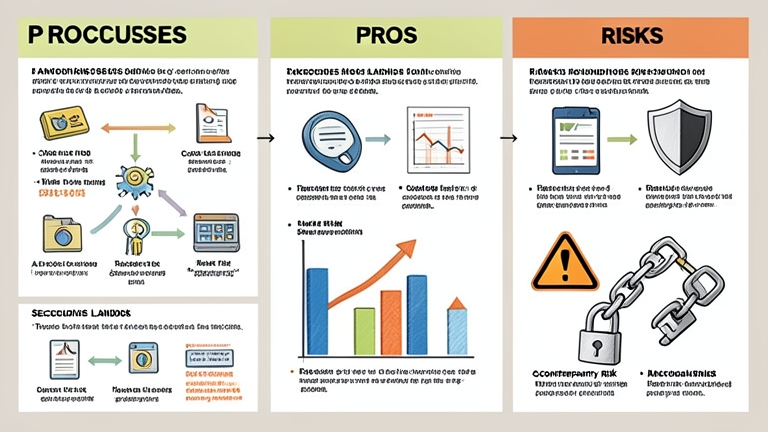
The typical lifecycle begins with a borrower requesting a specific security from an intermediary. The intermediary searches its network of lenders for an available position. Once a match is found, the terms of the loan—including the fee rate, collateral type (typically 102% to 105% of the market value for equities), and duration—are negotiated between the lender and borrower, facilitated by the intermediary. The borrower then delivers the collateral, often cash, to the lender. The lender transfers the securities to the borrower. The lender can invest the cash collateral in a short-term money market fund to generate additional yield, which is then split between the lender and the intermediary as a rebate. When the borrower returns the securities, the collateral is returned, and the loan is closed.
Primary Advantages of Securities Lending
For institutions that hold securities for the long term, lending can unlock a new and relatively low-risk income stream. This incremental revenue can help offset custodial and operational costs, or even improve overall portfolio performance. This is a significant advantage in a low-yield environment where generating extra basis points on a large asset base matters.
Enhancing Market Liquidity and Efficiency
Securities lending is the backbone of short selling, a strategy that allows investors to profit from declining prices. By providing the supply of shares needed to settle short sales, securities lending ensures that markets can price assets efficiently, reflecting negative sentiment in the same way that buying reflects positive sentiment. This liquidity is vital for price discovery and overall market health. Furthermore, it improves settlement efficiency, reducing the risk of failed trades that can disrupt markets.
Supporting a Range of Financial Strategies
Beyond short selling, borrowed securities are used for complex trading strategies such as arbitrage, where traders exploit price discrepancies between related securities. They also facilitate hedging through derivatives, allowing institutions to manage risk more precisely. Without the ready availability of stock borrowing, many of these activities would be impossible, making markets significantly less flexible and more volatile.
Critical Risks to Be Aware Of
While often described as low-risk, securities lending is not without its dangers. The most prominent risk is counterparty risk. Should the borrower become insolvent while the loan is outstanding, the lender could face a loss if the borrower is unable to return the borrowed shares. This is the primary reason why collateral is required, but it does not eliminate all risk if the collateral’s value drops precipitously.
Reinvestment Risk on Cash Collateral
Many lenders accept cash collateral and reinvest it in short-term instruments. If these reinvestments lose value—for example, due to a credit event in a money market fund or a sudden spike in interest rates—the lender could suffer a loss that exceeds the fee earned from the loan. This reinvestment risk must be actively managed, particularly during volatile market periods when a “run” on the lender’s collateral could force a loss.
Operational and Legal Risks
The operational complexities of managing thousands of loans, collateral movements, and recall requests introduce operational risk. Errors in documentation, settlement failures, or miscommunication can lead to financial losses. Furthermore, the legal and regulatory landscape for securities lending is evolving, and non-compliance with securities laws, tax rules, or disclosure requirements can result in penalties. The risk that a borrower can “recall” a loan at any time (and force the lender to call the loan back from an underlying trading client) also creates strategic uncertainty for the lender.
How Lenders Mitigate These Risks
Given these risks, lenders employ a rigorous risk management framework. The cornerstone is over-collateralization, requiring borrowers to post more collateral than the value of the loan (often 102% or 105%). The collateral is also frequently “marked-to-market”—revalued daily. If its value drops, the borrower must post additional collateral within a few hours. Lenders also restrict the types of collateral they accept, limiting it to high-grade government bonds or cash. They conduct strict due diligence on borrowers, often lending only to well-capitalized, regulated entities. Many lenders also implement a “recall” policy, ensuring they can reclaim securities if they need to vote on a critical corporate action.
Regulatory and Market Structure Considerations
The securities lending market is increasingly under the microscope of regulators. The G20 leaders have pushed for greater transparency, leading to mandates like the Securities Financing Transactions Regulation (SFTR) in Europe and the SEC’s Rule 10c-1 in the United States. These regulations require the reporting of loan details, including fees, collateral, and counterparties, to a trade repository. The goal is to improve market stability, reduce systemic risk, and increase transparency around short selling activity. These rules are reshaping the operational landscape for all participants, requiring significant investment in data infrastructure and reporting systems.
The Evolving Landscape of Securities Lending
The market continues to evolve, driven by technological innovation and changing investor behavior. The rise of “peer-to-peer” lending platforms, which use blockchain or distributed ledger technology, aims to reduce costs and increase efficiency by bypassing traditional intermediaries. Environmental, Social, and Governance (ESG) concerns are also gaining traction. Some pension funds and asset managers are now implementing policies to lend only to borrowers who agree not to use the shares for “unethical” short selling, or who commit to voting their shares in a manner consistent with the lender’s ESG values. This “ESG-selective lending” is adding a new, values-based dimension to a purely financial transaction.
In summary, securities lending is a sophisticated, high-volume activity that serves as a crucial gear in the machinery of global capital markets. It offers institutional lenders a pathway to generate supplemental yield on idle assets while simultaneously providing the liquidity essential for short selling, hedging, and arbitrage. However, the practice demands robust risk management protocols to neutralize counterparty, reinvestment, and operational exposures. As regulatory frameworks tighten and technology reshapes the access points, the industry is moving toward greater transparency and efficiency. The decision to participate in securities lending should be made only with a complete understanding of the structural rewards and the inherent risks, ensuring that the pursuit of incremental returns does not undermine the core objectives of the investment portfolio. The future of the market will likely be defined by how well participants balance the economic benefits with the demands for safety and transparency.