The team at Bulkhead has come a long way from its humble beginnings. Initially working on indie budgets, the studio eventually found millions being thrown its way under Tencent. But ultimately, it was more money than they could spend. The story of Bulkhead’s journey from an indie startup to a Tencent-owned studio and ultimately back to independence highlights a critical tension in modern game development: the clash between massive-scale corporate ambition and studio-level creative and operational realities.
The Indie Roots and the Corporate Ladder
Bulkhead started around 11 years ago as a group of friends who left university and dove straight into the games industry. To secure an Xbox One dev kit for their 2016 game The Turing Test, CEO Joe Brammer recalls fabricating experience, claiming the team had developers from Fable. This scrappy beginning defined their early ethos. Success came with the military shooter Battalion 1944 in 2019, which sold over 580,000 units. Published by Square Enix Collective, which also took a 20% stake in 2018, Bulkhead later found itself in a difficult middle ground. A survival game project with Square Enix had a budget of around £2 million, which positioned the studio awkwardly. “We were too big for Collective, too small for Square Enix, so we just got lost in that middle ground,” Brammer explains. That project was cancelled, and the studio split with Square Enix in 2022.
Acquisition and Initial Promise Under Tencent
Later in 2022, Bulkhead was acquired by Splash Damage, which was itself owned by Tencent following the Chinese giant’s $1.3 billion acquisition of Splash Damage’s parent company, Leyou Technologies, two years prior. For Brammer, this acquisition represented more than just financial security; it was an opportunity for mentorship from an established studio. “I levelled up massively from being a stroppy, passionate kid to being a business leader… We wouldn’t be the company we are today without Splash Damage,” he says. The first year under Tencent was, in Brammer’s words, “a dream.” The directive was simple: “Here’s a load of money, go and make a thing, tell us what it is and who you’re selling it for.”
The £50 Million Minimum and a Clash of Visions
Bulkhead pitched Wardogs, a PC first-person shooter with a budget between £10 million and £12 million—a significant leap for the team. However, Tencent’s ambitions were on an entirely different scale. Brammer states that Tencent had established a firm policy: “They told everyone in the UK in 2021/22 that they wouldn’t look at any game that was less than £50 million.” This £50 million minimum deal requirement created an immediate misalignment. For Bulkhead, a project of that magnitude was “not what we wanted to make. It was too big.” This fundamental mismatch in scale and ambition became a central point of friction.
Even as Wardogs progressed on its more modest budget, Tencent’s corporate culture scrutinized the studio’s spending. Brammer notes that despite hitting targets and operating a four-day work week, Tencent was suspicious because the team was spending far less than allocated. “We couldn’t spend that money. We were very adamant [about] not throwing money at people and problems,” he explains. Mike McGarvey of Hiro Advisory, which later advised Bulkhead’s spin-out, summarized the issue: Tencent’s shifting priorities meant Bulkhead was “not getting enough focus, support, and all the other things that they need as a smaller developer.”
The Path to Independence and a New Partnership
As Tencent moved to divest Splash Damage in 2025, it initially retained Bulkhead. However, the misalignment proved insurmountable. Brammer describes the experience as involving “quite corporate work,” with excessive board meetings that felt disconnected from game development. The situation reached a critical point where the studio faced closure in December 2025. In a move of radical transparency, Bulkhead’s leadership informed all staff of the risk, encouraging them to seek other jobs if necessary. This approach fostered intense loyalty.
Ultimately, a deal was struck with Team17’s parent company, Everplay, to spin out Bulkhead under a new holding company, Super Media Group. Everplay owns a 20% stake, Hiro Capital holds a minority, and close to 50% of Bulkhead staff own stock in the company. Reflecting on the moment the deal was signed, Brammer says, “we went to the pub and it was just one of the best days ever.” The studio retained its team and its project, Wardogs, which is now set for an Early Access launch in 2026 under Team17’s publishing.
Redefining Success After the Corporate Experience
Free from Tencent’s scale requirements, Bulkhead has radically redefined its goals for Wardogs and its own success metrics. Brammer contrasts Tencent’s “dream impossibly big” ethos with Bulkhead’s new, focused ambition. “We’re not trying to take on Battlefield or anything like that or be the biggest game on Steam,” he states. Instead, success is measured as having a dedicated player base of a few thousand nightly players and selling several hundred thousand copies. More importantly, success now means autonomy: “Do we get to work with our friends? Do we get to work on our own game? Do we get to be in charge of our own destiny?”
Wardogs: A Game Built for Community
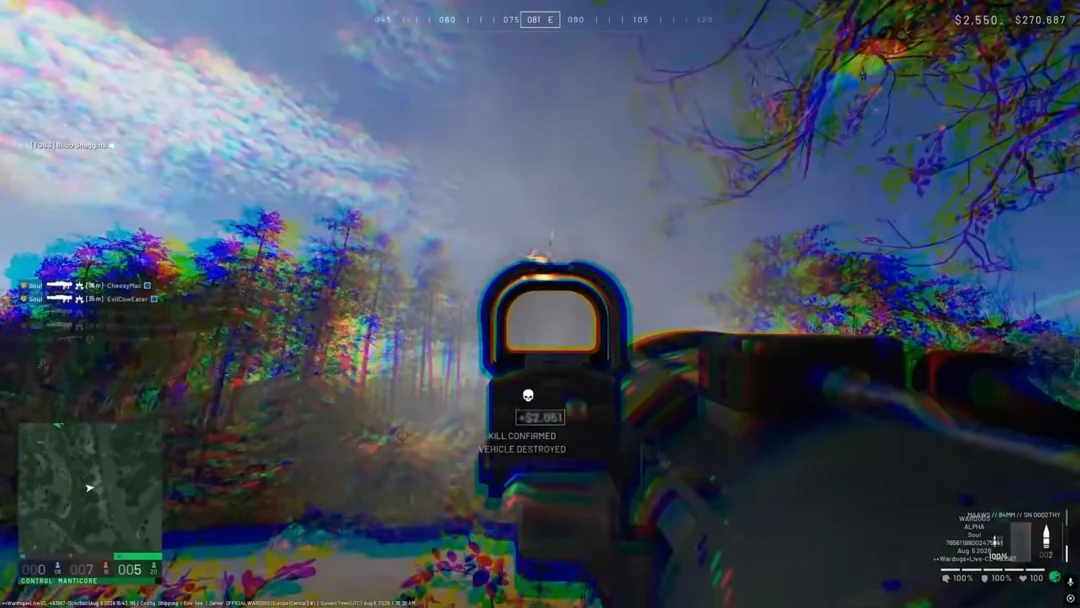
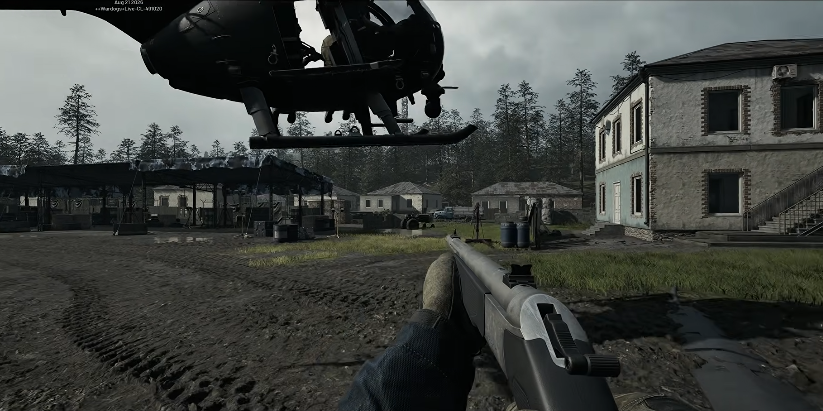
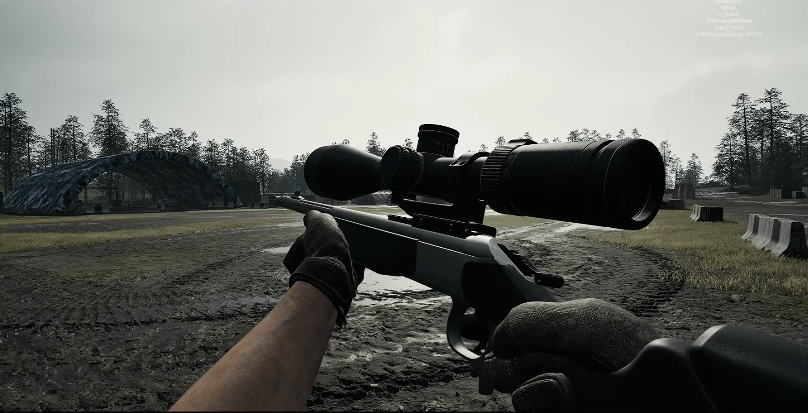
Wardogs itself embodies this community-centric, sustainable approach. It is a large-scale shooter featuring 100 players across three teams fighting over a single control zone. Its key innovation is an economic system where players retain their in-game cash between matches, a design inspired by Counter-Strike and MMOs. “What we want to do is reward players’ time. We want people to feel value, that they were given something for playing, which is something that shooters notoriously struggle with at the moment,” Brammer explains. The plan is to launch in Early Access, gather constant feedback, and build the game alongside its community—a strategy Bulkhead successfully employed with Battalion 1944.
The Ongoing Gamble and a Transparent Future
The independence gamble is not over. Brammer is acutely aware that Wardogs must perform commercially. “That could mean redundancies, or it could mean bonus schemes. That’s the games industry,” he notes candidly. The studio’s commitment to transparency remains, with staff fully aware of the stakes. Beyond the game’s launch, Brammer aims to find ways to reward his team for their resilience, including revisiting innovative work practices like the four-day week.
Bulkhead’s journey from indie to corporate subsidiary and back to an independent entity, now partly employee-owned, illustrates a pivotal narrative in the 2026 games industry. It underscores that for some developers, creative control and operational agility are more valuable than access to vast, scale-driven capital. The £50 million minimum deal requirement that defined their tenure under Tencent ultimately drove their decision to leave, proving that in game development, bigger is not always better, and sustainable success is often found in the freedom to define it on one’s own terms.