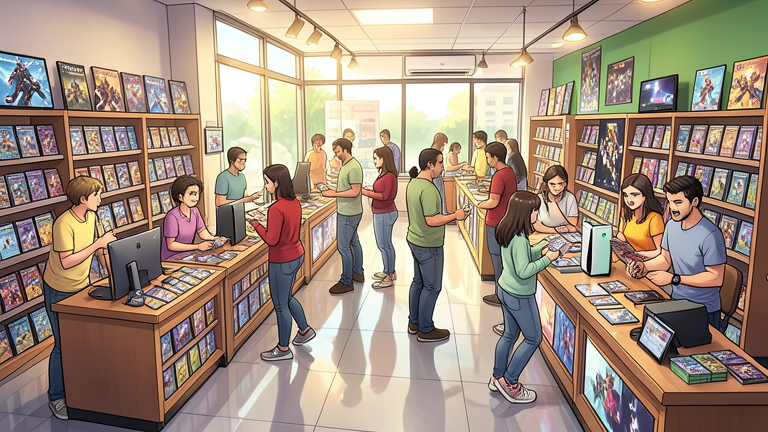
On September 15, 2025, the trading card game shop management simulation TCG Card Shop Simulator will graduate from Early Access and land on nearly every major gaming platform simultaneously. Developer OPNeon Games has confirmed the version 1.0 launch for PlayStation 5, Xbox Series, Switch 2, Xbox One, Switch, and PC via Steam and the Microsoft Store, marking a significant milestone for a title that spent exactly one year in early access on Steam (since September 15, 2024) and several months in Game Preview on Xbox platforms (since October 28, 2025). The announcement arrives with a new release date trailer and details on the most anticipated addition: a fully playable trading card game called “Tetramon” that lets players battle with the cards they collect. For the first time, the simulation will also be available on PlayStation and Nintendo hardware, opening the doors to a much larger audience of TCG enthusiasts and simulator fans alike.
What Is the TCG Card Shop Simulator Launch Date and Which Platforms Are Supported?
The version 1.0 release of TCG Card Shop Simulator is scheduled for September 15, 2025. It will be available on PlayStation 5, Xbox Series X|S, Switch 2, Xbox One, Nintendo Switch, and PC. PC players can purchase the game through Steam or the Microsoft Store, and the title is also accessible via Xbox Game Pass. This simultaneous multi-platform launch represents a strategic expansion for OPNeon Games, which previously restricted early access to PC and Xbox ecosystems. The inclusion of Switch 2 — Nintendo’s next-generation console — is particularly noteworthy, as it positions the simulation to capitalize on the handheld gaming audience that drives much of the modern simulator and management genre.
Early Access Journey: From September 2024 to Full Release
OPNeon Games first introduced TCG Card Shop Simulator to the public on September 15, 2024, as a Steam Early Access title. The game immediately attracted attention from a niche but passionate community of simulation enthusiasts who enjoy the granular control of running a card shop — stocking booster packs, organizing shelves, cleaning stores, and managing finances. Just over a month later, on October 28, 2025, the developer brought the game to Xbox Series, Xbox One, and PC via the Microsoft Store under the Game Preview program, making it available to Game Pass subscribers. The early access period lasted exactly one year on Steam, a relatively standard timeline for simulation games that rely heavily on community feedback to refine mechanics. During that year, OPNeon Games iterated on core systems, added new card sets, improved store customization, and laid the groundwork for the version 1.0 content drop that includes the playable Tetramon TCG.
Version 1.0’s Defining Feature: The Playable Tetramon Trading Card Game
The single most important addition in the version 1.0 update is the integration of a fully functional, playable trading card game called “Tetramon.” For the first time, players can open booster packs, collect cards, and then enter battles using those same cards in a structured TCG format. This feature was the community’s top request throughout early access, and OPNeon Games has now confirmed its inclusion. The playable TCG transforms the simulation from a purely managerial experience into a hybrid that combines shopkeeping with active card play. This dual-layer design aligns with successful franchise models like Recettear: An Item Shop’s Tale or the more recent Potionomics, where economic management interweaves with direct gameplay loops. The Tetramon card game itself is an original creation, not a real-world TCG, which gives OPNeon Games full creative control over card design, balance, and expansions without licensing constraints.
Players will be able to host card game tournaments in their shops, set entry fees, define the game format, and invite customers to play. Winning battles could yield rare cards or in-game currency, while losing might affect the shop’s reputation. The cleanliness and layout of the store also factor into player satisfaction — a messy environment could drive away customers. This mechanic encourages a holistic approach to shop management, where maintaining a pleasant atmosphere is as important as stocking the right booster packs.
Key Features of TCG Card Shop Simulator
Shop Management and Customization
At its core, TCG Card Shop Simulator is a detailed business management game. Players start with a small, sparsely furnished store and must design the layout to optimize customer flow. Shelves must be stocked with booster packs and card products, and the arrangement affects how quickly customers can find and purchase items. The game offers a range of display options, from simple racks to elaborate themed sections, allowing each shop to reflect its owner’s personality. Cleaning and hygiene are tracked, and a dirty store leads to negative customer reviews and lost sales.
Card Collection and Booster Pack Opening
The simulation includes the visceral thrill of opening booster packs. Each pack contains a random assortment of cards, ranging from common to ultra-rare. Players can build a personal collection, display prized cards in binders or on walls, or sell duplicates for profit. The card market fluctuates based on community trends and in-game events — a sudden surge in demand for a particular card set might drive prices up, rewarding players who pay attention to the meta. This dynamic economy mirrors real-world TCG markets, where supply, demand, and player preference create a living market.
Hosting Card Games and Events
With the version 1.0 update, hosting games becomes the centerpiece of the social experience. Players can set up tables, define tournament rules, and invite AI-controlled customers to participate. Each event generates revenue through entry fees and snack sales, but also taxes the store’s resources. A well-run tournament attracts repeat visitors and increases foot traffic, while a poorly managed event harms the shop’s reputation. The integration of the playable TCG means that shop owners can also compete in their own tournaments, blurring the line between proprietor and player.
Ordering and Inventory Management
Running a card shop requires careful inventory planning. Players place orders with suppliers for different booster packs, sleeves, deck boxes, and other accessories. The game simulates delivery times, supply chain disruptions, and shifting customer preferences. A successful shop owner must track which products are trending and adjust orders accordingly. Ordering too many of a stagnant set eats into profits, while underestimating demand for a hot new release results in missed opportunities and frustrated customers.
Business Expansion and Upgrades
Profits can be reinvested to expand the store’s physical space, unlock new card sets, and purchase upgrades like better lighting, signage, and storage systems. As the shop grows, more customers visit, and the complexity of management increases. Late-game challenges include managing multiple staff members, handling high-volume tournaments, and keeping the store competitive against AI-run rival shops. The upgrade tree encourages long-term planning and strategic resource allocation.
First Appearance on PlayStation and Nintendo Platforms
The September 15 launch marks the debut of TCG Card Shop Simulator on PlayStation and Nintendo systems. Previous early access versions were exclusive to PC and Xbox, leaving a substantial portion of the console market untapped. The addition of Switch 2 support is especially strategic, as Nintendo’s hybrid console is expected to be a natural fit for simulation games that benefit from both docked and handheld play. The PlayStation 5 version will likely take advantage of the DualSense controller’s haptic feedback and adaptive triggers to enhance the tactile sensation of opening booster packs and organizing cards. Launching simultaneously across six platforms reduces fragmentation and ensures that the community is united from day one, which is vital for a game that can support multiplayer or social features in future updates.
Market Context: Why a TCG Shop Simulator Resonates Right Now
The popularity of trading card games has surged in the past decade, driven by properties like Pokémon, Magic: The Gathering, and Yu-Gi-Oh!. Alongside the competitive play, the secondary market for rare cards has become a multi-billion-dollar industry, with pack-opening streams and speculation dominating online content. TCG Card Shop Simulator taps into this cultural moment by allowing players to experience the business side of the hobby without the financial risk. The genre of shop simulation games has also seen a renaissance, with titles like Tavern Master, Potion Craft, and Supermarket Simulator proving that audiences enjoy the methodical, detail-oriented gameplay of running a small enterprise. By combining two proven recipes — TCG collecting and shop management — OPNeon Games has crafted a product that appeals to both sim fans and card game enthusiasts.
The decision to include a fully playable TCG within the simulation also addresses a common criticism of management games: that they lack direct gameplay loops beyond clicking menus. Tetramon gives players a reason to care about the cards they collect beyond mere profit. The competitive aspect introduces skill-based challenges, replayability, and a sense of progression that pure management simulations sometimes struggle to maintain over dozens of hours.
How Does the Playable TCG Work in the Simulation?
Players who open booster packs and accumulate cards can use those very cards to build decks for the Tetramon card game. The game likely includes its own rules, card types, and strategic depth, though OPNeon Games has not released a full rulebook. From the overview, it is clear that hosting games is a core feature — players set a format and entry fee, then invite AI opponents to participate. The shop environment matters: a clean, well-organized space yields happier players who are more likely to return. The integration of the TCG into the simulation means that playing cards is not a separate minigame but a natural extension of the shopkeeper role. This design encourages players to invest in their card collections for both sentimental and competitive reasons, creating a loop of earning money to buy packs, opening packs to get cards, building decks, hosting tournaments, earning more money, and expanding the shop.
The Role of Early Access in Shaping Version 1.0
Throughout its early access period, OPNeon Games actively responded to community feedback. The introduction of the playable Tetramon TCG is the most visible result of that dialogue, but other refinements likely include improved UI, more card sets, balanced shop economics, and additional customization options. Early access allowed the developer to polish the game on a smaller scale before committing to a full multi-platform launch. The fact that the game spent exactly one year on Steam Early Access suggests a disciplined development cycle, avoiding the extended gestation periods seen in other simulation titles. Xbox Game Preview further extended the testing base, providing data on console controls and performance. The version 1.0 release appears to be not just a content drop but a culmination of a year-long collaborative improvement process.
Future Outlook: What Comes After Version 1.0
While the September 15 launch concludes early access, OPNeon Games is likely to support the title with post-launch updates, new card sets, seasonal events, and possibly online multiplayer features. The infrastructure for hosting games already exists, so a natural evolution would be to allow real-time competition against other players over the internet. Trading cards between players could also be introduced, creating a dynamic player-driven economy within the simulation. The expansion to PlayStation and Nintendo platforms broadens the potential user base, which in turn makes ongoing development more viable. For simulation game veterans and TCG collectors alike, the full release of TCG Card Shop Simulator represents a rare convergence of two hobbies — one that invites players to not only play the market but play the game itself.