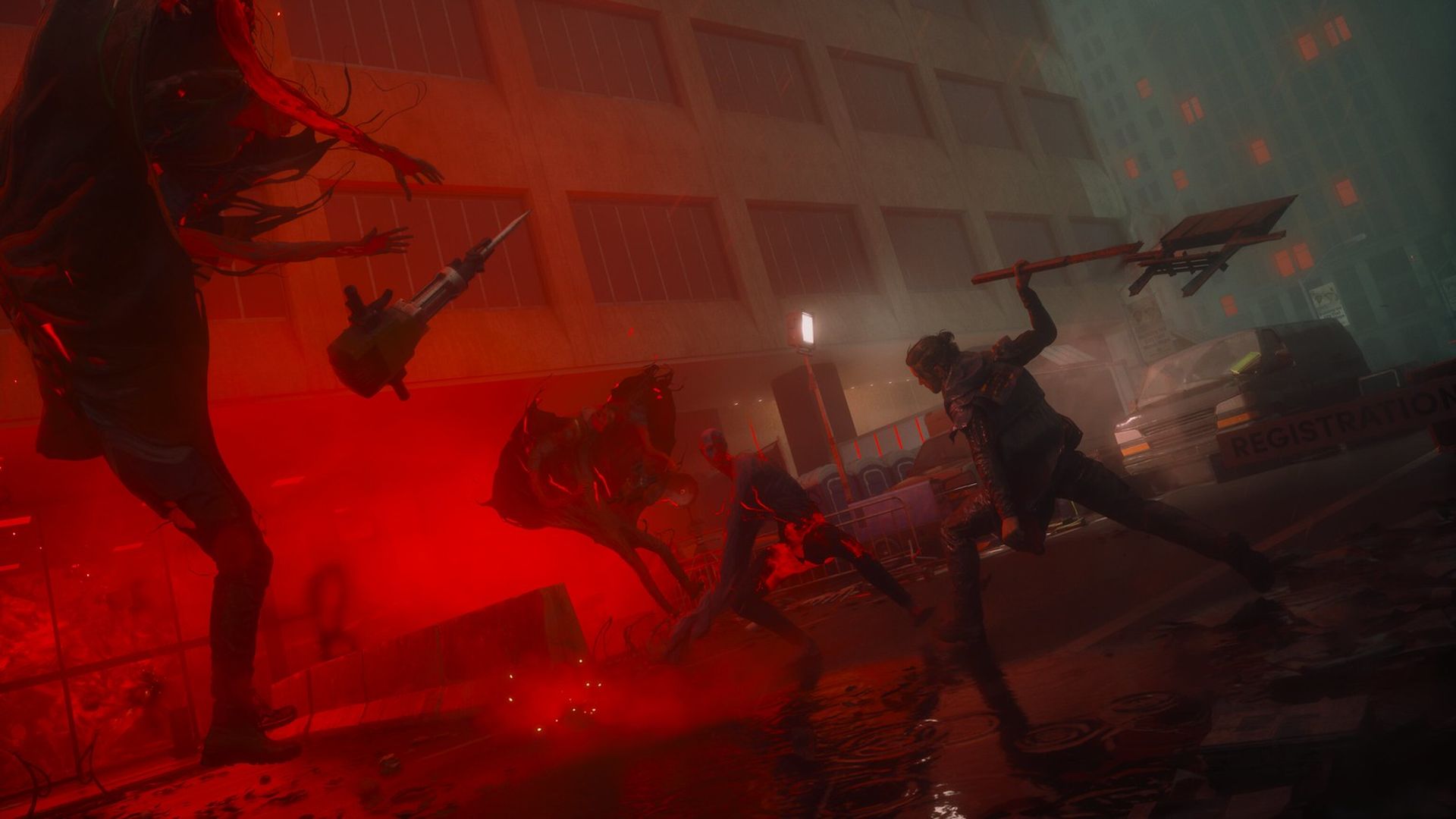
CD Projekt Red has confirmed that its highly anticipated next installment in The Witcher franchise will serve as the new flagship for cutting-edge real-time graphics technology, directly continuing the technical legacy established by Cyberpunk 2077. Following the Polish studio’s successful partnership with NVIDIA on groundbreaking features like path tracing and Ray Reconstruction for its sci-fi RPG, the developer is now focusing its advanced rendering pipeline on the dark fantasy world of The Continent.
From Night City to The Continent: A Technical Blueprint
The graphical evolution from The Witcher 3: Wild Hunt to Cyberpunk 2077 was one of the most significant leaps in real-time rendering of the past decade. Where the former was a benchmark for open-world beauty using then-conventional techniques, the latter became a laboratory for real-time ray tracing, pushing hardware to its limits. CD Projekt Red has stated that this was not a one-off experiment but rather the establishment of a new development philosophy. The studio intends to treat each major release as an opportunity to integrate and refine the next generation of visual technology, ensuring their games remain at the forefront of graphical fidelity for years after release.
This strategy means the technology developed and proven in the dense, neon-lit corridors of Night City will be adapted and evolved for the organic, sprawling landscapes expected in the next Witcher saga. The technical teams are tasked with applying lessons learned about performance optimization, asset streaming under intense ray tracing loads, and artist workflows for a fundamentally different aesthetic. Where Cyberpunk excelled in reflective surfaces and artificial lighting, The Witcher’s world demands mastery of natural light, complex foliage, weathered materials, and atmospheric depth.
The Core Innovation: NVIDIA RTX Mega Geometry
The centerpiece of this technical push for the new Witcher game is the implementation of NVIDIA’s RTX Mega Geometry technology. This is not merely a new lighting trick or shadow algorithm; it represents a fundamental shift in how geometric detail is handled by the rendering engine. Traditional rendering pipelines often face a trade-off between geometric complexity and performance. Highly detailed objects with millions of polygons can cripple frame rates, forcing developers to use simplified models, normal maps, and other tricks to simulate detail.
How Mega Geometry Changes the Game
RTX Mega Geometry leverages the dedicated ray-tracing cores (RT Cores) on modern NVIDIA GeForce RTX GPUs to offload and accelerate the processing of immensely complex geometry. Instead of the GPU’s traditional rasterization pipeline struggling with polygon counts, the RT cores can efficiently trace rays against a vastly more detailed geometric representation. This allows for objects, characters, and environments to be rendered with cinematic levels of detail directly from the artist’s original, ultra-high-polygon source models.

For players, the implications are profound. Imagine a Witcher’s leather armor where every individual stitch, crease, and scar from battle is modeled in true geometry, not painted on with a texture. Envision forest floors where every blade of grass, twig, and pebble is a unique 3D object, casting accurate shadows and reacting physically to wind and footsteps. Architectural details on castles and villages could feature intricate stonework, wood grain, and metalwork that holds up under the closest scrutiny, eliminating the “low-poly” look that appears when players examine objects up close in most current games.
Performance and Practical Benefits
Beyond raw visual splendor, the technology promises significant workflow benefits for the developers. Artists can create assets at their maximum intended quality from the outset without worrying about creating multiple levels of detail (LODs) for performance. This streamlines production and ensures the vision is preserved perfectly from creation to screen. Furthermore, by handling extreme geometry efficiently, it can reduce the reliance on complex, memory-intensive texture maps, potentially streamlining asset production and VRAM usage.
Building Upon the Cyberpunk 2077 Foundation
The upcoming Witcher title won’t just inherit one technology; it will build upon the entire suite of advanced RTX features pioneered in Cyberpunk 2077. Full ray-traced lighting (Path Tracing), which simulates every ray of light for physically perfect illumination, shadows, and reflections, is expected to be a cornerstone. Ray Reconstruction, an AI-powered technique that generates higher-quality rays from fewer samples, will be crucial for making this intensive lighting model perform acceptably.
DLSS 3.5 with Frame Generation will almost certainly be integral, using AI frame creation to boost performance, especially at higher resolutions. The combination of these technologies is what will make the staggering detail of Mega Geometry actually playable. The studio’s Overdrive mode for Cyberpunk 2077 served as the definitive proof-of-concept, demonstrating that a fully path-traced, cinematic-quality visual experience was possible in a real-time, open-world game. The next Witcher project aims to make that level of fidelity the new standard for its genre.
Challenges of a Fantasy Open World
Adapting these technologies from a primarily urban setting to a vast fantasy realm presents unique challenges. Cyberpunk’s environment, while dense, featured controlled vistas and abundant occluding geometry. A Witcher game promises vast draw distances—looking across valleys, through dense forests, and over mountain ranges. Implementing ray tracing and managing the geometric complexity of such landscapes in real time is a monumental task. The rendering engine must efficiently cull unseen geometry and scale detail dynamically over huge distances without popping or visual discontinuity, all while maintaining the integrity of the lighting simulation.
Implications for the Gaming Industry and Hardware
CD Projekt Red’s commitment to this path solidifies its partnership with NVIDIA and establishes a new high-water mark for graphical ambition in AAA gaming. When the game launches, it will immediately become the new benchmark for GPU performance, much as Crysis did in 2007 or Cyberpunk 2077 has in recent years. This pushes competing developers and platform holders to respond, accelerating industry-wide adoption of advanced ray tracing and geometric complexity.
For consumers, it underscores the importance of hardware equipped with dedicated ray-tracing and AI tensor cores. The experience of playing this Witcher sequel on a high-end GeForce RTX GPU will be fundamentally different—and vastly more immersive—than on hardware without these accelerators. It continues the trend of PC gaming offering a distinctly next-generation experience through cutting-edge hardware partnerships, potentially widening the visual gap between console and high-end PC versions of multi-platform titles.
The studio’s trajectory shows a clear vision: to create not just compelling narratives and worlds, but to define the visual potential of the medium for years to come. By using Cyberpunk 2077 as a technological proving ground, they have de-risked the integration of these complex systems, allowing them to focus on perfecting their application within a beloved fantasy universe. The promise is a world that feels more tangible, alive, and visually cohesive than any fantasy RPG before it, where every environment and character can be presented with a level of detail previously reserved for pre-rendered cinematics. This technical ambition, married to the studio’s renowned storytelling, aims to deliver an unparalleled immersive experience, setting a new standard for what players expect from a role-playing game.