Walmart, the world’s largest retailer by revenue, has quietly transformed its security posture over the past several years. Instead of simply layering on more surveillance cameras or hiring additional guards, the big-box giant has scaled its defenses by encouraging trust and innovation. Good communications, transparency, and team spirit are the key factors driving this evolution. The result is a security operation that is not only more effective but also more resilient—one that treats employees and customers as partners rather than subjects. This approach marks a significant departure from the traditional, top-down security model that has long defined corporate loss prevention and physical safety programs.
How Walmart Scaled Its Security Defenses: Trust and Innovation as Pillars
Walmart’s security expansion is not a story about new hardware or software alone. It is a story about culture. The company has recognized that the most powerful security system is an engaged workforce. When employees feel trusted, they are more likely to report suspicious activity, follow protocols, and collaborate with security teams. Innovation, in this context, means finding new ways to empower those employees—through mobile reporting tools, real-time communication platforms, and training programs that emphasize judgment over rigid rules.
This shift did not happen overnight. For decades, retail security was synonymous with deterrence and punishment. Cameras watched, guards patrolled, and loss prevention officers intervened after the fact. Trust was often in short supply, especially between store-level associates and corporate security. Walmart began to change that dynamic by investing in transparent communication channels and creating a culture where security was seen as a shared responsibility rather than a policing function.
The Role of Transparency and Team Spirit in Security Operations
Transparency is the bedrock of Walmart’s new security framework. The company publishes clear guidelines about what is monitored, how data is used, and what employees can expect. This openness reduces fear and builds credibility. Team spirit, meanwhile, is cultivated through regular town halls, anonymous feedback systems, and recognition programs for associates who contribute to safety. These measures ensure that security is not an abstract corporate mandate but a lived, collaborative practice.
Walmart has also restructured its security teams to include representatives from store operations, human resources, and even marketing. This cross-functional approach ensures that security decisions consider the full impact on the shopping experience and employee morale. The result is a more balanced, less intrusive security presence that still achieves its core objectives.

What Specific Communication Tools Does Walmart Use?
Walmart has deployed a suite of internal communication tools designed to bridge the gap between corporate security and frontline associates. These include a dedicated mobile app for reporting incidents, real-time alert systems for store emergencies, and a digital bulletin board that shares security updates in plain language. The company also conducts monthly video calls where security leaders answer questions directly from store employees. These tools are not flashy, but they create a continuous feedback loop that makes security feel personal and responsive.
Why Trust Matters More Than Technology Alone
Investing in trust may seem soft compared to installing facial recognition or AI-driven analytics, but Walmart’s experience shows that technology without trust is fragile. If employees do not believe that surveillance data will be used fairly, they will resist or circumvent it. If customers feel watched without understanding why, they will shop elsewhere. Trust acts as a lubricant that allows security technologies to function as intended.
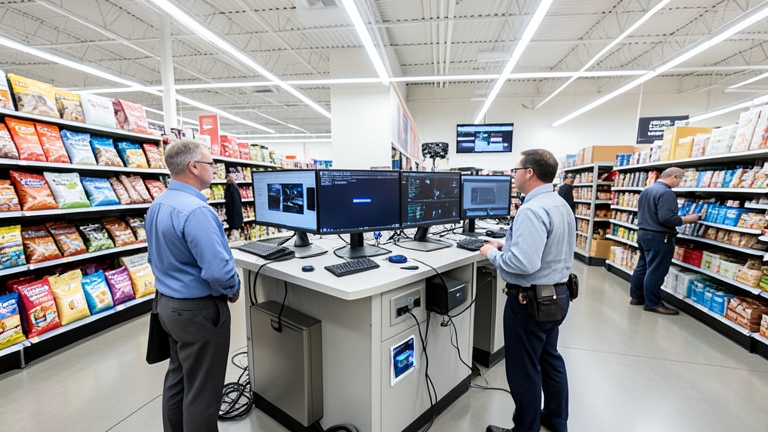
For example, Walmart has experimented with computer vision systems to monitor checkout lanes for theft. Instead of using these systems as a punitive tool, the company trains associates to view them as support mechanisms—alerting staff to potential issues so they can intervene early with a friendly reminder or offer assistance. This approach reduces conflict and preserves the shopping experience while still deterring theft.
How Does Walmart Balance Security with Customer Experience?
Walmart balances security with customer experience by designing interventions that are low- friction and high-empathy. Rather than stopping every customer at the door, the company uses data analytics to identify high-risk situations and deploys visible security only when necessary. Employees are trained to approach security interactions with a service mindset, using phrases like “Can I help you find something?” instead of accusatory language. This maintains a welcoming atmosphere while still discouraging criminal behavior.
Historical Context: From Loss Prevention to Trust-Based Security
Walmart’s earlier security model was typical of the retail industry: heavy reliance on uniformed guards, electronic article surveillance tags, and after-the-fact investigations. The company suffered from high employee turnover and low morale, which ironically made stores more vulnerable to internal theft. Research showed that disengaged employees were far more likely to steal or ignore security protocols. This realization prompted a rethink.
In the late 2010s, Walmart began piloting programs that emphasized recognition and participation. Stores that reduced shrinkage were rewarded with bonuses. Associates who reported safety hazards received public praise. Over time, these programs built a culture where security was everyone’s job, not just a specialized function. The COVID-19 pandemic accelerated this trend, as stores needed to adapt rapidly to new health and safety protocols. Trust and communication became essential for implementing mask mandates, social distancing, and cleaning routines.
Industry Context: What Other Retailers Can Learn from Walmart
Retail theft and workplace violence remain top concerns across the industry. Competitors like Target, Home Depot, and Amazon have all increased their security spending, often focusing on technology such as license plate readers, drones, and AI-powered cameras. Yet many of these investments have not yielded proportional reductions in loss or conflict. Walmart’s approach suggests that the missing ingredient is cultural alignment.
A survey from the National Retail Federation found that retailers lose nearly $100 billion annually to shrinkage, with employee theft accounting for a larger share than shoplifting. Walmart’s trust-and-innovation model directly addresses the employee theft problem by fostering loyalty and accountability. When workers feel respected and valued, they are less likely to rationalize stealing from their employer. This insight is backed by behavioral economics, which shows that trust reduces opportunism more effectively than surveillance does.
Practical Consequences for Walmart’s Workforce and Bottom Line
Walmart’s security transformation has had measurable effects. The company reports lower shrinkage rates in stores that have fully adopted the trust-based model compared to those still using traditional methods. Employee retention in security-related roles has also improved, reducing recruitment and training costs. More importantly, customer satisfaction scores have not declined despite the expanded security presence, suggesting that the approach is sustainable.
From a financial perspective, Walmart’s security spending has shifted from capital-intensive hardware to ongoing investments in training, communication, and culture. This reduces fixed costs and makes the security operation more adaptable. As threats evolve—whether from organized retail crime, cyberattacks, or workplace violence—Walmart can pivot quickly because its employees are already aligned and informed.

Future Outlook: Scaling Trust Across a Global Enterprise
Walmart operates more than 10,500 stores worldwide, serving millions of customers daily. Scaling a trust-based security model across such a vast, diverse organization is a formidable challenge. The company is now working on standardizing its communication protocols across international markets while allowing local adaptations for cultural differences. In Mexico, for example, community engagement is a key component; in the UK, data privacy regulations shape how transparency is implemented.
Artificial intelligence will likely play a growing role, but not in the way most observers expect. Walmart is exploring AI tools that can detect early signs of conflict or distress among employees and customers, enabling proactive de-escalation. These systems will only work if employees trust that the data is used to help them, not to punish them. That trust must be earned through the same principles of transparency and team spirit that have already proven effective.
Walmart’s security expansion serves as a case study for any large organization grappling with the tension between safety and freedom. The lesson is clear: the most robust defenses are built on a foundation of human connection. Good communications, transparency, and team spirit are not just nice-to-have extras; they are the essential infrastructure that allows innovation to flourish and security to scale without alienating the people it is meant to protect.