NVIDIA Corporation, the undisputed leader in artificial intelligence computing hardware, faces an unprecedented logistical and geopolitical crisis. Industry sources and financial analysts confirm that approximately 200,000 units of its flagship H200 data center GPUs are currently in production limbo, caught between intensifying U.S. export controls and China’s massive demand for advanced AI chips. This stockpile represents billions of dollars in manufactured inventory with no clear path to its intended primary market.
The Geopolitical Quagmire Halting AI Hardware
The core of NVIDIA’s dilemma stems from escalating technology restrictions initiated during the Trump administration and significantly expanded under subsequent U.S. leadership. These controls specifically target hardware capable of training sophisticated large language models (LLMs) and other frontier AI systems, a category where NVIDIA’s H200 series sits at the apex. The chips are designed to outperform their predecessors in memory bandwidth and computational throughput, making them ideal for the most demanding AI research and commercial applications.
According to multiple reports from the Financial Times and industry insiders, proposed U.S. regulations are evolving toward a global licensing framework. This system would empower authorities to block AI hardware sales to nearly any country deemed a national security concern, creating a regulatory environment of extreme uncertainty for semiconductor exporters. For NVIDIA, this means every shipment to China, or to intermediaries who might redirect products there, carries the risk of triggering severe sanctions, including being cut off from critical U.S. technology itself.
A Strategic Shift to the Vera Rubin Platform
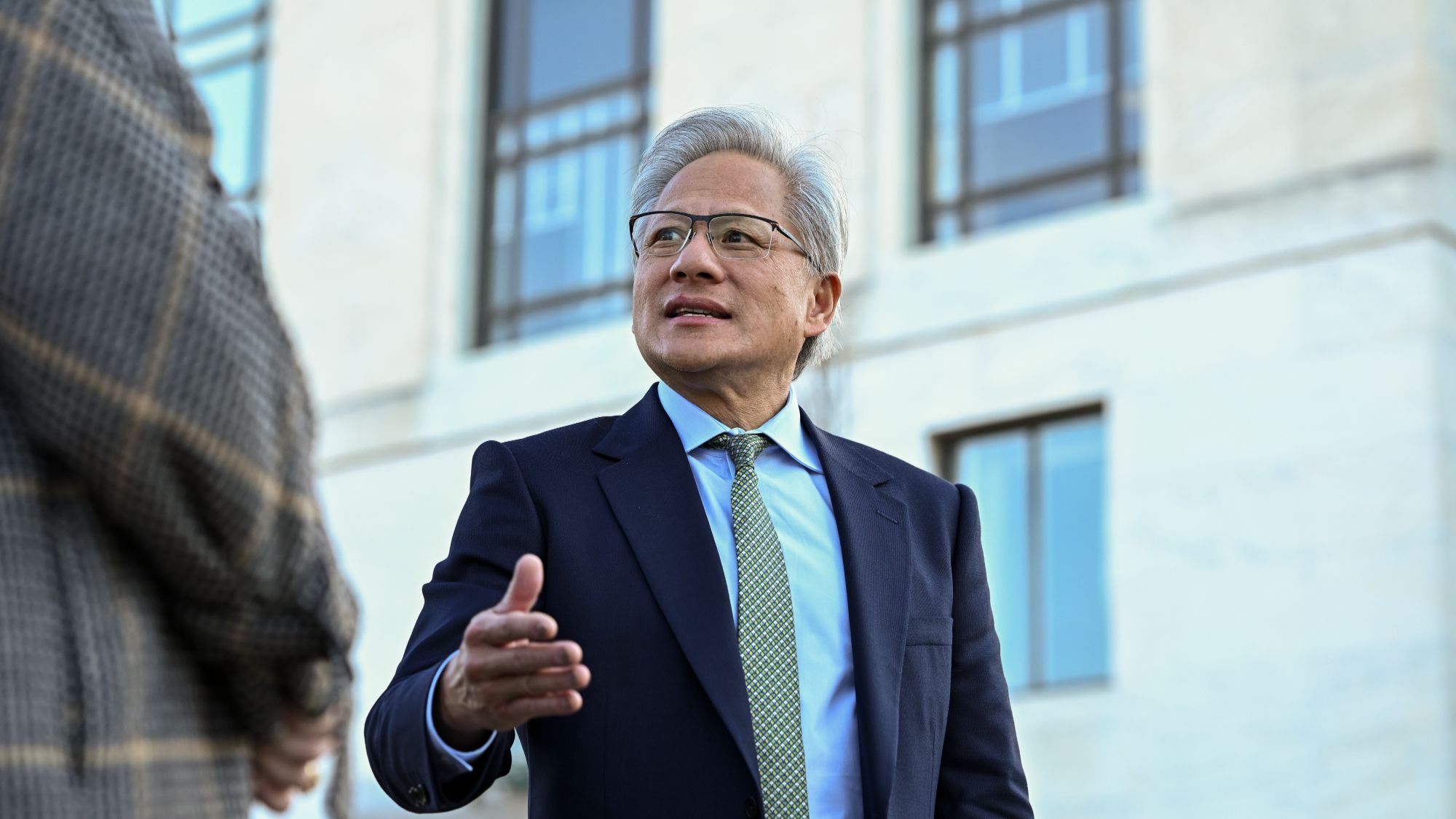
Confronted with this seemingly intractable situation, NVIDIA’s leadership, under CEO Jensen Huang, has executed a decisive strategic pivot. The company has begun reallocating significant portions of its advanced manufacturing capacity away from the H200 series destined for the Chinese market. Instead, this capacity is being channeled to accelerate the development and production of its next-generation AI platform, codenamed “Vera Rubin.”
This move is both defensive and offensive. Defensively, it mitigates the immediate risk of producing hardware that may become unsellable under new rules. Offensively, it aims to maintain NVIDIA’s technological lead over rivals like AMD and a growing cohort of Chinese chip designers by bringing its next architectural leap to market sooner. However, this transition has left a vast intermediate inventory—the 200,000 H200 units—stranded without a primary buyer.

The Financial and Competitive Fallout
The financial implications of warehousing 200,000 high-end GPUs are staggering. Each H200 represents a significant investment in advanced packaging, high-bandwidth memory, and sophisticated silicon. While NVIDIA will attempt to sell these units to other global markets, analysts speculate they will likely do so at a discount. The chips were optimized for specifications just below the U.S. export control thresholds for China, potentially making them less attractive to clients in unrestricted regions who can access fully capable versions.
More critically, the strategic withdrawal creates a massive vacuum in China’s AI infrastructure pipeline. Estimates suggest Chinese firms had plans to acquire up to two million advanced GPUs to fuel their domestic AI ambitions. With the H200 pipeline severed, these companies are forced to turn to alternatives. This accelerates investment in homegrown solutions from companies like Huawei and Biren, and potentially to less restricted competitors like AMD, albeit under similar U.S. constraints.
The Broader Impact on the Global AI Race
NVIDIA’s predicament is a microcosm of the broader decoupling in critical technology sectors between the United States and China. The U.S. government’s objective is clear: to slow China’s progress in foundational AI technologies by restricting access to the most powerful computing engines. The consequence, however, is the forceful stimulation of China’s indigenous semiconductor industry, a long-term goal of Beijing’s national strategy.
For global AI development, this bifurcation risks creating parallel, incompatible tech stacks. Research and models trained on Chinese hardware may not seamlessly transfer to Western systems, and vice versa, potentially fragmenting global innovation. It also places multinational corporations in an impossible position, forced to choose between compliance with U.S. law and access to the world’s second-largest economy.
NVIDIA’s Long-Term Calculus
Jensen Huang’s apparent decision to de-prioritize the immediate Chinese market in favor of technological momentum is a calculated gamble. The company is betting that its architectural lead and software ecosystem (CUDA) are so entrenched that it can afford a temporary setback in one geographic market. By rushing the Vera Rubin platform, NVIDIA aims to present a new, even more advanced product to the rest of the world, hoping that China’s domestic alternatives will still lag a full generation behind.
This strategy acknowledges that while revenue from China is significant, losing technological leadership would be catastrophic. The time-to-market advantage is considered more valuable than immediate sales, especially when those sales are fraught with regulatory peril. The stranded H200s, therefore, become a costly but necessary write-down in a much longer game.
The Unwinnable Position of a Market Leader
NVIDIA’s experience highlights the precarious position of market leaders in geopolitically charged sectors. The company succeeded brilliantly in creating the essential tool for the AI revolution, only to find that tool deemed a national security asset. Its “Catch-22” is perfectly framed: sell the chips and risk the company’s entire global operation; withhold them and cede the market, fostering the very competitors the sanctions aim to hinder.
The outcome of this standoff will resonate far beyond Santa Clara. It sets a precedent for how other dual-use technologies—from quantum computing to biotechnology—might be managed in an era of great power competition. It also tests the resilience of global supply chains that were built for efficiency, not for geopolitical resilience.
The sight of 200,000 state-of-the-art GPUs sitting idle is a powerful symbol of the new costs of the tech cold war. It represents not just lost revenue for NVIDIA, but delayed AI projects, redirected research budgets, and a global industry forced to navigate a labyrinth of export controls. As the U.S. and China continue their strategic rivalry, the world’s most advanced technology companies will increasingly find themselves not just as commercial actors, but as pieces on a grand geopolitical chessboard, where the rules can change with a single regulatory announcement. The ultimate cost is measured not only in dollars but in the pace of innovation itself, as the free flow of ideas and hardware that fueled the last decade of AI progress faces unprecedented barriers.