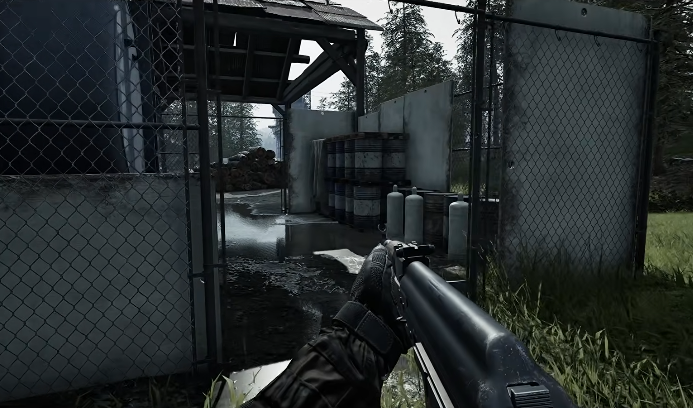
The opening months of 2026 have established an unprecedented benchmark for the video game industry, with a relentless stream of critically acclaimed releases across every conceivable genre and price point. This surge isn’t limited to the traditional AAA blockbusters from major publishers; it represents a fundamental shift where independent studios and mid-tier developers are delivering experiences that rival, and in some cases surpass, their bigger-budget counterparts. The sheer density of must-play titles arriving week after week has created an environment where players are struggling to keep up, not due to a lack of interest, but due to an overwhelming abundance of quality.
The AAA Landscape Redefined by Early-Year Powerhouses
Historically, the first quarter has often been seen as a quieter period for major releases, with publishers saving their biggest guns for the holiday season. 2026 has completely shattered that convention. Several tentpole franchises have launched entries that are not merely iterative but are being hailed as genre-defining moments. One such title, the open-world sci-fi epic “Nexus Dawn” from a renowned studio, has captivated audiences with its seamless planetary exploration and a narrative branching system that reacts meaningfully to player choice, setting a new technical and storytelling standard.
Narrative Depth Meets Revolutionary Gameplay
Another standout, the action-RPG “Chrono-Legacy,” has managed to blend complex, time-manipulation mechanics with a deeply personal story, a combination rarely executed with such finesse. Critics have praised its combat system for being both accessible to newcomers and offering near-infinite depth for mastery, a balance that has long eluded many similar games. The success of these titles demonstrates a clear trend: players are rewarding studios that prioritize innovative gameplay loops and compelling writing alongside graphical prowess.
The Indie and AA Scene Fuels Unprecedented Innovation
While the AAA space is thriving, the true heartbeat of 2026’s explosive start may be found in the vibrant indie and AA (double-A) sector. Unburdened by the need to appeal to a mass market of tens of millions, these smaller teams are taking bold creative risks that are paying off spectacularly. A puzzle-platformer titled “Lumina’s Thread” has become a viral sensation, not for its budget, but for its ingenious core mechanic of painting light into the environment to solve challenges, creating moments of genuine wonder.
Genre Hybrids and Unexpected Success Stories
Similarly, a game that blends farming simulation with eldritch horror, “Harvest of the Void,” has found a massive audience by subverting expectations and merging seemingly incompatible genres into a cohesive and addictive whole. These successes are not flukes; they are indicative of a market that is increasingly hungry for unique experiences and is willing to support developers directly through digital storefronts and subscription services. The barrier between “indie darling” and “mainstream hit” has never been thinner.

Accessibility and Value Define the Current Market
A key driver behind this golden age is the diversification of access points and business models. The days of a $70 price tag being the sole barrier to entry are fading. Day-one releases on premium subscription services like Xbox Game Pass and PlayStation Plus Extra have allowed millions of players to experience major titles without a direct purchase, dramatically broadening their reach. Furthermore, the quality of free-to-play and live-service games has risen significantly, with several new entrants in early 2026 offering polished, content-rich experiences that respect player time and avoid predatory monetization.
The Rise of the Mid-Tier Masterpiece
Equally important is the resurgence of the $30-$50 “AA” game. These titles, often developed by studios with teams of 50-150 people, offer production values close to AAA but with more focused scope and distinct artistic vision. A tactical RPG released in February, “Iron Doctrine,” exemplifies this perfectly, offering dozens of hours of deep strategic gameplay and a compelling war story at a price point that feels generous for the quality provided. This tier provides a crucial proving ground for new IPs and mechanics.
Technological Foundations Enable Creative Freedom
This creative explosion is underpinned by significant technological maturation. Established game engines like Unreal Engine 5 and Unity have become more accessible and powerful, providing small teams with tools that were once the exclusive domain of giant studios. Advanced procedural generation, robust AI-assisted development tools, and streamlined online infrastructure have lowered development hurdles, allowing creators to focus more on design and narrative rather than overcoming technical limitations from scratch.
Cloud Gaming and Cross-Platform Play Expand Audiences
The expansion of reliable cloud gaming services and the near-universal adoption of cross-platform play and progression have also played a pivotal role. A player can now start a game on a console during the evening, continue on a phone during a commute, and then pick it up on a PC later, with their progress perfectly synchronized. This platform-agnostic approach removes friction and ensures that great games can find their audience regardless of the hardware owned.
Community and Critical Reception in Real-Time
The discourse surrounding these releases has also evolved. The instantaneous nature of social media and content creation means that a game’s quality is debated, dissected, and celebrated by a global community within hours of launch. This real-time feedback loop creates a powerful momentum for standout titles, propelling them to the top of digital charts and keeping them in the cultural conversation. In early 2026, several games have seen their player bases multiply tenfold within a week purely through word-of-mouth and streaming buzz, proving that marketing budgets are no longer the sole determinant of success.
The Challenge of Attention in a Crowded Field
This abundance does present a unique challenge: discoverability. With so many excellent games releasing concurrently, some gems risk being overlooked. This has led to a greater emphasis on strong initial hooks, compelling demo experiences, and creative community engagement from developers. Curators, both algorithmic and human, have become more important than ever in guiding players toward experiences they will love.
The trajectory set in the first months of 2026 suggests we are not witnessing a temporary spike but a new plateau for the industry. The convergence of artistic ambition, technological democratization, and flexible business models has created a perfect storm for players. The remainder of the year promises even more highly anticipated titles, but the foundation has already been laid. The defining narrative of 2026 in gaming will be one of consistent, overwhelming quality that respects the intelligence, time, and passion of players across the entire spectrum of the medium, setting a standard that will resonate for years to come.