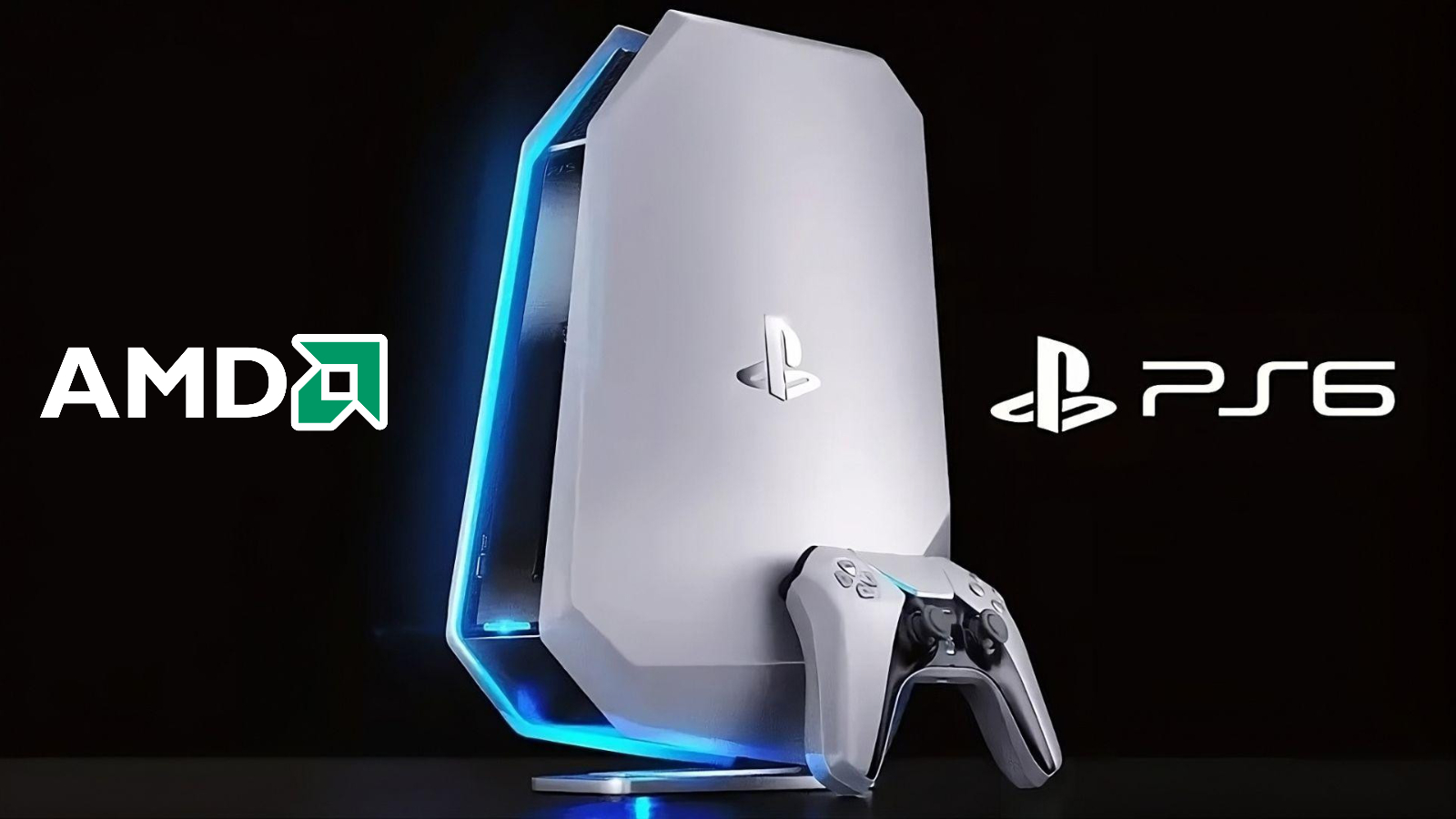
Leaked specifications for Microsoft’s next-generation Xbox console, codenamed Helix, reveal a strategic departure from Sony’s PlayStation 6 approach, positioning Microsoft’s hardware as a significantly more powerful and premium product. According to industry sources, the Xbox Helix will utilize a full-fledged AMD “Magnus” APU, while Sony’s PlayStation 6 will feature a more power-efficient “Orion” variant, setting the stage for divergent market strategies in the next console generation.
Divergent Paths for Next-Generation Consoles
The core of the divergence lies in the silicon. The Xbox Helix’s Magnus APU is reported to be a physically larger, more powerful chip built on a 408 mm-squared footprint. It will incorporate full Zen 6 CPU cores, which are designed for peak performance. In contrast, the PlayStation 6’s Orion chip is expected to utilize a smaller 280 mm-squared die and employ Zen 6c cores. These “compact” cores are architecturally similar but optimized for density and power efficiency, often at a slight cost to peak clock speeds.
This fundamental hardware choice signals a clear strategic split. Microsoft appears to be targeting the high-end, performance-first segment of the market, potentially willing to sacrifice cost efficiency for raw power. Sony, on the other hand, seems to be prioritizing a more traditional console strategy focused on balanced performance, thermal management, and a consumer-friendly price point, building directly on the foundation established by the PlayStation 5.
Performance Implications of the Magnus and Orion APUs
The performance gap suggested by these specifications could be substantial, particularly in CPU-bound scenarios. The full Zen 6 cores in the Magnus APU are expected to deliver higher single-threaded and multi-threaded performance, benefiting complex simulation games, advanced AI systems, and high-frame-rate gameplay. The Zen 6c cores in the Orion chip will still offer a generational leap over current hardware but may be more tailored for consistent performance within a strict thermal and power envelope.
On the graphics front, the advantage also leans heavily toward the Xbox Helix. The Magnus APU is reported to integrate AMD’s next-generation RDNA 5 architecture with 68 Compute Units (CUs). Sources indicate this new architecture could deliver a compute unit performance uplift of approximately 65% over the RDNA 2 architecture found in the current Xbox Series X. Combined with the increased CU count, this positions the Helix for a significant generational leap in graphical fidelity and rendering performance.
Targeting High-Frame-Rate Gaming and Beyond
Internal targets for the Xbox Helix, as reported by leakers, extend “beyond 120 FPS” for supported titles. This suggests Microsoft is not only focusing on 4K resolution but is making high-refresh-rate gaming a cornerstone of the Helix’s value proposition. Achieving consistent frame rates at this level, especially at high resolutions, requires immense GPU and CPU horsepower, which the Magnus APU is seemingly designed to provide.
The PlayStation 6’s Orion chip, while still a major step forward, is expected to deliver a more conservative performance profile. Early reports suggest it will be capable of running games at 4K and 120 FPS, a benchmark the current PS5 can only hit in select, optimized titles. For Sony, the goal appears to be solidifying and democratizing the 4K/120fps experience rather than pushing far beyond it at this stage.
Market Positioning and the Sticker Price Reality
The most immediate consequence of this hardware bifurcation is cost. The larger, more complex Magnus APU will be significantly more expensive to manufacture than the Orion chip. This increased Bill of Materials (BOM), combined with other potential premium components like faster memory or more advanced cooling solutions, points directly to a higher retail price for the Xbox Helix.
Industry analysts and leakers, including Moore’s Law is Dead, have suggested the Xbox Helix could be positioned as a premium device with a price tag exceeding $1,000. This would mark a dramatic shift from the traditional $400-$500 console market and place the Helix in direct competition with high-end gaming PCs. Microsoft may be betting on a segment of core gamers willing to pay a premium for what is effectively a sealed, console-optimized equivalent of a powerful PC.
Sony’s PlayStation 6, by leveraging a more efficient and presumably cheaper APU, is expected to maintain a price point much closer to historical console launches, likely in the $500-$600 range. This strategy aims for mass-market appeal and continuity, offering a clear generational upgrade without a severe price shock to its existing vast user base.
The Broader Ecosystem Strategy
Microsoft’s premium hardware push must be viewed within the context of its broader Xbox ecosystem strategy. For years, the company has de-emphasized the console as the sole gateway to Xbox, instead promoting its Game Pass subscription service and cloud gaming across consoles, PCs, and mobile devices. A high-end Helix console could serve as the flagship hardware showcase for this ecosystem—the ultimate device for experiencing Xbox games at their absolute best.
It creates a tiered hardware approach: cloud gaming for accessibility, the existing Series S|X for mainstream console play, and the Helix for the enthusiast seeking no-compromise performance. This mirrors strategies seen in other tech sectors, like smartphones, where a premium model sits atop a more accessible lineup.
Sony’s strategy remains more hardware-centric. The PlayStation console is the primary, and for many exclusive titles, the only way to experience its content. Therefore, maintaining an accessible price point to grow and retain its hardware install base is paramount. The efficient Orion chip supports this goal by enabling strong performance without necessitating a prohibitive cost.
Technical Challenges and Design Considerations
Packing the powerful Magnus APU into a consumer console presents significant engineering challenges. The larger chip generates more heat, requiring a sophisticated and potentially bulky cooling system. Power draw will also be higher, impacting the design of the power supply unit and overall console efficiency ratings. Microsoft’s engineers will need to balance this raw power with acceptable noise levels, form factor, and reliability.
Sony’s focus on efficiency with the Orion chip simplifies these challenges. A smaller, cooler-running APU allows for more flexibility in console design—potentially enabling a slimmer profile, quieter operation, and lower energy consumption. This efficiency-first approach has been a hallmark of PlayStation hardware design, contributing to the widespread adoption and longevity of its consoles.

Industry Reactions and Developer Implications
The prospect of a significant performance gap between the two next-generation market leaders presents both opportunities and challenges for game developers. Cross-platform titles may see noticeable differences in frame rates, graphical settings, or feature sets between the Helix and PS6 versions. Developers targeting the Helix’s high-performance specs will need to ensure their games scale down effectively for the PS6 and other platforms.
Conversely, first-party studios will be able to tailor their experiences to the specific strengths of each platform. Microsoft’s studios could create games that leverage the Helix’s powerful CPU for unprecedented world simulation or AI complexity. Sony’s Worldwide Studios have historically excelled at extracting maximum visual fidelity from efficient hardware, a tradition likely to continue with the Orion-based PS6.
The leak has already sparked intense debate within gaming communities. Enthusiasts are divided between excitement for a no-holds-barred console and concern over market fragmentation and rising costs. The success of Microsoft’s premium gamble will depend entirely on whether a large enough segment of gamers perceives the performance leap as worth a potentially doubled entry price.
As the industry awaits official announcements, these leaks paint a picture of a fascinating crossroads. The next generation may not be a simple head-to-head spec battle but a clash of philosophies: raw power and premium positioning versus refined efficiency and mainstream accessibility. The choices made by Microsoft and Sony will not only define their next consoles but could reshape the competitive landscape of the entire home gaming market for years to come. The era of parallel, similarly-specced console launches may be giving way to a new model of clear differentiation, forcing consumers to make a more fundamental choice about what they value most in their gaming hardware.