Nexon sees artificial intelligence as gaming’s future amid Arc Raiders shift
During a capital markets briefing in Tokyo on March 31, 2026, Nexon CEO Junghun Lee unveiled “Mono Lake,” an ambitious end-to-end AI platform positioned as the cornerstone of the company’s future. This move, detailed against the backdrop of the surprising commercial success of Arc Raiders, signals a strategic pivot where artificial intelligence is no longer just a tool but the foundational intelligence for all development and live operations.
Mono Lake: Nexon’s Proprietary AI Advantage
Nexon’s unveiled strategy revolves around Mono Lake, described not as a singular generative tool but as a comprehensive intelligence system. The platform is engineered to integrate into every phase of game production and live service management. Its purported strength lies in its unique dataset. According to Junghun Lee, Mono Lake has been trained on billions of player sessions and decades of proprietary data encompassing engagement patterns, retention metrics, monetization habits, and detailed game telemetry from Nexon’s vast portfolio.
Lee emphasized that this historical context is what differentiates the company’s approach. He argued that AI without deep, proprietary context results in generic outcomes, stating, “AI without context is just speed. Faster output of a generic outcome… Without context, AI is a race to the arithmetic middle where everyone’s games look the same. That’s not a competitive advantage. That’s noise, at scale.” The claim is that Mono Lake’s deeply ingrained knowledge of player behavior and design history will guide creative decisions rather than replace them.
The Role of Arc Raiders in Validating the Strategy
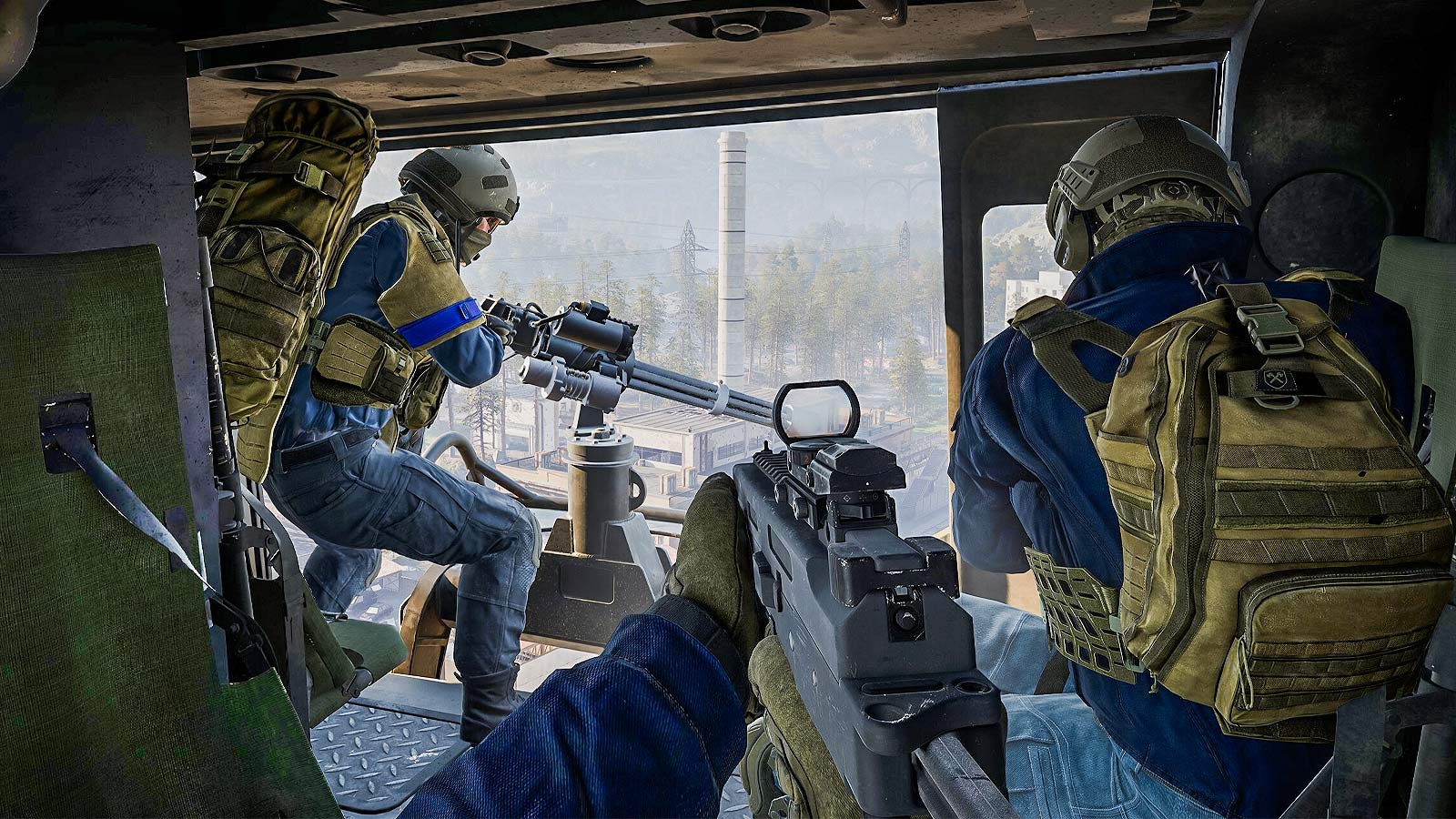
The success of Embark Studios’ Arc Raiders, which has sold over 14 million units, was presented as a validation of this data-informed philosophy. Lee characterized the game’s performance as a “trojan horse,” an unexpected proof-of-concept that demonstrated how technology could streamline development. He suggested it allowed developers to “spend more time thinking and less time typing. More time innovating; less time writing code.” It is important to note that Embark CCO Stefan Strandberg has clarified that while AI tools assisted in content creation for Arc Raiders, no generative AI was used in the core production process, drawing a distinction between automation aids and generative creation.
Executive Vision: Fewer Bets, More Conviction
The AI reveal coincided with a broader corporate reset under newly appointed Executive Chairman Patrick Söderlund, the CEO of Embark Studios. Söderlund outlined a plan for Nexon to make “fewer bets” but with “more conviction.” This involves a rigorous review of the entire project portfolio, from live games to new titles, based on realistic revenue assumptions and contribution margin targets.
“Some projects will get more funding. Some will be restructured. Some will be cancelled,” Söderlund stated. He also pointed to scrutinizing costs unrelated to direct game development, including corporate functions, management layers, and external contractors. The goal is to prevent revenue growth from being erased by ballooning overheads, a situation he implied had occurred previously.
Integrating the Embark Mindset
Söderlund positioned the strategic shift as importing Embark’s operational mindset into the wider Nexon group. This mindset involves questioning all processes, from initial ideation to production, and determining what can be done more efficiently by machines. “It’s really about encouraging people to use smarter processes, better tools, and to let go of habits that no longer serve them,” he explained. He revealed that Nexon developers are already meeting with Embark colleagues to understand these workflows, fostering a culture of bottom-up initiative rather than top-down mandates.
The Distinction Between AI Hype and Applied Intelligence
Throughout the briefing, Nexon executives carefully framed their AI ambition. Mono Lake was not presented as a magic bullet for content generation but as a sophisticated decision-support system. The emphasis remained on augmenting human creativity with unparalleled data context. Lee asserted, “Our methodology doesn’t replace creative people, it frees them to create, with context.” This aligns with Söderlund’s view that smart use of AI can empower teams to deliver higher-quality products more efficiently, a principle he intends to scale across Nexon.
Market Context and Future Moves
The announcement positions Nexon in a competitive industry increasingly leaning on AI. Lee has previously stated that every game company should now be assumed to be using AI in some capacity. Nexon’s differentiating argument is the scale and exclusivity of its training data. Furthermore, Söderlund indicated that this restructuring and efficiency drive would not preclude strategic investments. He stated Nexon is prepared to deploy capital toward acquisitions that meet a specific test: “can this become something players build their lives around?”
The strategic pivot articulated by Nexon’s leadership in 2026 frames artificial intelligence not merely as a suite of tools but as the core operating system for future game development. By leveraging its vast historical datasets through Mono Lake and adopting a more disciplined, conviction-driven investment model, the company aims to transform its creative process. The success of Arc Raiders serves as a foundational case study, though the true test will be whether this integrated, AI-informed methodology can reliably produce hits across its diverse portfolio while maintaining the margins that justify the corporate reset.





/i.s3.glbimg.com/v1/AUTH_08fbf48bc0524877943fe86e43087e7a/internal_photos/bs/2026/G/E/qzLHIbT6652B71SVMIqA/marvels-wolverine-20260830191411.jpg "Marvel’s Wolverine HDR Settings: Stop Tuning the Game, Fix Your TV")