
Bungie’s announcement that active live-service development for Destiny 2 is drawing to a close has sent shockwaves through the gaming industry, and few reactions have been as candid or as emotionally charged as that of Rebecca Ford, the Creative Director of Warframe. In a series of public statements and a podcast appearance, Ford did not mince words, describing the news as “cataclysmic” and placing the blame squarely on the business side of game development — a rare moment of cross-industry solidarity from a direct competitor that underscores just how significant Destiny 2’s run has been for the entire live-service genre.
Why Rebecca Ford Called Destiny 2’s Live-Service End “Cataclysmic”
Speaking as a guest on the OnlyFrames podcast, Ford offered an unfiltered assessment of Bungie’s decision to cease major content updates for Destiny 2. She described the announcement as “cataclysmic,” adding that there is “no world where it makes sense from someone who enjoys video games that you can just do that — you can just end one of the biggest things to hit the gaming industry in the past 10 years.”
Ford’s commentary went beyond simple disappointment. She directly attributed the decision to the growing influence of business priorities over creative and player-focused considerations. “It turns out that is very much what happens when the business side of things — which I have emphasized with gusto how much we hate when that becomes the biggest voice in the room — becomes the biggest voice in the room,” she said. “And you’ve seen the business side of things be the biggest voice in the room for a long time. It’s just never hurt this much for a lot of people in our niche genre, I think. It’s unthinkable.”
Her words carry particular weight because they come not from a Bungie employee or a Destiny community figure, but from the creative lead of Warframe, the game that has been Destiny 2’s most enduring rival in the live-service looter-shooter space for nearly a decade.
What Did Rebecca Ford Say About Bungie’s Influence on Warframe?
Despite the competitive relationship between the two games, Ford made it unequivocally clear that Warframe would not exist without Bungie’s legacy. In a post on X (formerly Twitter), she wrote, “There is no Warframe without the legacy of Bungie games,” recalling her personal history with Bungie’s titles stretching all the way back to Halo 3. This acknowledgment positions Bungie’s design philosophy as a foundational influence on Digital Extremes’ own work, bridging the gap between two studios often framed as rivals.
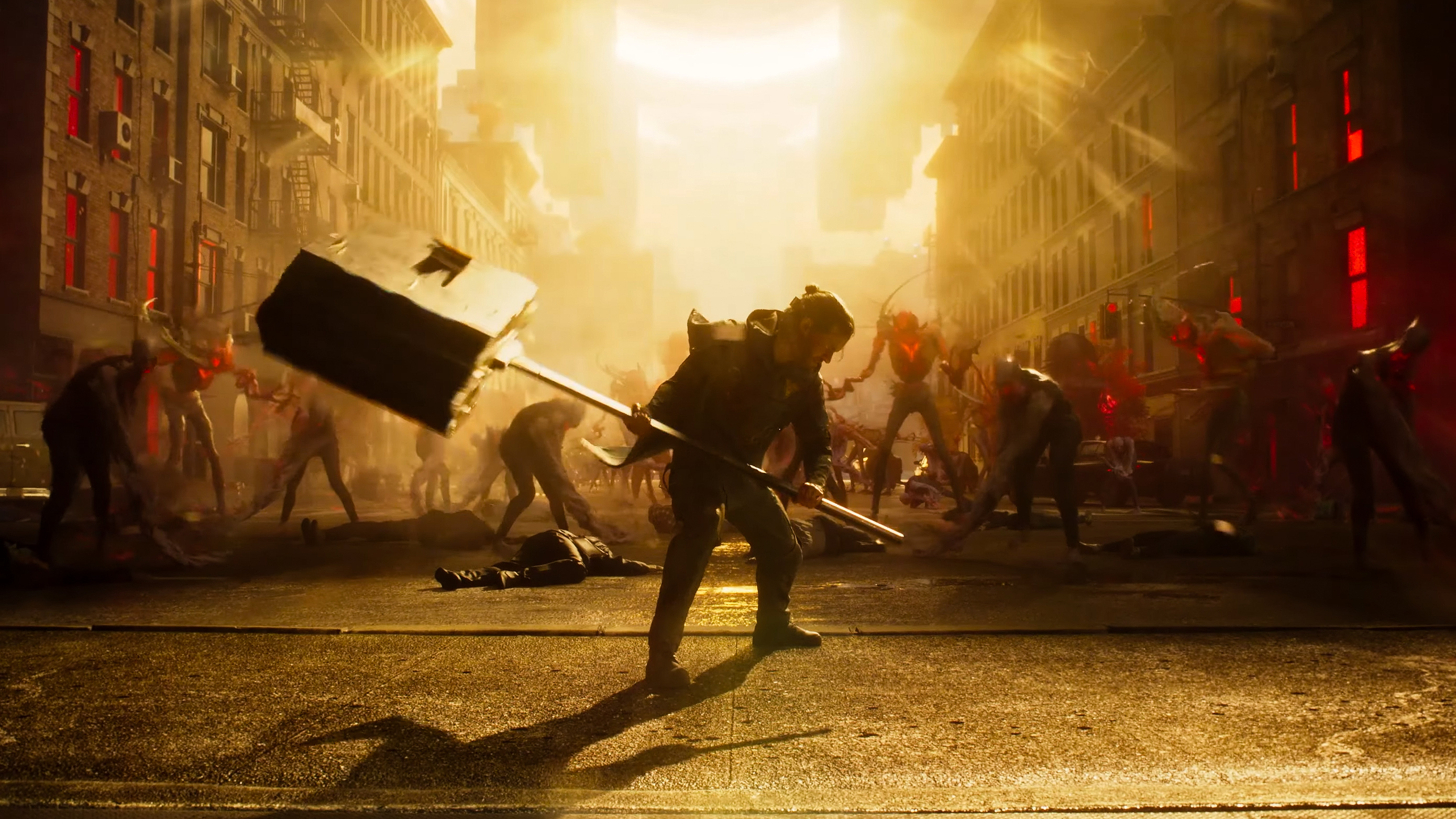
Ford also described Destiny as “a force of nature, loved and held in the hands of so many people who, for a moment, were part of the biggest thing in gaming.” That sense of shared history and mutual respect, even in the face of direct market competition, highlights a deeper truth about the live-service genre: its leading titles have always existed in a state of productive tension, each pushing the other forward.
Saying Goodbye to “the Only Lasting Pillar”
Perhaps the most striking element of Ford’s response was its personal tone. She admitted the news has been difficult to process, calling Destiny “the only lasting pillar I had to look up to” throughout her career. “I am making Warframe, I am saying goodbye to the only lasting pillar I had to look up to,” she said. “I am responsible for my own destiny.”
That final line — a deliberate play on words — captures the emotional weight of the moment for many developers who grew up playing Bungie’s games and later built careers in the genre those games defined. For Ford, the end of Destiny 2’s live-service development is not merely a business decision; it is the closing of a chapter in the history of an entire sub-sector of the gaming industry, one that she and her team at Digital Extremes helped shape alongside Bungie.
What the Final Monument of Triumph Update Includes
Destiny 2 will receive its final major content drop, the Monument of Triumph update, on June 9. Bungie has characterized this as the game’s last significant content release. According to the studio, the patch includes:
- Pantheon 2.0, an evolved version of the game’s endgame boss-rush activity
- Updates to existing raids and dungeons
- The return of Sparrow Racing League (SRL), a fan-favorite limited-time mode
- Various quality-of-life improvements and bug fixes
After the June 9 update, Destiny 2’s servers will remain online, and players will still be able to access all existing content. However, Bungie has confirmed that there will be no new seasonal content, expansions, or major gameplay updates going forward. The studio has pledged to continue providing support in the form of bug fixes and server maintenance, but the live-service engine that has driven Destiny 2 for nearly a decade is being shut down.
Why This Decision Reflects Broader Industry Pressures
Ford’s critique of the “business side of things” becoming the loudest voice in the room resonates beyond this single announcement. The live-service model, once hailed as the holy grail of recurring revenue and player engagement, has come under increasing financial scrutiny across the entire gaming industry. Publishers and platform holders are demanding clearer returns on investment, and even the most successful live-service titles are not immune to corporate restructuring, layoffs, or strategic wind-downs.
In Destiny 2’s case, Sony’s acquisition of Bungie for $3.6 billion in 2022 created new expectations around profitability and portfolio synergy. When Bungie’s next major project, Marathon, faced reported struggles, the calculus shifted. Valve veteran Chet Faliszek has publicly expressed concern about Bungie’s future in the wake of the Destiny 2 news, suggesting that Sony no longer “cares” about the studio in the same way following Marathon’s difficulties. Whether or not that characterization is fair, it reflects a growing unease about the direction of one of gaming’s most celebrated studios.
What Destiny 2’s Wind-Down Means for the Live-Service Genre
The end of Destiny 2’s live-service development marks a turning point for the genre it helped define. Alongside Warframe, Destiny 2 was one of the two dominant pillars of the looter-shooter live-service space for nearly a decade. Its departure from active development leaves Warframe as the last standing major entry in that specific sub-genre, a fact that Ford herself seems acutely aware of.
For players, the news is a bittersweet conclusion to a game that has evolved dramatically since its 2017 launch. For developers, it is a cautionary tale about the fragility of live-service commitment, even for titles that have generated hundreds of millions of dollars and sustained millions of active players. And for the industry at large, it raises uncomfortable questions about how long any live-service game can realistically expect to receive ongoing investment before the business side of the room inevitably starts to speak louder than the creative side.
Ford’s parting sentiment — that she is now “responsible for my own destiny” — may well serve as an epitaph for an era. Destiny 2’s influence on game design, community building, and the very concept of a living game will persist for years to come. But the end of its live-service journey is a reminder that even the most impactful forces in gaming are ultimately subject to the economic realities that govern the entire medium. As the industry watches Warframe continue its own long-running evolution, Ford’s words will linger: in the end, the business side always finds its way to the front of the room, and when it does, even the biggest things in gaming can come to an unthinkable halt.