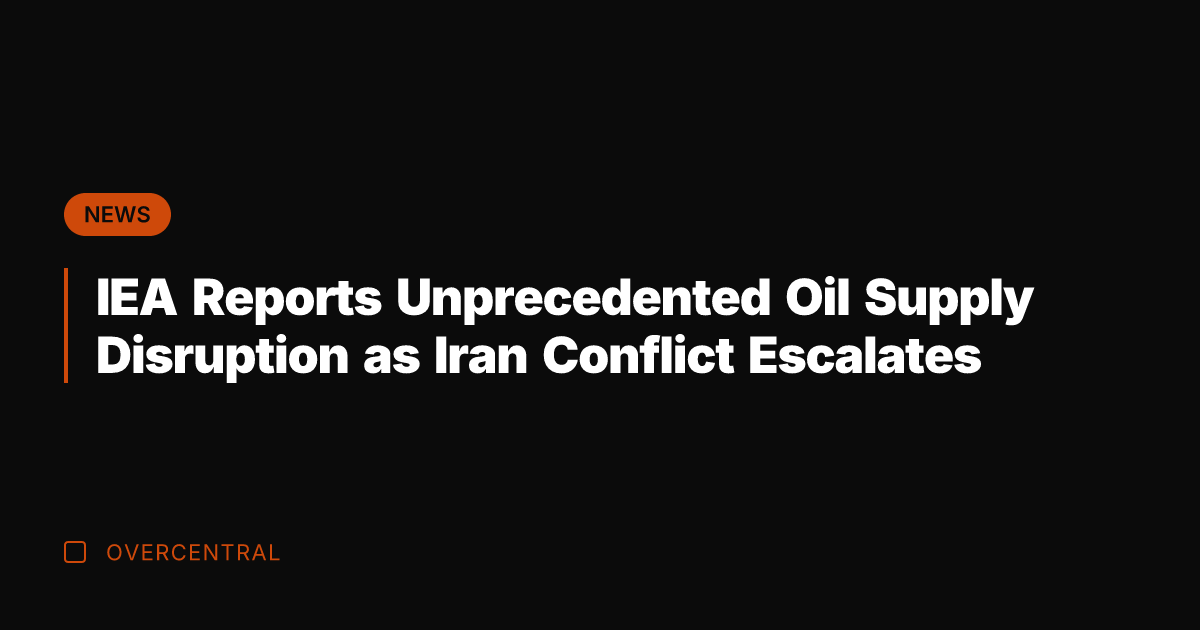
The International Energy Agency has issued a stark warning that the ongoing conflict involving Iran is creating what the organization describes as the largest disruption to global oil supplies in recorded history. According to the agency’s latest market analysis, global crude output is projected to fall to its lowest level in four years, threatening energy security and economic stability worldwide.
Scale of the Disruption
The IEA’s monthly oil market report reveals that the situation in the Middle East has escalated beyond previous regional conflicts, with production losses and transportation blockages creating a perfect storm for global energy markets. “We are witnessing supply chain disruptions of unprecedented magnitude,” the report states, noting that daily production has already fallen by approximately 3.8 million barrels since the conflict intensified last month.
Historical Context and Comparison
To understand the gravity of the current situation, analysts point to previous disruptions that now pale in comparison. The 1973 oil embargo resulted in a 4.4 million barrel per day reduction, while the Iran-Iraq War in the 1980s caused losses of about 3.5 million barrels daily. The current disruption, however, combines production losses with significant transportation bottlenecks through the Strait of Hormuz, through which approximately 21 million barrels of oil pass daily, representing about 21% of global petroleum consumption.
Regional Production Impacts
The conflict has directly affected multiple production facilities across the region. Iranian oil output, which had been gradually increasing in recent years, has fallen dramatically as infrastructure comes under attack and sanctions enforcement tightens. Neighboring countries including Iraq, Kuwait, and Saudi Arabia have also experienced production challenges as the conflict spills across borders and creates security concerns for oilfield workers and facilities.
Strait of Hormuz Closure Scenarios
The most significant concern for global markets remains the potential closure of the Strait of Hormuz. While complete closure remains unlikely according to most analysts, even partial disruptions have created massive logistical challenges. “The threat to this critical chokepoint represents the single greatest risk to global oil supplies,” notes the IEA report. Shipping insurance premiums have increased tenfold in recent weeks, while many tanker companies are refusing to transit the region altogether.

Global Market Reactions
Financial markets have responded with volatility not seen since the early days of the COVID-19 pandemic. Brent crude futures have surged above $120 per barrel, with analysts predicting further increases if the situation deteriorates. Stock markets have shown particular sensitivity to energy prices, with transportation and manufacturing sectors experiencing the most significant declines.
Strategic Petroleum Reserve Releases
In response to the crisis, member countries of the International Energy Agency have coordinated the largest ever release from strategic petroleum reserves. A total of 120 million barrels has been authorized for release over the next six months, representing approximately 1.3 million barrels per day. While this measure provides temporary relief, analysts warn that it cannot compensate for prolonged production losses.
Alternative Supply Routes
The crisis has accelerated investment in alternative transportation routes and energy sources. Pipeline projects that bypass the Strait of Hormuz have received renewed attention and funding, while renewable energy investments have seen a surge in interest from both governments and private investors. “This crisis demonstrates the urgent need for energy diversification,” the IEA report emphasizes.
Economic Consequences
The economic impact extends far beyond energy markets. Inflationary pressures have intensified globally, with transportation costs increasing by an average of 35% across major trade routes. Developing economies face particular challenges, as higher energy prices threaten to reverse recent economic gains and increase poverty levels in vulnerable regions.
Geopolitical Implications
The conflict has reshaped diplomatic relations across the Middle East and beyond. Traditional alliances are being tested as countries balance energy security concerns with political considerations. The United States, European Union, and China have all increased diplomatic efforts to contain the conflict, recognizing the global economic stakes involved.
Sanctions and Their Effectiveness
International sanctions against Iran have taken on new significance in the current context. While designed to pressure the Iranian government, these measures have also contributed to the supply disruption by limiting Iran’s ability to export oil through conventional channels. Some analysts question whether the current sanctions regime might be counterproductive given the global supply crisis.
Industry Adaptation and Response
Oil companies and related industries are implementing emergency response measures. Production increases in non-OPEC countries, particularly the United States, Canada, and Brazil, have accelerated but face limitations due to infrastructure constraints and environmental considerations. Refinery operations worldwide are being adjusted to process different crude grades as traditional supply patterns are disrupted.
Consumer Impact and Behavior Changes
At the consumer level, the crisis has translated into rapidly increasing fuel prices across most major economies. Behavioral changes are already evident, with public transportation usage increasing in urban areas and consumer preference shifting toward more fuel-efficient vehicles. These changes, while beneficial from an environmental perspective, represent significant economic stress for households worldwide.
Long-Term Energy Security Considerations
The current crisis has reignited debates about long-term energy security strategies. Many experts argue that the vulnerability exposed by the Iran conflict demonstrates the need for more resilient energy systems. Investments in energy storage, grid modernization, and diversified supply chains are likely to receive increased attention in policy discussions moving forward.
Environmental Trade-Offs
In response to supply concerns, some countries have temporarily relaxed environmental regulations to increase domestic production. These measures, while addressing immediate energy security needs, create tension with climate change commitments made under international agreements. Balancing these competing priorities represents one of the most significant policy challenges emerging from the current crisis.

The International Energy Agency’s warning serves as a sobering reminder of the interconnected nature of global energy markets and geopolitical stability. As the situation continues to evolve, the world faces not only immediate economic challenges but also fundamental questions about how to build more resilient energy systems for an increasingly uncertain future. The lessons learned from this unprecedented disruption will likely shape energy policy and investment decisions for years to come, highlighting the delicate balance between energy security, economic stability, and environmental sustainability in a world where regional conflicts can rapidly become global crises.