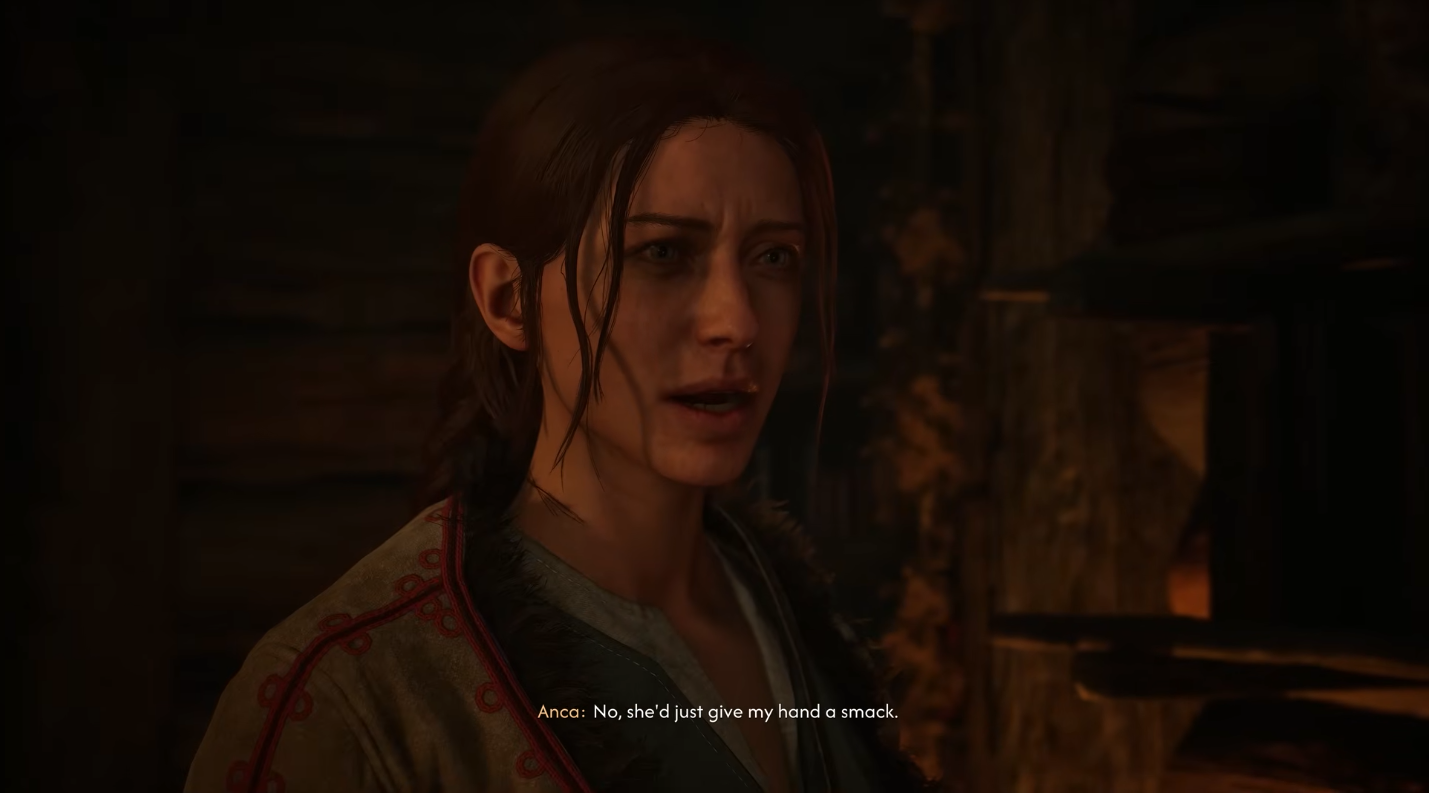
The inclusion of a same-sex romantic option between Henry and Sir Hans Capon in Kingdom Come: Deliverance 2 has become one of the game’s most discussed narrative features, celebrated by players and award bodies alike. Creative director Daniel Vávra, a figure with a long and contentious history of public commentary, has publicly taken credit for championing this storyline, framing its execution as a deliberate rebuke to what he terms “woke” game design. This framing has reignited a complex dialogue about representation, authorial intent, and the persistent culture wars within gaming, all while the feature itself garners nominations for LGBTQ+ awards.
The Awards and Vávra’s Response
Kingdom Come: Deliverance 2’s portrayal of the potential relationship between protagonist Henry and his noble companion, Sir Hans Capon, has been recognized with nominations from Gayming Magazine. These nominations specifically honor the game’s nuanced approach to LGBTQ+ storytelling within a historical setting. In response, Daniel Vávra took to social media to express pride in the achievement, but his statement was layered with political positioning. He stated the romance was done “non-coercively, naturally, and educationally” and contrasted it with titles he believes “shove” representation down players’ throats or aim to “re-educate” them, which he rightfully calls “woke.” His core boast was that the inclusion made the gay community happy through player choice, while those uninterested might not have even noticed it existed.
A Champion’s Claim and a Defensive Posture
Vávra was emphatic in claiming personal ownership of the romantic subplot. He asserted, “It was my idea, my decision and my responsibility and I had to convince others to do it.” This declaration is central to understanding his subsequent defensive stance. Having positioned himself historically as an anti-“woke” voice, often aligning with Gamergator rhetoric under the banner of “historical accuracy,” he now finds himself being lauded by the very communities often targeted by that rhetoric. His lengthy post and subsequent replies to comments appear to be an effort to reconcile this contradiction—to take credit for positive representation while vehemently distancing the execution from the broader movement for inclusivity in media that he has previously criticized.
The Mini-Arguments and Investor Conspiracies
Following his initial statement, Vávra engaged extensively with commenters, revealing the underlying tensions. One notable exchange involved a user pretending to be Tony Soprano, who suggested the gay romance was forced into the game due to pressure from a mysterious Embracer Group investor. Vávra’s rebuttal of this conspiracy theory further underscores the narrative he wishes to control: that this was an organic, author-driven creative decision, not a mandate from a corporate or “woke” agenda. These interactions highlight the fraught environment where any inclusion is subject to intense scrutiny and bad-faith accusations from a subset of the audience.
The “Historical Accuracy” Debate Revisited
The first Kingdom Come: Deliverance was famously enveloped in controversy over its lack of racial diversity, which developers defended using claims of “historical accuracy” for 15th century Bohemia. This argument was frequently co-opted by reactionary elements within gaming to oppose broader inclusion. With the sequel, the inclusion of a gay romance option—arguably a less historically documented possibility for two men of Henry and Hans’s stations—turns that same rhetoric on its head. Vávra now uses a modified version of the argument, stating the game shows “how things really were in the Middle Ages without idealising them,” suggesting the romance is part of a realistic, complex human tapestry rather than an anachronistic imposition.

Choice vs. Coercion in Narrative Design
A central pillar of Vávra’s defense is the concept of player agency. The Henry/Hans relationship is not a mandatory story beat; it is an optional path that unfolds based on specific player choices and accumulated rapport. This, Vávra contends, is the correct way to implement such content: as a natural possibility within a world of many possibilities. He contrasts this with narratives where LGBTQ+ identity is a core, unchangeable characteristic of a protagonist or a central, unavoidable plot point, which he dismissively labels as “forced.” This perspective ignores how the very act of including such an option, especially in a historically-grounded game, is itself a powerful authorial statement, regardless of its optionality.
The Illusion of Invisibility for the Disinterested
Vávra’s claim that disinterested players “probably didn’t even notice” the romance is a telling point in his philosophy. It positions the feature as a hidden treat for a specific audience, without impacting the experience of others. This design aims to avoid alienating players who might be hostile to such content, effectively containing the “political” element to a niche, discoverable side-quest. While this may be a pragmatic approach in a polarized market, it also raises questions about the commitment to normalization versus mere appeasement. It treats the romance as a secret to be found by some, rather than an open facet of the world’s reality.
The “Woke” vs. “Anti-Woke” Labyrinth
Vávra’s statement is a case study in the confusing semantics of the ongoing culture war. He enthusiastically accepts awards from an LGBTQ+ publication for gay representation while in the same breath denouncing “the abundance of forced ‘woke’ nonsense in the entertainment industry.” This requires a precise, self-serving definition of “woke.” In Vávra’s framing, “woke” appears to mean content where inclusion is the primary, didactic purpose, executed without subtlety or choice. His own work, he argues, achieves inclusion without being “woke” because it is optional, naturally integrated, and free of perceived moral lecturing. The contradiction is stark: he wants credit for the positive outcome while rejecting the ideological framework most associated with advocating for such outcomes.
Ego, Credit, and Team Effort
Beneath the political posturing lies a strong undercurrent of ego. The insistence that “I had to convince others to do it” frames Vávra as a visionary battling internal resistance to do the right thing. While he may have been a key advocate, this narrative sidelines the contributions of writers, designers, and actors who brought the romance to life with the sensitivity that earned it award nominations. His need to position himself as the singular champion, while simultaneously defending his anti-“woke” credentials, suggests a motivation driven as much by personal legacy management as by any pure creative conviction. The final line of his statement reinforces this, ensuring his audience knows his broader annoyance with industry trends remains intact.
The Core Achievement: A Well-Executed Romance
Lost somewhat in the director’s framing is the foundational success: by most critical and player accounts, the romantic option between Henry and Hans is well-written, emotionally resonant, and feels organic to their evolving friendship. It emerges from shared experiences, vulnerability, and character growth. This execution is why it resonated with players and impressed awards judges. The political conversation around it is, in many ways, secondary to its quality as a piece of interactive storytelling. It demonstrates that a same-sex romance can be seamlessly woven into a gritty, historical narrative without breaking verisimilitude, serving as a practical example for other developers regardless of their ideological leanings.
What It Means for Player Representation
For LGBTQ+ players, particularly those who enjoy historical or hardcore RPGs, this optional path provides a rare opportunity for representation in a genre that often overlooks them. The value of seeing oneself reflected in a beloved game world cannot be overstated. The fact that it is a choice also holds power; it allows players to explore that aspect of identity within the safety of a virtual space, or to ignore it in favor of other role-playing avenues. This design acknowledges the diversity of both the audience and the ways in which they wish to engage with a character, making Henry a more customizable protagonist in terms of personal, not just professional, identity.
The Practical Takeaway for Game Developers
For developers observing this situation, there are clear lessons. First, integrating diverse relationships as optional, character-driven narratives grounded in existing story mechanics can lead to both critical acclaim and positive player response. Second, the surrounding discourse is inevitable and will be shaped by the creators’ own public history. A developer’s past statements will become part of the story. Third, the team’s work in sensitively crafting the content is paramount; the political stance of a figurehead can overshadow, but not negate, the quality of the execution. The success of the Henry/Hans story proves that player-centric, organic inclusion works, irrespective of the developer’s stated reasons for implementing it.
Beyond the Binary: Nuance in a Polarized Discussion
The Kingdom Come: Deliverance 2 situation defies simple “for or against” categorization. It is possible, and perhaps necessary, to hold multiple truths at once: to applaud the inclusion of a thoughtfully executed gay romance option that expands player choice and representation; to critique the director’s framing of that inclusion as a weapon in a culture war; and to recognize that the very existence of this debate often overshadows the hard work of the narrative team. It exposes the difficulty of navigating representation in a landscape where every creative decision is politicized, and where creators may seek credit for outcomes while rejecting the movements that created the demand for them.
Ultimately, the legacy of Kingdom Come: Deliverance 2’s gay romance will likely be defined more by the players who experienced it than by the director’s tweets. Its award nominations are a testament to its effective implementation, proving that stories of same-sex love can belong in even the most rugged historical settings. While Daniel Vávra’s defensive justification reveals the exhausting tensions within modern game development discourse, the subplot itself stands as a quiet, impactful example of how choice-driven role-playing can foster meaningful representation—a success that belongs to every developer who worked to make it feel real for the player.