Developers behind the upcoming nostalgic adventure title Mixtape have moved swiftly to address growing community concerns, offering a firm assurance that the game will not be removed from digital storefronts due to music licensing complications related to music licensing and copyright claims. The statement arrives as a direct response to speculation that had been circulating among fans, many of whom had drawn parallels to other high-profile titles that were delisted or had content stripped following music rights disputes. In an era where digital preservation remains a pressing issue, and where licensed soundtracks have frequently become a liability for publishers, the team at the helm of Mixtape is making an early and unequivocal commitment to the game’s long-term availability represents a significant signal of confidence and planning.
The Core Concern: Why Players Were Worried About Mixtape
The apprehension surrounding Mixtape is not without precedent. The video game industry has witnessed numerous instances where beloved titles were pulled from sale or forced into updates that removed iconic tracks after licensing agreements expired or were challenged. From the Grand Theft Auto series periodically losing radio station songs to remasters like GTA: The Trilogy launching without several licensed tracks, to entire games like Alan Wake temporarily disappearing from digital shelves over music rights, the pattern is well documented. For a game that is explicitly built around a soundtrack and whose very name evokes the concept of a curated musical collection, the fear that Mixtape could suffer a similar fate was understandable. Players who have invested emotionally and financially into games that later became unlistenable or unplayable in their original form have grown wary. The rumor mill, fueled by the lack of immediate clarification from the studio, began to suggest that the game’s heavy reliance on licensed music might make it a ticking clock for removal once agreements ran their course.
Official Clarification: An Unequivocal Commitment to Longevity
The studio behind Mixtape has now put those rumors to rest with a clear and direct message. In their statement, the developers confirmed that they have structured their licensing structure in order and that players should have no fear of the game being delisted or having its audio compromised after launch. The phrasing of the assurance suggests that the team has not only secured the necessary permissions for the tracks featured in the game but has done so with terms that account for ongoing sales and distribution. This is a marked departure from practices where licenses were negotiated on shorter timelines or with limitations that restricted the game’s lifespan. The commitment extends beyond mere lip service; it implies a contractual framework designed to protect both the creative vision of the title and the consumer’s right to continued access. For a studio working on a project that is as intimately tied to its musical identity as Mixtape is, failing to secure such terms would have been a critical oversight. The developers are effectively stating that the music is not a temporary feature but a permanent pillar of the game.
Understanding the Complex Landscape of Music Licensing in Games
The music licensing environment for video games is notoriously complex and often fraught with landmines for developers, particularly independent studios operating with limited legal and financial resources. Securing a license for a song involves multiple rights holders. Typically, there is the composition itself, which is owned by the songwriter or a publishing company, and the master recording, which is owned by the label or the artist. Both elements require separate clearance. Negotiations can fall apart over territory restrictions, duration of use, platform limitations, or cost, and whether the license covers physical sales, digital distribution, streaming service inclusion, and future re-releases or remasters. Many older games that relied on licensed music simply did not account for the digital marketplace that would dominate decades later. Contracts written in the 1990s or early 2000s often did not include provisions for digital downloads, leading to disputes when publishers attempted to re-release classic titles on modern platforms. What makes the Mixtape case distinct is that the developers appear to have proactively addressed these very pitfalls before the game has even launched. By publicly assuring players that the game will not be removed, they are signaling that their licensing strategy was built with the long term in mind.
How Mixtape Differs from Problematic Cases
Comparing Mixtape to titles that suffered removal or content loss highlights several key differences. Many problematic cases involve games that are years or decades old, where original contracts were vague or have since lapsed, and where the revenue from continued sales no longer justifies the cost of renegotiating licenses. Mixtape, being a new release, has the advantage of operating within the current legal and commercial framework. The developers can draft agreements from scratch that explicitly cover present and foreseeable distribution models. Additionally, the game’s identity is so interwoven with its music that the developers would have likely made the soundtrack a priority from the earliest stages of production. This stands in contrast to titles where music was licensed somewhat incidentally to flesh out a radio station or a background playlist, making it easier for publishers to simply cut those tracks in a re-release rather than pay to keep them. For Mixtape, the music is not decorative; it is narrative and atmospheric. Removing it would compromise the fundamental experience, creating a strong incentive for the studio to ensure that such a scenario never occurs.
What This Assurance Means for the Player Community
For the Mixtape player community, this assurance carries tangible weight. It removes a significant barrier to purchase for consumers who have been burned before by delistings or soundtrack replacements. In the digital age, where ownership is often illusory and access can be revoked at any time, knowing that a developer has publicly staked a claim on the game’s permanence provides a rare degree of confidence. The statement also signals that the studio respects the player’s investment. Games that are removed from storefronts not only prevent new players from buying them but can also impact those who already own them, particularly if patches, updates, or re-downloads are affected. By addressing this proactively, the Mixtape team is fostering a sense of trust that is increasingly valuable in an industry where consumer skepticism toward digital rights management and content rotation is high. For collectors, preservationists, and anyone who values the ability to revisit a game years down the line, this kind of commitment is a strong positive indicator.
Preserving a Nostalgic Experience for the Long Haul
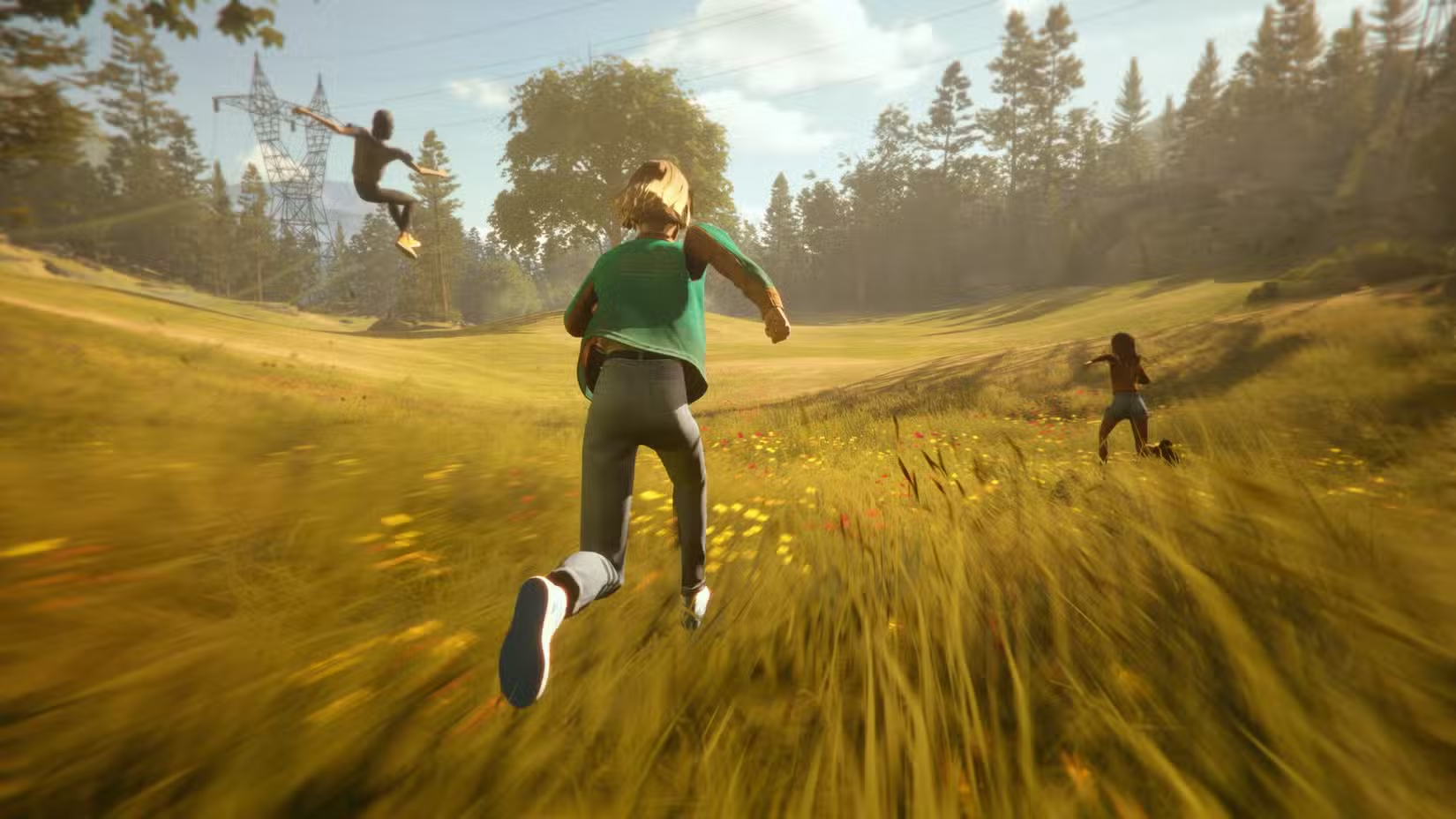
Mixtape is being marketed heavily on its nostalgic appeal, evoking a specific era of music, culture, and personal memory. The entire premise of the game revolves around the emotional resonance of a curated collection of songs. If the soundtrack were to be compromised or the game were to disappear, that nostalgic value would be irrevocably damaged. The developers are clearly aware that the authenticity of the experience depends on the permanence of its audio component. A game about a mixtape that has to replace its tracks a few years after release would lose the very essence it seeks to capture. By ensuring the music stays, the studio is preserving the integrity of the work as a time capsule. This attention to detail suggests a team that understands the emotional contract they are entering into with the player. They are not just selling a game with a soundtrack; they are selling a curated moment in time, and that moment must remain unchanged to retain its meaning.
Industry Context: A Growing Trend Toward Licensing Transparency
The Mixtape team’s decision to address licensing concerns so directly may also reflect a broader industry trend toward greater transparency and consumer protection regarding licensed content. Several publishers have begun to adopt policies that acknowledge the temporary nature of some licenses, and a few have started to include disclaimers about potential future removals. In some cases, developers have opted to compose original scores rather than navigate the complexities of licensing, trading cultural authenticity for total creative and commercial control. Mixtape’s approach suggests a third path: securing proper, permanent licenses and then communicating that security clearly to the audience. This could set a positive example for other developers, particularly those working on music-centric projects. If the game proves successful, it may encourage other studios to invest in more robust licensing agreements from the outset, knowing that it can serve as both a creative asset and a selling point. The statement from the developers is not just a reassurance; it is a declaration of their own operational competence and a challenge to the notion that licensed music must always be a temporary feature in video games.
Technical and Legal Implications of Permanent Music Licensing
Securing permanent or long-term licenses for music in a video game is no small feat. The costs can be prohibitive, especially for an independent team or a smaller studio. Major label songs often command significant upfront fees and ongoing royalties. To offer the kind of guarantee that Mixtape’s developers are making, the team likely had to negotiate terms that included advance payments for extended windows, possibly in perpetuity, or agree to revenue sharing models that ensure rights holders continue to profit from the game’s sales. There may also be territorial considerations, though digital distribution tends to favor global licensing. The legal language in such contracts must be precise. A clause that allows a licensor to revoke rights for any reason would undermine the guarantee the developers have made. Therefore, the statement from the studio implies that they have secured either a perpetual license or one with a duration that is effectively indefinite for a game of this type. It also suggests that they have planned for contingencies such as company acquisitions, platform changes, or future remasters. This level of legal preparation is demanding and expensive, but for a game that lives and dies by its soundtrack, it is arguably the most critical investment the team could make.
How the Development Team Built the Game Around Its Soundtrack
Details about the specific tracks featured in Mixtape remain under wraps, but the game’s concept provides clues about the selection process. A mixtape, by definition, is a personal and intentional compilation. Every song choice reflects a mood, a memory, or a message. The developers have spoken in previous interviews about treating the soundtrack not as a backdrop but as a character in the story. This philosophy likely guided their outreach to artists and labels. Rather than seeking a generic list of popular songs that happen to be available for licensing, the team probably pursued tracks that carry specific cultural and emotional weight, songs that align thematically with the game’s narrative beats. This targeted approach may have also helped in negotiations, as rights holders are sometimes more amenable to reasonable terms when they understand how the music will be used in a respectful and artistically meaningful context. The developers’ assurance that the game will remain intact suggests that these negotiations were conducted with the full cooperation of the artists or their representatives, who share an interest in the music being heard for years to come.
What Happens If a License Eventually Expires Despite Assumptions Versus Reality
Even with the best intentions, some players may still wonder about hypothetical scenarios. What if a record label is acquired, or a rights holder changes their stance, or a legal dispute arises that is beyond the developer’s control? These are valid questions, and the gaming industry has seen cases where even well-structured agreements have unraveled due to circumstances no one anticipated. However, the language used in the developers’ statement indicates a level of confidence that goes beyond hopeful thinking. Typically, when a studio cannot guarantee permanence, they use hedging language. They might say they are doing their best, or that they have secured licenses for a certain period. Mixtape’s developers did not hedge. They explicitly assured that the game won’t be removed. That kind of statement is unlikely to be made without robust legal backing. It is possible that the team secured what is known as a synchronization license in perpetuity, or that the music rights are owned by an entity with whom they have an ongoing and stable relationship. In any case, the public nature of the assurance creates a form of accountability. Should anything change, the studio would face not only contractual issues but also a significant reputational backlash, which serves as an additional incentive to maintain the status quo.
Comparisons to Other Nostalgic Games with Licensed Music
To fully appreciate what Mixtape is doing, it is useful to look at how other nostalgic games have handled or mishandled their soundtracks. Games like Tony Hawks Pro Skater revitalized interest in punk and skate culture through carefully curated soundtracks, but later re-releases of those games suffered from missing tracks due to licensing issues. The same is true for the Grand Theft Auto series, where radio stations in the original PS2 era games had to be modified for the mobile ports and remasters. Even music-focused titles like Guitar Hero and Rock Band, which were built entirely around licensed recordings, have seen massive portions of their catalogs become unavailable as licenses expired and were not renewed. These examples illustrate that having licensed music is often a double-edged sword. It enhances the immediate experience but creates a fragile dependency. Mixtape’s developers are claiming that they have found a way to enjoy the benefits without inheriting the fragility. Whether they have achieved this through contractual innovation, financial commitment, or a combination of both, the result is a promise that differentiates the game from many of its predecessors. If they succeed, Mixtape could become a case study for how to do licensed soundtracks right in the modern era.
The Broader Implications for Game Preservation and Digital Ownership
The conversation around Mixtape and its music rights inevitably ties into larger discussions about game preservation and digital ownership. As more games are distributed digitally and as physical media declines, the question of who controls access to a game after purchase has become increasingly fraught. When a game is delisted due to music rights, it is not just a commercial casualty; it is a cultural one. A piece of interactive art becomes inaccessible, often forever. Developers who take active steps to prevent that outcome are contributing to a healthier ecosystem for digital media. Mixtape’s commitment to its soundtrack is a preservationist act. It acknowledges that games are cultural artifacts and that their value over time depends on their continued availability in an unaltered form. While the developers have not framed their announcement in these grand terms, the implication is clear: they are building something that is intended to last. For gamers who have grown accustomed to the impermanence of digital storefronts, this is a refreshing and welcome approach. It suggests that some developers are thinking not just about launch day sales but about the legacy of their work.
What the Future Holds for Mixtape and Its Soundtrack
With the licensing concerns put to rest, attention can now return to what makes Mixtape an intriguing proposition in the first place. The game promises to blend interactive storytelling with a deeply personal musical journey, inviting players to explore memories, relationships, and moments that are defined by the songs that accompany them. The developers have successfully removed a major distraction from the conversation around the game. Potential buyers no longer need to ask whether the game will still be playable in five or ten years. They can focus on whether the story resonates, whether the gameplay engages, and whether the soundtrack moves them. For the studio, this is a significant victory. They have neutralized a criticism that could have lingered over the project and turned it into a point of differentiation. By staking a claim on permanence, they have elevated their own standards and set an expectation that other developers may now be measured against. The game’s release will ultimately determine how well the creative vision is executed, but from a business and communication standpoint, the handling of the music licensing issue has been exemplary.
Practical Advice for Players Evaluating Music-Centric Games
For players who are evaluating whether to invest in Mixtape or any other music-focused game, the developers’ assurance provides a useful checklist for what to look for in similar titles. First, check whether the developers have publicly addressed licensing terms. Vague statements about licenses being secured for launch may not be sufficient if there is no mention of long-term availability. Second, look at the track record of the publisher or studio. Have previous games from the same team been delisted or altered due to music issues? Third, consider the nature of the soundtrack. Original scores are generally safer than licensed tracks, but even licensed tracks can be secured properly if the developer has prioritized longevity. Fourth, pay attention to the language used in official communications. Specific guarantees carry more weight than aspirational language. Mixtape passes all these checks, making it a relatively low-risk investment for those who care about having lasting access to the games they purchase. The transparency of the developers is commendable and sets a benchmark for the industry.

Final Assessment of the Developers Announcement
The decision by Mixtape’s development team to proactively address and put to rest concerns about music-related removal is a masterclass in community management and risk mitigation. They identified a potential point of anxiety among their audience, addressed it directly with factual assurance, and did so in a way that reinforces the creative and commercial integrity of the project. The announcement does not feel defensive or reactive; it feels confident and deliberate. It signals that the team understands both the legal landscape they are operating in and the emotional expectations of their players. In an industry where silence on such matters often leads to speculation and distrust, Mixtape’s developers have chosen transparency as a strategy. The result is that the conversation around the game can now move forward without the shadow of impermanence hanging over it. Whether Mixtape goes on to become a classic remains to be seen, but it has already achieved something noteworthy: it has earned the trust of its audience before the game has even shipped. That is no small feat, and it speaks to the seriousness with which the team approaches their craft and their relationship with the people who will ultimately play their game.