{
“aigenerated_title”: “Sony Plummets in Metacritic’s 2025 Publisher Rankings Amid Studio Turmoil”,
“aigenerated_content”: “
In a dramatic shift for one of gaming’s perennial leaders, Sony Interactive Entertainment has experienced a precipitous fall in Metacritic’s annual publisher rankings. For 2025, the PlayStation maker landed at No. 21, a staggering drop of 17 places from its No. 4 position the previous year. This decline, outlined in the review aggregator’s year-end report, signals a potential recalibration of industry power, fueled by Sony’s internal challenges and a relatively thin slate of critical darlings.
nnn
Metacritic’s ranking is a data-driven analysis of a publisher’s annual performance, calculated by averaging the Metascores of all its released titles, with extra weighting given to games scoring 90 or above (“Great”) and penalties for those scoring 49 or below (“Very Poor”). Sony’s average Metascore for 2025 settled at 74. Out of 17 products released, only 53% achieved “good” scores (75 or higher), while a single title—the PC port of The Last of Us Part II Remastered—crossed the “Great” threshold. This ratio proved insufficient to compete with publishers who delivered more consistent quality across a broader range of releases.
nn
High-Profile Hits and Costly Misses
n
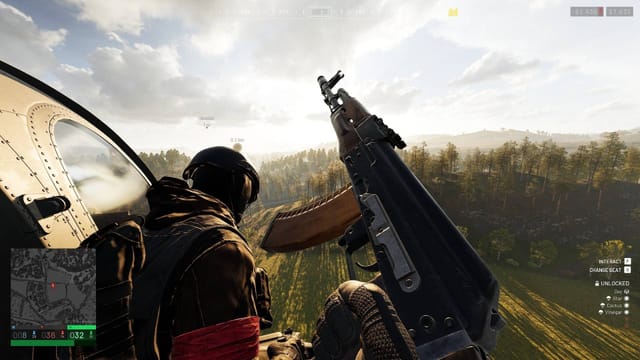
The year was not devoid of success for Sony. Two major exclusives, Ghost of Yotei and Hideo Kojima’s Death Stranding 2, were critical and commercial successes, garnering numerous Game of the Year nominations and awards. However, these triumphs were undermined by several high-profile underperformers. The long-awaited action title Lost Souls Aside failed to meet elevated expectations, while multiple expansions for the live-service juggernaut Destiny 2 received lukewarm receptions. Smaller-scale releases like Midnight Murder Club were outright critical failures, collectively dragging down the publisher’s average.
nn
This pattern highlights a core issue reflected in the rankings: a lack of volume in top-tier releases. While Sony’s tentpole games can compete with the best, the supporting lineup in 2025 lacked the depth and consistent quality seen from its highest-ranked competitors. The reliance on PC ports of existing PlayStation hits, such as the top-performing The Last of Us Part II Remastered, while successful, also underscores a year where new, original AAA experiences were in shorter supply.
nn
The Rivals Rise: Microsoft and Square Enix Claim the Spotlight
n
Sony’s stumble coincided with notable gains for its direct competitors. Most strikingly, Microsoft ascended into the top 5 publishers for 2025, boasting an average Metascore of 80. The irony was palpable, as Microsoft’s highest-rated title was the PlayStation 5 port of Forza Horizon 5, a masterpiece from its acquired Xbox Game Studios. This performance demonstrates the impact of Microsoft’s multi-year studio acquisition strategy, which has begun yielding a more diverse and critically acclaimed portfolio across platforms.
nn
Square Enix Tops the Chart
n
Claiming the No. 1 spot was Japanese rival Square Enix. Its victory was propelled by the universally acclaimed PC release of Final Fantasy VII Rebirth, a title that initially launched as a PlayStation 5 exclusive. Square Enix’s year was characterized by strong performances across both major franchises and mid-tier releases, showcasing an output that balanced blockbuster quality with reliable breadth. Their top position, directly contrasted with Sony’s No. 21, paints a clear picture of the competitive landscape where consistent execution across multiple projects is paramount.
nn
Further emphasizing Sony’s relative decline, publishers including Ubisoft, Koei Tecmo, Electronic Arts, and even a resurgent Atari all placed ahead in the rankings. This suggests a broader industry trend where traditional hierarchies are being challenged by publishers who have refined their development cycles and portfolio management.
nn
Internal Strategy and Studio Relations Under Scrutiny
n
Beyond the raw review scores, industry analysts point to Sony’s internal management as a significant factor in its ranking decline. Reports of project cancellations, shifting strategic priorities, and strained relations with first-party studios have circulated for months. The closure of studios like Dark Outlaw Games, attributed by its lead to a “shift in Sony strategy,” and the rejection of pitches for beloved franchise revivals like Jak & Daxter, suggest a period of internal uncertainty.
nn
The Cost of Cancellation and Pivot
n
This apparent volatility has a tangible cost. When multi-year projects are canceled, not only is the investment lost, but the studio’s momentum and morale can be severely impacted, potentially delaying or derailing future quality output. The Metacritic ranking, which reflects a single year’s output, can be seen as a lagging indicator of these internal decisions made years prior. The “horrible treatment of its first-party studios,” as cited in the original report, may now be manifesting in a pipeline that appears less robust than in previous generations.
nn
Sony’s strategic pivot toward live-service games and multiplatform releases, while financially sound in theory, has seemingly created a transitional gap in its exclusive, narrative-driven AAA lineup—the very category that historically defined the PlayStation brand’s critical prestige. The 2025 ranking indicates that this gap was not sufficiently filled.

nn
Interpreting the Data and Looking Ahead
n
It is crucial to contextualize Metacritic’s ranking. It is a snapshot of one year’s critical reception, not a definitive verdict on a company’s overall health. Sony remains a financial powerhouse with a massive installed base and a deep catalog of iconic franchises. The strong sales and cultural impact of Ghost of Yotei and Death Stranding 2 are undeniable successes that the aggregated score alone does not capture.
nn
A Wake-Up Call or a Statistical Anomaly?
n
However, for a company that has long marketed itself on quality and prestige, falling out of the top 20 is a symbolic blow. It serves as a potent data point for critics and a potential wake-up call for management. The ranking amplifies concerns that Sony’s content cadence has slowed and that its studio ecosystem is under strain. Whether 2025 proves to be an anomaly or the start of a new trend will depend on Sony’s ability to stabilize its development pipeline, rebuild studio confidence, and deliver the consistent stream of high-quality exclusives that players and critics have come to expect.
nn
The dramatic shift in Metacritic’s 2025 publisher rankings underscores a volatile moment in the gaming industry. As Microsoft leverages its expanded studio network and Square Enix capitalizes on franchise strength, Sony’s stumble highlights the relentless pressure of content creation in the modern era. The coming years will reveal if this was a temporary misstep corrected by a formidable slate of announced titles, or evidence of a more fundamental challenge in balancing blockbuster ambition with sustainable, respectful studio management. For now, the data tells a clear story: past success is no guarantee of future acclaim, and the competition has never been fiercer.
“,
“aigenerated_tags”: “Sony, Metacritic, Publisher Rankings, PlayStation, Microsoft, Square Enix, Video Game Industry, Game Development, Studio Management, 2025”,
“image_prompt”: “Photorealistic digital illustration of a dramatic, symbolic scene. In the foreground, a sleek, modern silver trophy labeled “No. 4” lies toppled on its side on a dark marble surface, slightly cracked. Just behind it, a ranking podium is visible. On the first-place spot stands a glowing, pristine gold trophy engraved with “Square Enix.” On the third-place spot, a polished trophy labeled “Microsoft” shines. The spot for 21st place, far in the background and slightly out of focus, is marked by a simple, tarnished bronze plaque with the PlayStation logo. The lighting is dramatic, with a sharp spotlight on the fallen Sony trophy, casting long shadows. The atmosphere is tense and cinematic, emphasizing loss and competitive pressure. Style: hyper-realistic, detailed textures on marble and metal, studio lighting, depth of field.”
}