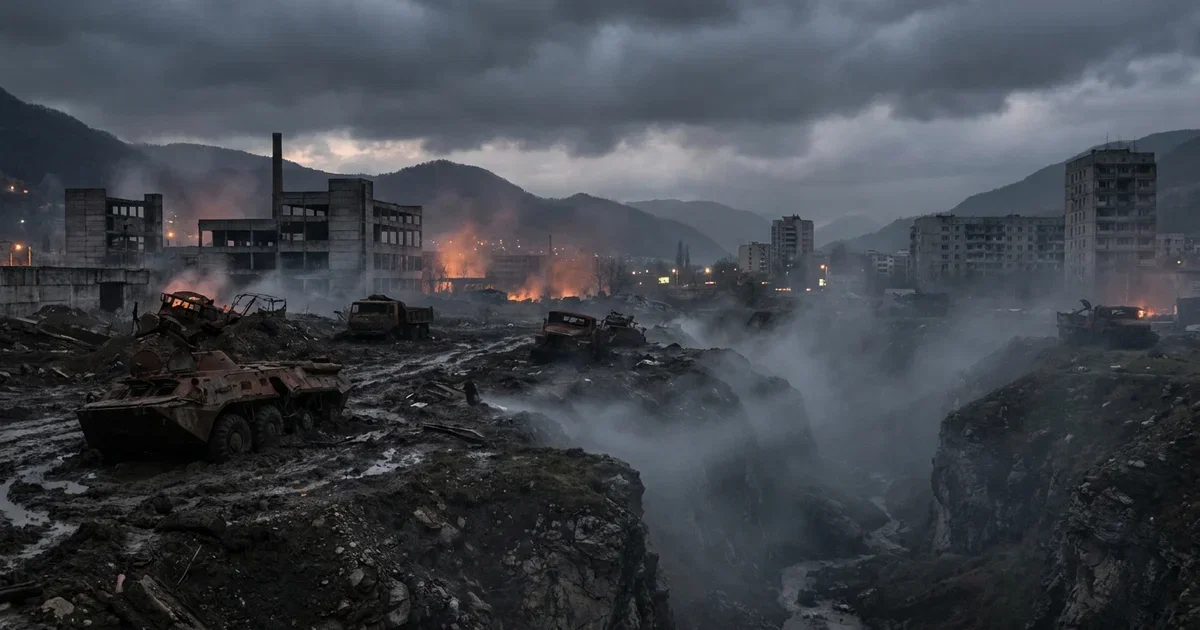
Psychic Software has officially unveiled War on Wheels, a major new project that promises to deliver deep tactical vehicle combat within a harsh post-apocalyptic setting. The studio, drawing from its extensive twenty-year experience supporting the popular MMO Darkwind, is translating the best mechanics from that title into a modern format. Set in the year 2100 following a devastating global solar catastrophe, the game aims to blend strategic planning with brutal automotive warfare.
From Darkwind Legacy to Modern Apocalypse
The announcement positions War on Wheels as a spiritual successor to Darkwind: War on Wheels, the studio’s long-running browser-based MMO. Psychic Software’s two decades of development and community management for Darkwind have provided a unique foundation. This isn’t merely a graphical update; the team is leveraging hard-won knowledge about vehicle mechanics, faction dynamics, and persistent world design. The core philosophy revolves around meaningful choice and consequence, where every skirmish impacts a larger, struggling world.
Core Gameplay and Tactical Systems
War on Wheels is described as a tactical combat game first and foremost. Players will command crews and customized vehicles in turn-based or real-time-with-pause engagements. Initial details suggest a focus on positioning, weapon systems management, and environmental exploitation. Terrain will play a critical role, with wreckage, crumbling buildings, and hazardous zones offering both cover and deadly traps. Vehicle customization is expected to be extensive, allowing players to scavenge parts, mount various weapons from machine guns to energy-based salvage, and reinforce armor in a desperate bid for survival.
The World of 2100: A Solar-Blasted Wasteland
The game’s setting is a direct result of a solar event that crippled global technology and infrastructure. Society has fractured into isolated enclaves and nomadic caravans, all vying for the dwindling resources of fuel, ammunition, and pre-collapse technology. The year 2100 represents a world still reeling, where knowledge of the old world is myth and survival is a daily calculation of risk versus reward. This backdrop informs every aspect of gameplay, from the scarcity of high-end components to the motivations of various in-game factions.
Faction Warfare and Persistent Elements
While not explicitly confirmed as an MMO like its predecessor, Psychic Software hints at persistent world elements. Factions will control territory, and player actions may influence the balance of power in the wasteland. The dynamics between these groups—whether they are militarized remnants, religious cults, or pure scavenger gangs—will drive both narrative and emergent gameplay. Alliances will be as fragile as the rusted hulls of the vehicles used to enforce them.

Technical Vision and Development Philosophy
Psychic Software emphasizes a move to a modern, dedicated game client, leaving behind the browser-based limitations of Darkwind. This shift allows for more detailed visuals, complex physics simulations, and deeper systemic gameplay. The studio’s approach remains community-focused, suggesting plans for ongoing support and development based on player feedback, a hallmark of their previous project. The goal appears to be creating a living, breathing, and unforgiving post-apocalyptic sandbox where vehicle combat is the primary language of conflict.
Challenges and Opportunities in the Genre
The announcement enters a niche but dedicated segment of the gaming market. Titles emphasizing realistic vehicle combat and deep tactical management are rare, giving War on Wheels a potential advantage with its proven developers. The key challenge will be modernizing the often complex and unforgiving mechanics of its predecessor without alienating the core audience that cherishes that depth. Balancing accessibility with strategic richness will be crucial for its success.
Anticipated Features from the Darkwind Legacy
Fans of Darkwind can reasonably expect certain features to carry over. These include detailed damage models affecting individual vehicle components (tires, engines, weapons), morale systems for crew members, and an economy driven by scavenging and crafting. The new setting provides a fresh narrative canvas while maintaining the mechanical heart that made the original a cult classic for over twenty years.
The Road Ahead for War on Wheels
With the project now officially announced, the focus shifts to development milestones and further reveals. The community built around Darkwind represents a ready-made audience, but Psychic Software’s ambitions seem aimed at a broader reach. The fusion of tactical depth, vehicle customization, and a persistent post-apocalyptic setting offers a compelling proposition for players weary of more arcade-style automotive combat. The studio’s long-term commitment to its previous title suggests a similar vision for War on Wheels, aiming to build a world that evolves and endures.
The unveiling of War on Wheels signals a bold commitment to a specialized genre. By harnessing two decades of experience, Psychic Software is not just creating a game but attempting to define a standard for thoughtful, strategic vehicle combat. In a landscape often dominated by speed and spectacle, this project bets on a slower, more calculated form of chaos, where survival depends not on horsepower alone, but on cunning, preparation, and the strategic application of automotive violence in a world that has already ended once.