Digital Extremes has once again demonstrated why Warframe remains one of the most creatively restless live-service games in the industry, unveiling a fresh update that weaves together music, narrative, and tabletop-inspired gameplay under the banner of Nightwave Mix: Amir’s Shockwave. This latest seasonal offering expands the highly anticipated 1999 setting with a brand new track from the fictional synthwave band On-lyne, introduces a text adventure mode directly inspired by classic tabletop RPGs, and delivers a suite of rewards that deepen the retro-futuristic aesthetic. For a game that launched over a decade ago, the willingness to experiment with genre and form is not merely impressive—it is a strategic statement about how long-running franchises can evolve without losing their core identity.
Nightwave Mix: Amir’s Shockwave and the 1999 Expansion
Nightwave has long served as Warframe’s seasonal battle pass system, offering players themed challenges and exclusive cosmetic rewards. With Amir’s Shockwave, Digital Extremes leans heavily into the 1999 alternate-history setting first teased during TennoCon 2023. This isn’t just a palette swap or a superficial nostalgia trip; the developers are committing to a full aesthetic and tonal shift that reimagines Warframe’s sci-fi universe through the lens of late-20th-century pop culture, complete with CRT monitors, cassette tapes, and a darker, more grounded visual language.
The choice to name this chapter after Amir—one of the proto-Warframe characters introduced in the 1999 narrative—signals that Digital Extremes is moving beyond mere world-building into character-driven storytelling. Amir, a character defined by his rebellious energy and cybernetic enhancements, provides a natural focal point for a season that blends high-tech powers with a punkish, handheld-camera immediacy. The “Shockwave” in the title likely refers both to an electrical ability theme and to the cultural impact this era has within the game’s fiction.
Behind the Music: A New On-lyne Track for a Fictional Band
One of the most distinctive elements of the 1999 expansion has been the creation of On-lyne, an in-universe synthwave band whose music permeates the setting. With Amir’s Shockwave, Digital Extremes has released a brand new song from On-lyne, further fleshing out the fictional band’s discography and reinforcing the immersive audio landscape of Warframe’s alternate 1999. This is not merely a background track; it is part of a deliberate strategy to treat the game’s world as a living, breathing environment with its own cultural artifacts.
For players, the inclusion of a new On-lyne song serves multiple purposes. It deepens the lore by suggesting that the 1999 timeline has its own music scene, complete with bands that reflect the era’s synth-heavy, dystopian optimism. It also provides an emotional anchor—music can evoke a time and place more immediately than environmental storytelling alone. The track can be heard during specific missions or within the new text adventure segments, creating a cohesive sensory experience that blurs the line between gameplay and narrative.
Digital Extremes has previously collaborated with real-world musicians to create On-lyne’s sound, and the quality of the production has been praised for its authenticity. By continuing to expand this fictional band’s catalogue, the studio invites players to engage with Warframe not just as a shooter, but as a multimedia universe where music, art, and story converge.
Tabletop RPG Inspired Text Adventure: The Hex
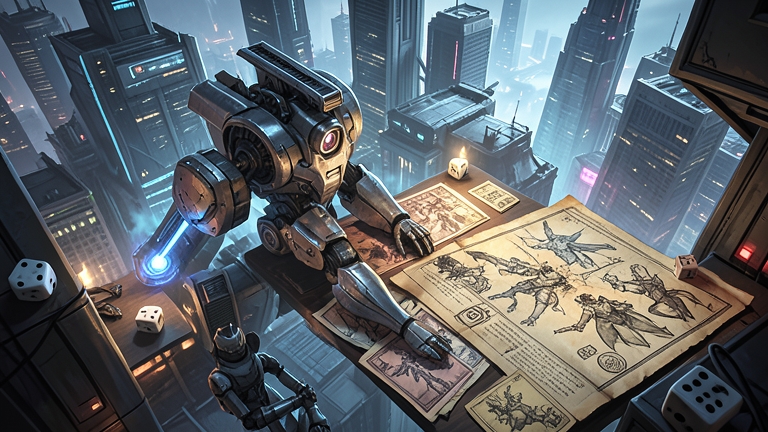
Perhaps the most surprising addition in Amir’s Shockwave is the introduction of a text adventure mode—a format that stands in stark contrast to Warframe’s traditionally fast-paced third-person combat. Drawing direct inspiration from tabletop role-playing games, this new feature tasks players with navigating a branching narrative using text-based choices, skill checks, and dice rolls. The Hex, the central faction of the 1999 setting, serves as the focus of this interactive story.
Unlike typical Warframe missions that prioritize movement and gunplay, the text adventure slows the pace dramatically, asking players to read carefully, weigh options, and accept the consequences of their decisions. This is a bold design choice for a game whose audience has been conditioned for rapid action, but it also reflects a broader industry trend toward genre-blending within established live-service titles. Digital Extremes is betting that a segment of its player base craves deeper narrative engagement, and that the tabletop RPG framework—with its emphasis on character building and chance—can deliver that without alienating core players.
How the Text Adventure Works in Practice
Full details on the mechanics remain under wraps until the update goes live, but early previews suggest a system modeled on classic RPG text adventures like Zork or more recent digital tabletop experiences such as Disco Elysium and 80 Days. Players take on the role of a character within The Hex, exploring locations, interacting with other faction members, and making decisions that affect the story’s outcome. Dice rolls, governed by the player’s equipped Warframe or chosen skills, introduce an element of uncertainty that mirrors the randomness inherent in tabletop gaming.
The text adventure is not a separate game mode but is woven into the Nightwave progression, meaning players will unlock story beats as they complete challenges and earn reputation. This integration ensures that the feature feels like a natural part of the seasonal loop rather than a tacked-on minigame. It also rewards players who invest time in understanding the 1999 lore, as knowledge of character relationships and historical events may unlock hidden outcomes or bonus rewards.
Nightwave Rewards: What Amir’s Shockwave Offers
Beyond the narrative and musical content, Amir’s Shockwave packs a full suite of seasonal rewards designed to appeal to collectors and fashion-forward players. The reward track includes exclusive armor sets, syandanas, weapon skins, and decorative items that channel the 1999 aesthetic—think chunky cybernetic armor, retro-futuristic weapon finishes, and ephemera that mimic static interference or glitch effects. A new ephemera called “Crackling Static” has been teased, visually wrapping the Warframe in a cascade of digital noise reminiscent of a broken CRT screen.
Players can also earn the “Shockwave Emote” and a unique landing craft skin that transforms the Orbiter’s exterior into a weathered, modular vehicle straight out of a 1999 action film. For those who complete the entire Nightwave track, there is a significant prestige reward: an alternate helmet for Proto-Excalibur that combines the original design with newer 1999 influences, effectively bridging the old and new aesthetics.
The battle pass format remains free for all players, with an optional premium tier that offers accelerated progression and additional cosmetic items. Digital Extremes has been careful to ensure that the text adventure and music are accessible to free-to-play users, with no paywalled narrative content. This approach reinforces the developer’s longstanding philosophy that monetization should not gate story or core gameplay experiences.
What This Means for Warframe’s Narrative and Future
Amir’s Shockwave represents more than a seasonal content drop; it is a testbed for ideas that could reshape Warframe’s long-term direction. The tabletop RPG text adventure, in particular, signals that Digital Extremes is willing to experiment with non-combat gameplay loops that emphasize player agency and storytelling. If successful, this could lead to more elaborate narrative systems in future updates, potentially including full branching questlines with persistent consequences or even cooperative text-based adventures where friends vote on decisions.
The 1999 setting itself is also being positioned as a major narrative pillar. While Warframe has always had a deep lore, much of it was conveyed through codex entries and dialogue during missions. The creation of a distinct time period with its own music, fashion, and social dynamics gives the narrative a tangible texture that was previously missing. By anchoring these elements to a recurring seasonal structure, Digital Extremes can sustain interest in the 1999 universe without committing to a single massive expansion.
Critically, the update demonstrates that the studio is listening to its community. Warframe players have long requested more narrative depth and alternative gameplay styles. The text adventure directly addresses those desires, while the new On-lyne track caters to the subset of fans who have embraced the game’s music as part of its identity. Nightwave Mix: Amir’s Shockwave is, at its core, an acknowledgment that a live-service game must evolve not just through new weapons and Warframes, but through the kinds of stories it tells and the way it tells them.
For players who have been with Warframe since its early days, this update offers a chance to see the game in a new light—slower, more introspective, and unafraid to borrow from genres outside the action-RPG space. For newcomers, it provides an easy entry point into one of the most distinctive settings in modern gaming, complete with a soundtrack that already feels timeless. Whether the text adventure becomes a mainstay or a seasonal novelty, its inclusion marks a moment of creative courage that few other live-service developers would risk. Digital Extremes is doubling down on the idea that a game can be many things at once, and that the only real limitation is the willingness to try something new.