The race is on. Blizzard Entertainment has officially opened the gates to the Venomous Abyss, a new level 90 raid in World of Warcraft, and with it, the highly anticipated Race to World First (RWF) has commenced. This moment marks a significant inflection point for the current expansion, offering a fresh pinnacle of PvE content that will test the mettle of the world’s most dedicated guilds. The Venomous Abyss is not merely another dungeon; it is a curated crucible designed to challenge years of accumulated knowledge, mechanical precision, and strategic innovation.
What Is the Venomous Abyss Raid? A New Pinnacle of Endgame Content
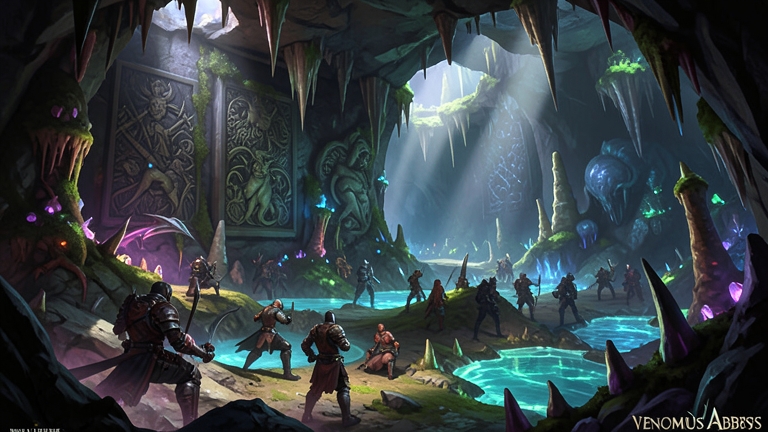
The Venomous Abyss is a level 90 raid that serves as the latest major endgame PvE challenge in World of Warcraft. It represents a focused, high-difficulty encounter suite designed to push players beyond the gear and skill thresholds established earlier in the expansion. Unlike previous raids that often span multiple tiers of difficulty across a wider level range, the Venomous Abyss is laser-focused on the maximum level cap, demanding that players have fully optimized their characters through Mythic+ dungeons, previous raid tiers, and the Great Vault. The raid introduces a new environmental theme—a sprawling, toxic underworld filled with corrosive elements and ancient, venomous entities. The visual and mechanical design of the Venomous Abyss signals a deliberate shift toward tighter, more punishing encounter designs that reward perfect execution over raw gear checks.
Thematic and Environmental Design of the Venomous Abyss
The Venomous Abyss draws heavily from the darker, more grotesque elements of Warcraft lore. The raid is set deep within a chasm of concentrated toxins, where the very air is a threat. Encounters are themed around poison, decay, and biological horror, with bosses that manipulate pools of venom, summon swarms of parasitic creatures, and corrupt the ground beneath players’ feet. This thematic consistency creates a cohesive atmospheric pressure that elevates the tension of the race. For players and viewers, the aesthetic is immediately recognizable as a departure from the more elemental or cosmic themes of recent patches, grounding the conflict in a visceral, primal threat. The art team has clearly invested in environmental storytelling, with each boss room and trash pack corridor reflecting the decay and malevolence of the Abyss’s inhabitants.
Race to World First: The High-Stakes Competition Begins
The Race to World First for the Venomous Abyss is already underway, with the top guilds globally—such as Echo, Liquid (formerly known as Limit), and Method—having entered the raid simultaneously. This competition is the most prestigious event in the World of Warcraft PvE calendar, drawing hundreds of thousands of live viewers on platforms like Twitch and YouTube. The race is structured as a non-linear, real-time contest where guilds push through progressively difficult bosses on Mythic difficulty. The first guild to defeat the final boss, often a secret or heavily guarded encounter, claims the title of World First. The stakes are immense: not only prestige and in-game recognition via the Hall of Fame, but also long-term sponsorship deals, community legacy, and the ability to shape future raid meta-discussions.
How the Race to World First Works: Mechanics and Rules
The RWF is governed by a de facto set of rules established by Blizzard and the top guilds. The raid unlocks on Mythic difficulty at a specific global time, preventing any region from gaining an unfair temporal advantage. Bosses are progressive, meaning that a guild must defeat each boss in order to access the next, with the final boss typically locked until all previous bosses in the instance are defeated. This forces guilds to master the full sequence of encounters rather than specializing in a single fight. A critical feature of the Venomous Abyss RWF is the use of the “Hall of Fame” system: the first 100 guilds (split across regions) to defeat the final boss on Mythic are immortalized in a special in-game list. However, the world-first title is only claimed by the very first guild to achieve the kill globally. The competition is also governed by strict rules against exploiting bugs or unintended mechanics, with Blizzard monitoring the race closely to issue hotfixes that can completely shift encounter strategies in real-time.

What Makes the Venomous Abyss Different from Previous Raids?
Compared to earlier level 90 raids such as the Sepulcher of the First Ones or the Castle Nathria, the Venomous Abyss introduces several key design and structural differences. First, the raid is notably more compact, featuring a smaller number of bosses (typically 8 to 10) but with a higher density of complex mechanics per encounter. This design philosophy aligns with player feedback that long, sprawling raids with numerous “filler” bosses can feel exhausting and dilute the narrative impact. Second, the Venomous Abyss places a heavy emphasis on environmental hazard management. Many fights require players to navigate moving toxic streams, avoid collapsing platforms, or manage personal corruption meters that can wipe the raid if ignored. This adds a layer of chaotic choreography that demands split-second decision-making from every single raid member, not just the tanks or healers.
Gear Progression and the Venomous Abyss
The gear available from the Venomous Abyss is designed to be a significant power spike, but it is also carefully gated. Items drop at item levels higher than those available from Mythic+ dungeons or the previous raid tier, ensuring that the Venomous Abyss remains the definitive source of top-tier endgame equipment. However, Blizzard has implemented a more generous personal loot system combined with a new currency system that allows players to purchase specific items from a vendor after accumulating enough kills. This change is partly a response to burnout and frustration from previous tiers where players could go months without seeing a critical weapon or trinket. The trinkets and tier set bonuses from the Venomous Abyss are particularly potent, often reshaping class rotations and priority lists for the remainder of the expansion. Guilds competing in the RWF are acutely aware that a single trinket drop can be the difference between a clean kill and a wipe on the final boss.
Strategic Analysis: What Guilds Must Master to Win
Winning the Venomous Abyss RWF requires more than just raw skill or gear. It demands a synthesis of preparation, adaptability, and psychological resilience. Top guilds have been preparing for this moment for weeks, farming the previous raid tier for optimal gear, running simulations to predict boss abilities, and conducting split runs to funnel gear into their core raiders. Once the raid is live, the most critical phase begins: the progression push. Guilds typically raid for 16 to 18 hours a day during the first week, with players rotating sleep shifts. The key to success often lies in log analysis and strategy iteration. Every wipe is recorded, replayed, and dissected. Failure to execute a mechanic at the 12-minute mark of a 15-minute fight can mean a complete reset. The guild that can identify the root cause of a wipe fastest and adjust their play accordingly gains a decisive advantage.
The Role of Class Composition and Specialization
Class balance patches and talent reworks leading up to the Venomous Abyss have reshaped the meta. Certain specializations that were dominant in the previous tier, such as Fire Mages and Discipline Priests, have been tuned down, while others like Outlaw Rogues and Restoration Druids have seen significant buffs. Guilds are experimenting with creative compositions, often stacking multiple of a particular class to exploit a specific boss mechanic. For example, if a boss requires high burst single-target damage to destroy an add before it wipes the raid, guilds may bring three or four Demon Hunters. Alternatively, if the fight is dominated by heavy raid-wide damage, multiple Holy Paladins might be used for their unmatched cooldown efficiency. The meta evolves daily during the RWF, and teams that can rapidly pivot their roster are better positioned to clear the raid first.
What Players and Viewers Can Expect from This Raid Tier
For the broader World of Warcraft community, the Venomous Abyss represents a return to form in terms of difficulty and spectacle. The encounters are designed to be challenging but fair, with telegraphing that allows skilled players to react and adapt. Viewers watching the RWF on Twitch can expect high drama: clutch saves, agonizing near-kills at 1% boss health, and the inevitable frustration of bugs or server lag that can derail a perfect attempt. Blizzard has also improved the spectator experience by adding a dedicated raid camera, enhanced damage logs, and a live boss health tracker on the official website. For players who are not racing, the raid will soon be available on Normal and Heroic difficulties, offering a more accessible path to experiencing the story and earning gear. The Venomous Abyss also ties directly into the ongoing narrative arc of the expansion, providing crucial lore revelations about the nature of the corruption spreading through Azeroth.
How to Prepare for the Venomous Abyss (For Non-Racing Players)
If you are not in the top 1% of raiders, preparation for the Venomous Abyss still requires deliberate effort. First, ensure your character is at item level 480 or higher through Mythic+ and the previous raid tier. Second, research optimal talent builds and rotations for your specialization via community resources like the class Discord servers or websites like Wowhead and Icy Veins. Third, stock up on consumables: flasks, potions, food, and runes are mandatory for even the easiest Heroic bosses. Fourth, communicate with your guild or raid leader about strategy expectations. Many raid leaders will use the RWF to study tactics that can be adapted for lower difficulties. Finally, manage your expectations. The Venomous Abyss is tough, and wipes are part of the learning process. Patience and a willingness to improve will carry you further than raw gear ever will.
The Broader Impact on World of Warcraft’s Endgame Ecosystem
The success and reception of the Venomous Abyss will have lasting implications for World of Warcraft. Blizzard has been under pressure to deliver content that respects players’ time while still offering meaningful challenges. The compact design of this raid suggests that the development team is moving away from 12-boss marathon raids toward shorter, more focused tiers. This shift could influence the entire seasonal structure of the game, affecting how Mythic+, PvP, and open-world content are scheduled and balanced. Furthermore, the RWF is a massive spectator event that drives engagement and subscriptions. A tense, well-designed race can renew interest in the game and attract former players who have fallen off during previous content lulls. Conversely, a poorly balanced or buggy raid can erode trust and lead to negative press. Blizzard has a lot riding on the Venomous Abyss delivering a polished, memorable experience.
The Future of Race to World First Events
Looking beyond this specific raid, the Venomous Abyss RWF may serve as a testbed for changes to how Blizzard supports competitive PvE. Rumors have circulated about potential in-game tournament integration, official prize pools, or even a dedicated spectator client. While none of these have been confirmed, the popularity of the RWF continues to grow, and Blizzard is paying close attention. The company has already improved communication with top guilds, providing preliminary encounter information and testing opportunities. If the Venomous Abyss race proves to be one of the most-watched in history, it could accelerate the push for more institutional support. For now, the focus remains on the immediate challenge: eight to ten bosses of pure, unadulterated skill-check content. The clock is ticking, and the guilds are deep in the Abyss. The world is watching to see who emerges with the crown.