In an industry dominated by chasing competitors and following trends, Jagex CEO Jon Bellamy’s declaration that there’s nothing wrong with being known as “the RuneScape company” represents a quietly radical stance. This isn’t just corporate pride; it’s a deliberate strategy to return to the game’s uniquely British roots, a move that flies in the face of conventional gaming wisdom. While other studios rush to implement battle passes, chase hyper-realistic graphics, or pivot to the latest genre craze, RuneScape is doubling down on what made it special in the first place: its quirky charm, community-driven evolution, and distinctly UK-flavoured sense of humour.
The Perilous Chase for Relevance
For years, the pressure on live-service games to remain “relevant” has been immense. The standard playbook involves meticulously monitoring competitors, adopting their successful features, and relentlessly pursuing graphical fidelity to match AAA titles. This often leads to a homogenisation of experience, where games begin to feel like slightly different skins on the same underlying mechanics. Jagex itself has not been immune to this pressure over RuneScape’s two-decade history. There were attempts to modernise, to streamline, and to appeal to broader audiences who might be put off by the game’s famously grind-heavy, point-and-click mechanics.
Yet, this chase often comes at a cost. The very identity of a game can be diluted in the process. Features that are core to the original vision are sanded down to avoid friction, and unique artistic styles are replaced with more “marketable” generic fantasy aesthetics. The result is a product that may check all the boxes for modern game design but has lost its soul. Bellamy’s comments suggest a recognition of this trap. Instead of trying to be everything to everyone, the focus is now on being the best version of itself for its dedicated community.
Embracing the Quirk: RuneScape’s Britishness
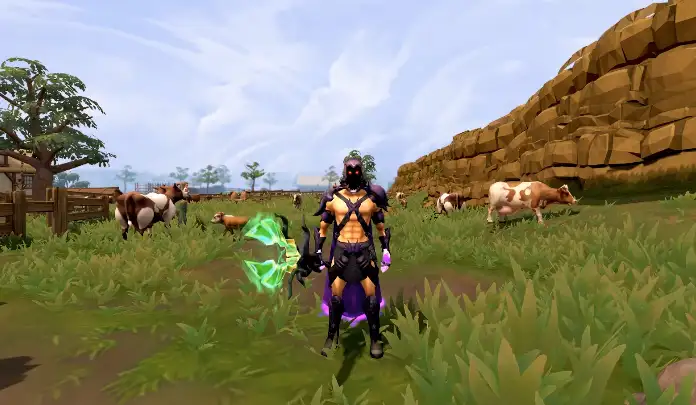
What does it mean to return to “British roots”? For RuneScape, it’s woven into the fabric of the game. It’s the dry, understated wit of the non-player characters (NPCs). It’s the world of Gielinor itself, which feels less like a grand, epic Tolkien-esque realm and more like a quirky, sometimes absurd, British fantasy novel. The humour is often self-deprecating and referential, from quests that parody classic British literature and culture to item descriptions filled with puns and sly observations.
This extends to the game’s systems. The skills—from Fishing and Woodcutting to the more bizarre Herblore and Agility—have a mundane, almost pastoral quality that feels uniquely British. There’s a charm in the simplicity of clicking on a tree for hours to gather logs, a meditative quality that contrasts sharply with the high-octane action of most modern MMOs. This isn’t a game about saving the world every Tuesday; it’s a world to inhabit, a second life where personal goals and community interactions are paramount. This focus on a persistent, player-driven world over scripted, theme-park-style content is a foundational principle that harkens back to its origins.
The Strength of a Niche: Why Community Trumps Trends
By stepping off the hamster wheel of trend-chasing, Jagex is betting on the immense strength of its established community. RuneScape players are famously loyal. They have built careers, found lifelong friends, and created a vast ecosystem of content, from fan sites and wikis to YouTube guides and economic market analyses. This community isn’t just playing the game; they are active participants in its culture and evolution.
Focusing on this core audience allows for a more authentic development cycle. Updates can be designed to deepen the existing experience rather than pivot to something new. It means listening to what players actually want for the world they’ve invested in for years, even decades. This could mean expanding on beloved but niche skills, introducing new quests that respect longstanding lore, or refining the old-school combat system rather than replacing it with a more action-oriented one. This approach fosters a sense of ownership and partnership between the developers and the players, a relationship that is far more valuable and sustainable than transient player numbers attracted by a fleeting trend.
Old School vs. Modern: A Tale of Two Games
The existence of both Old School RuneScape (OSRS) and RuneScape 3 (RS3) perfectly illustrates the tension between evolution and tradition. RS3 represents the path of modernisation, with more advanced graphics, abilities-based combat, and quality-of-life features. OSRS, born from a 2007 backup of the game, is a preservation of the classic experience. Significantly, OSRS has not remained static; it has evolved, but through updates that are famously community-polled. Every major change must be approved by the players, ensuring the game’s spirit remains intact.
The roaring success of OSRS, which often rivals or surpasses its modern counterpart in player numbers, is a powerful testament to the appeal of the original vision. It proves that there is a massive and passionate audience for the game’s core principles. Jagex’s renewed focus on its roots seems to be an acknowledgment of this lesson. It’s not about rejecting progress outright, but about ensuring that progress is true to the game’s identity. The future may involve bringing some of the thoughtful, community-approved evolution of OSRS to the broader RuneScape philosophy.
A Sustainable Future Built on Identity
In the long run, this strategy may be more sustainable. Chasing trends is an exhausting and expensive endeavour with no guarantee of success. By contrast, cultivating a strong, unique identity creates a defensible position in the market. No one can make “RuneScape” except Jagex. They own that particular brand of charming, grind-heavy, British fantasy. In a crowded marketplace, being truly unique is a superpower.
This focus allows the developers to innovate within their own sandbox. New content can explore deeper aspects of the world’s lore, introduce creative new skills that fit the existing framework, or find ways to make the world feel more alive and interconnected for its veterans. The goal shifts from “how do we get new players?” to “how do we make this the best possible experience for the players who already love it?” Ironically, this often proves to be the most effective way to attract new players, as a game with a strong, confident identity and a passionate community is inherently appealing.
The Ripple Effect: A Lesson for the Industry?
Jagex’s stance could serve as a valuable case study for the wider games industry, particularly for other long-running live-service titles. The relentless pressure to chase the new can lead to developer burnout and player alienation. There is immense value in recognising the core of what makes a game special and having the courage to nurture that instead of constantly looking over your shoulder.
This isn’t to say that games shouldn’t evolve or improve. But evolution should be organic, growing from the original seed rather than being grafted on from elsewhere. For RuneScape, that seed was planted in Cambridge, England, over twenty years ago. It grew into a quirky, unpredictable, and deeply beloved tree. Now, rather than trying to trim it into a shape that looks like every other tree in the forest, Jagex is choosing to water its roots and let it grow in its own unique way.
In an age of constant noise and relentless change, there is a profound comfort in returning to a familiar world that knows exactly what it is. It’s a world where the journey of earning a skill cape can be as fulfilling as defeating a grand boss, where a conversation with a quirky NPC can be as memorable as a epic cutscene, and where the community is the true endgame. By embracing its identity as “the RuneScape company,” Jagex isn’t looking backwards out of nostalgia; it’s looking forward with a clear vision, building a future that is authentically and unapologetically its own.