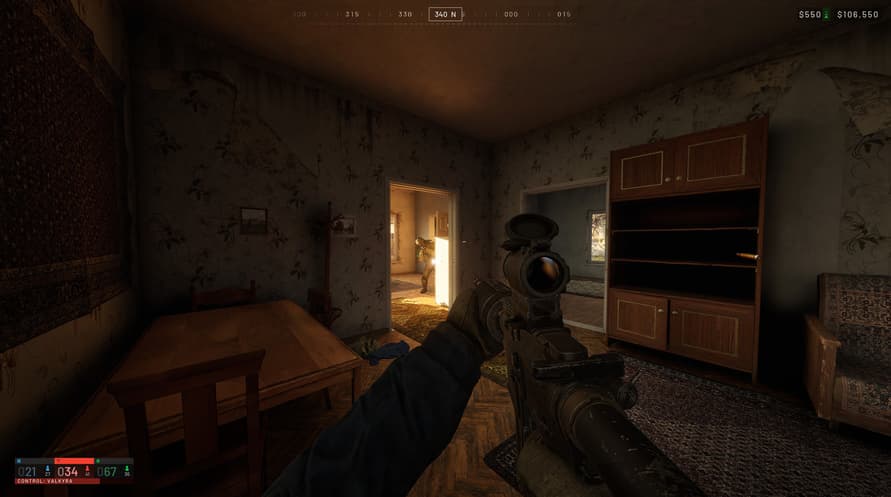
The extraction shooter genre has a new challenger, and it’s not pulling punches. WARDOGS launched into early access with a simple pitch: take the brutal, high-stakes formula that Escape from Tarkov popularized and strip away the friction that keeps casual players out. The result is a game that respects your time while still making your heart pound. That’s not a small achievement.
Tarkov has spent years building its reputation as the most hardcore extraction experience on PC. Its gunplay is punishing, its economy is unforgiving, and its learning curve is a vertical cliff face. WARDOGS doesn’t try to out-Tarkov Tarkov. Instead, it wins by doing something smarter: it fixes the problems that Tarkov’s own community has been complaining about for years while keeping the tension that makes the genre work.
Before diving into the technical weeds, here’s the honest comparison table that matters most to players deciding where to spend their next few hundred hours.
| Criterion | WARDOGS | Escape from Tarkov |
|---|---|---|
| Crash frequency after launch fixes | Playable after disabling a known Windows conflict | Persistent kernel-level crash reports for years |
| Time to first meaningful raid | Under 10 minutes from install | 30+ minutes of hideout management and gear sorting |
| Anti-cheat stability | Stable after disabling input x64.sys process | Repeated bans, but ongoing exploit reports |
| Hardware demands | Runs on mid-range PCs with Game Mode enabled | Requires high-end specs for consistent frames |
| Solo player experience | Full solo queue support with balanced matchmaking | Usually you’re outgunned by 3-man squads |
| Tutorial and onboarding | Built-in firing range and guided first raids | Wiki-dependent, community-made guides only |
If you want to actually play the game instead of troubleshooting it, WARDOGS is the choice. If you want the most uncompromising simulation of military extraction that exists, Tarkov still holds that title. But here’s the thing — WARDOGS wins because it respects the player’s time, and that’s a hill I’ll defend all day.
The WARDOGS Launch Problem Nobody Talks About
WARDOGS did not launch clean. The closed beta was rough, with players reporting crashes that made the game borderline unplayable. One of the most common issues involved a Windows security update from August 12th that conflicted with the game’s anti-cheat system. The crash log pointed to a process called input x64.sys — an RGB control process that runs at the kernel level.

Here’s the fix that worked: open command prompt as administrator, run two specific commands to disable that process, restart your PC, and verify it’s stopped. Players who did this went from crashing every few seconds to playing 24 to 26 hours straight without a single crash. That’s not a minor improvement. That’s the difference between a game you can’t play and a game you can’t put down.
The same Windows update caused identical problems in The Finals. The developers of that game recommended deleting the process entirely. WARDOGS players found that disabling it works just as well and carries less risk. You don’t need to nuke your system files — you just need to stop that one process from auto-starting.
Tarkov has never had a fix this clean. Its crashes stem from a web of issues: memory leaks, shader compilation stutters, and a Unity version that’s been patched so many times it’s held together with digital duct tape. The WARDOGS team shipped a game with one identifiable, fixable problem. Tarkov’s problems are a buffet of suffering.
Performance Optimization: Where WARDOGS Pulls Ahead
The most defensible position in this debate is simple: WARDOGS runs better on more hardware than Tarkov does. That’s not subjective. It’s a direct result of the game’s engine choices and optimization priorities.
Windows Settings That Actually Matter
WARDOGS benefits from a few Windows tweaks that cost nothing and deliver immediate results. Disabling transparency effects removes unnecessary animations that eat GPU cycles. Turning off the Game Bar entirely — not just minimizing it — stops an overlay service that runs in the background and consumes system resources whether you use it or not. Enabling Game Mode helps Windows prioritize game processes over background tasks.
These are not exotic fixes. They’re the standard maintenance that Tarkov players also need, but here’s the difference: on WARDOGS, these tweaks are enough. On Tarkov, they’re the starting point of a 20-step optimization journey that still ends with frame drops in specific maps.
The Driver and BIOS Checklist
Both games need updated graphics drivers. WARDOGS launched with a dedicated Game Ready driver released the day before early access began. Nvidia users can grab it through the Nvidia app, select the custom installation option, check the clean installation box, and restart. AMD users follow a similar path through the AMD website.
BIOS updates matter too, especially for players on newer CPUs or motherboards with known stability issues. The WARDOGS community has documented cases where a BIOS update alone resolved persistent stuttering. If you’re on a laptop, keep the AC adapter connected and the battery charged during the update — a power loss mid-update bricks the system.
Tarkov’s optimization guides run three times longer and still end with “your mileage may vary.” WARDOGS gets you playing in under an hour of setup. That’s the entire argument in one sentence.
The Counterargument: Tarkov’s Depth Is Worth the Pain
The strongest case for Tarkov is that its complexity is the point. The hideout management, the flea market economy, the realistic ballistics modeling, the health system that tracks individual body parts — these systems create emergent stories that WARDOGS simply doesn’t match yet. Tarkov veterans will tell you that the learning curve is the game. Every death teaches you something. Every successful extraction feels earned because so much could have gone wrong.
That argument has merit. Tarkov’s depth is genuine, and no amount of polish on WARDOGS can substitute for systems that have been iterating for years.
But here’s the problem with that position: it assumes difficulty and friction are the same thing. They’re not. Tarkov’s steepest obstacles are often not intentional design — they’re technical failures, unclear mechanics, and a UI that requires a degree in spreadsheet management. The game is hard because it’s poorly explained, not because it’s smartly designed. WARDOGS delivers comparable tension through cleaner mechanics: you go in, you grab loot, you extract. The stakes are identical. The clarity is not.
Players who defend Tarkov’s friction are defending their own sunk cost. They’ve already climbed the mountain, so they want everyone else to suffer the same climb. WARDOGS doesn’t ask you to suffer. It asks you to play.
The Crash-Log Method: A Diagnostic Skill Both Games Need
One technique from the WARDOGS community deserves special attention because it transfers directly to any PC game. When a game crashes, open Windows Event Viewer immediately — even if your PC restarts, the log persists. Look for the red exclamation marks in Windows Logs under System. The entry will name the process that caused the crash.
In the WARDOGS beta, this revealed input x64.sys as the culprit. In Tarkov, this same method has identified everything from outdated RGB software to conflicting overlay services. Knowing how to read your crash logs turns you from a helpless victim into someone who can fix their own problems. That’s a skill worth developing regardless of which game you choose.
The method works because it points you at the actual cause instead of making you guess. Tarkov’s community guides are full of “try this and see if it helps” advice. Event Viewer gives you a precise answer. It’s the difference between a mechanic who runs diagnostics and one who throws parts at the engine until something sticks.
The Verdict: Play WARDOGS Now, Revisit Tarkov Later
WARDOGS wins the extraction shooter comparison because it delivers the core fantasy without the house of cards collapsing around you. The game is stable after a 15-minute fix. It runs well on hardware that Tarkov struggles with. It respects your time with clear progression and quick matchmaking. The tension is real, the gunplay is satisfying, and the extraction loop is as addictive as anything in the genre.
Tarkov remains the deeper game. Its systems are more intricate, its economy is more complex, and its hardcore credentials are unimpeachable. But “more complex” and “better” are not synonyms. For most players, most of the time, WARDOGS is the better package.
One edge case worth noting: if you’re a Tarkov veteran who has already mastered its systems and you’re looking for a new challenge, WARDOGS will feel shallow in its current early access state. The content count is lower, the maps are fewer, and the depth is still developing. But for everyone else — the curious, the frustrated, the time-poor — WARDOGS is the on-ramp the genre needed. It’s the extraction game you can actually play on a Tuesday night after work, and that’s a bigger win than any simulation purist will admit.