There is a peculiar rhythm to the life of a games journalist, a cycle of anticipation and release that often leaves the most interesting releases stranded in the immediate past, overshadowed by the next big thing. It is a rare pleasure, then, to step back from the churn of the new and shine a light on a title that deserves more than a fleeting glance. That title is Alabaster Dawn, a 2.5D action-RPG from Radical Fish Games that launched into early access on May 7th and, crucially, still offers a free demo. Having spent a substantial amount of time with the opening hours, it is already shaping up to be something genuinely special, a vibrant and mechanically rich experience that builds brilliantly on the foundations of its acclaimed predecessor. This is not merely a game you should watch; it is a game you should play, and the demo is the perfect gateway.
From CrossCode to a New Dawn: The Radical Fish Pedigree
To understand the promise of Alabaster Dawn, you must first understand its creators. Radical Fish Games is the studio behind CrossCode, a game that earned a reputation as one of the most lovingly crafted action-RPGs of its generation. That game was an affectionate send-up of the MMORPG and isekai genres, wrapped in a top-down, 16-bit aesthetic that was far deeper and more complex than its visual style suggested. CrossCode was, as one critic memorably put it, a truly great game you could devote 117 hours to. It was a game of immense heart, clever puzzles, and surprisingly tight combat. With Alabaster Dawn, the team has not rested on their laurels. Instead, they have taken a significant evolutionary leap, discarding the purely top-down perspective for an angled, 2.5D presentation that allows for more organic, layered, and visually complex playspaces. The shift is immediately apparent and profoundly effective. Where CrossCode felt like a love letter to the 16-bit era, Alabaster Dawn feels like a confident step into a new, more visually expressive future for the studio.
A Visual Feast: Sprite Art That Outshines the Competition
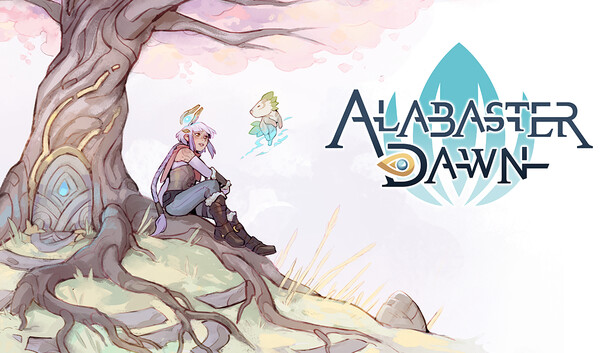
The first thing that strikes you about Alabaster Dawn is its absurdly beautiful sprite art. This is not the gritty, hyper-realistic, UE5-powered aesthetic that dominates the modern triple-A landscape. Instead, it is a masterclass in expressive, hand-drawn animation. The characters move with a fluidity and nuance that is rarely seen in pixel art, capable of conveying complex emotions with a simple tilt of the head or a subtle shift in posture. It makes you wonder why so many studios invest millions in ray-traced skin pores when this level of character and charm can be achieved through such careful, deliberate artistry. The environment art is equally breathtaking. The opening cutscene alone, with its cascading meteors and flurrying leaves caught in the gale, is a stunning showcase of what the team can achieve. This is a world that feels alive and painterly, a place you want to explore not just for the loot and the quests, but for the sheer pleasure of seeing what beautiful scene awaits around the next corner.
The Curse of Nyx and the Fall of the Chosen
Beneath the gorgeous surface lies a world in ruins. The narrative of Alabaster Dawn is a classic tale of divine betrayal and unlikely heroism, told with a sharp, modern wit. The realm has been ravaged by the curse of Nyx, a monstrous, Zerg-like horde of chitinous abominations that have consumed the landscape, leaving it slick with pink and purple organic matter. The gods, in their infinite wisdom, chose a group of powerful warriors, the Chosen, and granted them special weapons to fight back. Yet, at the climactic moment of the final battle, the gods arbitrarily revoked their gifts, leaving the Chosen helpless. They were slaughtered. All of them. All except for one: Juno, a bright-eyed, determined young woman who had been expelled from the Chosen before the battle even began. She awakens from a magical sarcophagus to find a world reduced to a wasteland. This is your starting point. The opening hours are a masterful blend of tragedy and setup, establishing a world that has already lost, and a protagonist who carries the weight of that loss without being crushed by it.
Juno’s Quest: Combat Inspired by Devil May Cry and Kingdom Hearts
The gameplay loop in Alabaster Dawn is built around a combat system that wears its inspirations on its sleeve. The developers have explicitly cited Devil May Cry and Kingdom Hearts as key influences, and you can feel that DNA in every fight. The system is centered on two of eight available weapons, which can be equipped simultaneously and swapped mid-combo. Each weapon has its own unique skill tree, offering unlockable combos, super moves, and special properties. This creates a deep and fluid combat system that rewards experimentation and player expression. You might pair a fast, close-range dagger with a heavy, slow-moving greatsword, or a ranged elemental blaster with a defensive shield. The brawling is satisfying, responsive, and kinetic. It is not so much about skull-cracking difficulty as it is about style, flow, and chaining together satisfying sequences. The game gives you the tools to feel powerful, and the enemy design encourages you to use them creatively. It is a system that is easy to pick up but will take time to truly master, and that is a hallmark of the best action-RPGs.

A Script That Winks at the Player
What elevates the experience beyond the purely mechanical is the writing. The script in Alabaster Dawn is concise, off-beat, and frequently self-referential in a way that fans of CrossCode will immediately recognize and appreciate. It is not afraid to poke fun at the conventions of the genre. In one early scene, Juno stumbles upon a glowing green flower, a classic action-RPG health-restoration item. Most games would simply let you smash it without comment. Here, Juno expresses mild consternation at the absurdity of clobbering a pretty plant to recover from a fatal wound. Her simple line, But it is pretty, is a perfect example of the game’s tone. It acknowledges the absurdity without breaking the immersion, adding a layer of charm and personality that makes the world feel more lived-in. The dialogue is sharp, the characters are memorable, and the story is driven by a sense of hope and resilience that is refreshing in a genre often defined by grimdark cynicism. This is a world you want to save, and a protagonist you want to save it with.
Early Access Scope: What You Get Now and What Awaits
For those considering jumping into early access, it is important to understand the scope of the current build. Radical Fish Games estimates that Alabaster Dawn will remain in early access for roughly two years. The final version is projected to include a complete story of seven chapters, with an estimated playtime of about 40 hours. The current build, which takes players through the beginning of the story and up to the middle of chapter two, offers between six and ten hours of content. That is a substantial amount of gameplay for an early access title, and it is polished and feature-rich. The developers have also included a roguelite mode designed to eke out additional replayability, providing a different way to engage with the core combat loop once the main story content has been exhausted. This is a smart approach. It gives early adopters a meaningful and complete-feeling experience while clearly signaling that the final vision is a much larger, more ambitious project. The roadmap ahead is promising, and the current state of the game is a testament to the team’s dedication and skill.
Technical Polish and Performance Notes
In terms of technical performance, the early access build of Alabaster Dawn is remarkably stable. The sprite art and animation run buttery smooth, with no noticeable frame rate drops or stuttering, even during the more chaotic combat encounters and the visually demanding cutscenes. The controls are tight and responsive, which is critical for a game that demands precision in its combo execution. The user interface is clean and intuitive, making it easy to manage your arsenal of weapons, skills, and inventory. The sound design is equally commendable, with a soundtrack that blends orchestral swells with more intimate, melodic themes, perfectly matching the game’s tone of epic adventure and personal discovery. The team at Radical Fish Games clearly understands the importance of a polished technical foundation, even at this early stage, and it speaks volumes about their commitment to quality. There are no game-breaking bugs or performance issues that would detract from the experience, which is more than can be said for many full-price releases.
Why the Demo Is a Must-Play
The availability of a free demo is a smart move, and it is the best way to determine if Alabaster Dawn is for you. The demo provides a substantial slice of the early game, allowing you to get a feel for the combat, explore the world, and meet Juno. It is long enough to sell you on the core loop but leaves you wanting more. For fans of CrossCode, the demo is an essential download. It shows how the studio has evolved, and it confirms that the same wit, charm, and attention to detail are present and accounted for. For newcomers, it is a risk-free introduction to one of the most promising action-RPGs in development. There is no reason not to try it. The demo is a statement of confidence from the developers. They are not hiding a flawed product behind a paywall; they are showcasing a polished, enjoyable experience and inviting players to join them on the journey to the full release.
Comparing the Vision: From 16-Bit Homage to 2.5D Mastery
One of the most compelling aspects of Alabaster Dawn is how it represents a clear artistic and technical progression from CrossCode. While the previous game was a masterful execution of a retro-inspired vision, Alabaster Dawn uses its 2.5D perspective to create a greater sense of depth and verticality. The environments feel more like real, physical spaces. You can see platforms above and below your current position, and the combat takes advantage of this added dimension. Enemies attack from multiple angles, and your own movement and attack patterns become more strategic as a result. This is not just a cosmetic upgrade; it fundamentally changes how you interact with the world. The shift to an angled perspective also allows for more dynamic camera work during cutscenes and key moments, adding a cinematic quality to the storytelling that was absent in the purely top-down CrossCode. It is a natural and impressive evolution for a studio that is clearly not content to repeat itself.
The Long Wait Ahead: Two Years of Development
It is also worth addressing the elephant in the room: the two-year early access timeline. That might sound like a long time, and it is. But it is also a sign of a studio that is being realistic about the scope of its ambition. Radical Fish Games is not a massive, hundred-person studio. They are a dedicated, passionate team that wants to deliver a complete, polished, and feature-rich experience. Rushing the development to meet an artificial deadline would be a disservice to the game and to the players. The two-year window gives them the time to fully realize the seven-chapter story, to balance and expand the combat system, to build out the roguelite mode, and to polish every pixel of that beautiful sprite art. For players, this means buying into a journey. You are not just buying a product; you are supporting a vision. The current build is already excellent, and the prospect of watching it grow and expand over the next two years is an exciting one. This is a game that values quality over speed, and that is a philosophy worth supporting.
The Verdict: A Promising Dawn Indeed
Based on extensive time with the early access build and the demo, Alabaster Dawn is a triumph of style and substance. It is a beautiful, intelligent, and deeply enjoyable action-RPG that honors the legacy of CrossCode while forging its own distinct identity. The combat is fluid and rewarding, the visuals are stunning, the writing is sharp and charming, and the world is a joy to explore. The developers at Radical Fish Games have set a high bar for themselves, and if the current build is any indication, they are going to clear it with room to spare. If you have any interest in action-RPGs, character-driven stories, or simply want to see some of the best pixel art in modern gaming, you owe it to yourself to download the demo. The dawn may be early, but the light is already brilliant. This is a game that deserves your attention, not next week or next month, but right now. The wait for the full release is long, but the journey will be worth it.