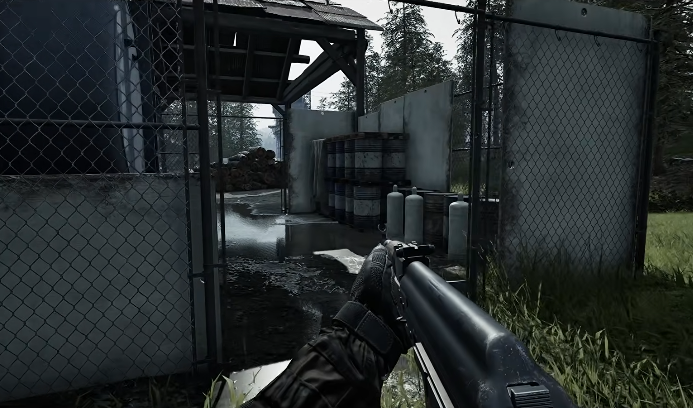
A recent listing on the Entertainment Software Rating Board (ESRB) website has ignited speculation that Bungie’s upcoming extraction shooter, Marathon, may receive versions for PlayStation 4 and Xbox One, despite the developer’s initial announcement targeting only PC, PlayStation 5, and Xbox Series X|S. The discovery was made by observant players who noticed the previous-generation consoles listed alongside the confirmed platforms on the official ESRB rating summary.
The ESRB Listing That Changed the Conversation
The ESRB, the North American video game content rating organization, published a rating for Marathon that included “PlayStation 4” and “Xbox One” in its platform list. This listing directly contradicts Bungie’s official communications, which have consistently stated the game is being developed for current-generation hardware and PC. The page was not corrected in the immediate hours following its discovery, leading the gaming community to question whether this was a simple database error or a premature disclosure of unannounced plans.
Bungie’s Official Stance and the Silence That Follows
To date, Bungie has made no official statement addressing the ESRB listing or hinting at any development for legacy consoles. The studio’s initial reveal and all subsequent promotional material have focused squarely on the technical capabilities and immersive potential of the newer systems. This silence in the face of mounting speculation is particularly noteworthy, as the company has a history of clear communication regarding its platform strategies, especially with its flagship Destiny franchise.
The Technical Feasibility of a Cross-Generation Port
From a technical perspective, a port to PlayStation 4 and Xbox One is not an impossibility. Bungie possesses deep, institutional knowledge of these older hardware platforms, having supported Destiny 2 on them for years. This ongoing support means the development team is intimately familiar with the architectural limitations, optimization pathways, and performance ceilings of the 2013-era consoles.
Potential Compromises and Visual Downgrades
Bringing a game designed for the SSD-driven architecture of the PS5 and Xbox Series X|S to older hardware would inevitably require significant compromises. Analysts and developers suggest that such a port would likely involve substantial visual downgrades, including reduced resolution, lower texture quality, simplified environmental geometry, and pared-back particle and lighting effects. Frame rates would also be a primary concern, potentially targeting 30 FPS with aggressive dynamic resolution scaling to maintain stability, a stark contrast to the high-framerate targets expected on newer systems.

The Engine Adaptation Challenge
The core challenge lies in adapting Bungie’s Tiger Engine, which has been evolved significantly for the current generation, to perform adequately on hardware with mechanical hard drives and weaker CPUs. Load times would be considerably longer, and the dense, persistent world of Marathon might need to be segmented or streamed differently. However, Bungie’s engine team has a proven track record of scalability, as demonstrated by Destiny 2‘s ability to run across a wide spectrum of PC hardware and four console generations.
Industry Precedents for Delayed Legacy Releases
The video game industry has several precedents for major titles arriving on previous-generation consoles well after their debut on newer platforms. A prominent example is Star Wars Jedi: Survivor from Respawn Entertainment and EA. The game launched in April 2023 for PC, PS5, and Xbox Series X|S, with versions for PS4 and Xbox One announced later and released in the following months. This strategy allows developers to focus their initial efforts on maximizing the potential of new hardware, then dedicating a separate team or partner studio to handle the more technically demanding down-port.
Commercial Motivations Behind a Broader Release
The commercial argument for a PS4 and Xbox One release remains compelling. Despite the PS5 and Xbox Series consoles being on the market for several years, the combined install base of the PS4 and Xbox One still numbers in the hundreds of millions worldwide. For a live-service game like Marathon, which relies on a large, sustained player base for its extraction shooter loops and potential microtransactions, tapping into this vast existing audience could be a lucrative decision. It lowers the barrier to entry for players who have not yet upgraded their consoles, ensuring the game finds a community from day one.
The Impact on Game Design and Player Experience
If Bungie is developing Marathon with last-generation consoles in mind from the outset, it could have profound implications for the game’s core design. Extraction shooters thrive on large, detailed maps with high player counts and complex environmental interactions. Designing these elements to function on a base PS4 or Xbox One could necessitate scaling back ambitions for map size, player density, or real-time environmental destruction to ensure parity of experience across all platforms—a key tenet of Bungie’s philosophy with Destiny.
The Risk of Holding Back Next-Gen Innovation
The primary criticism of cross-generation development is the potential for it to “hold back” the vision for newer hardware. Features that leverage the ultra-fast SSDs for near-instantaneous travel or complex, unbroken game worlds might be impossible to implement if the game must also run on a console with a traditional hard drive. The community is divided; some welcome the possibility of playing on affordable, accessible hardware, while purists argue that games like Marathon should be allowed to fully embrace the new technological frontier without compromise.
Awaiting Official Confirmation or Denial
Until Bungie breaks its silence, the ESRB listing remains an intriguing anomaly. The rating board has been known to make errors in the past, but they are typically corrected swiftly. The persistence of this listing is what fuels the rumor mill. The gaming community and industry analysts are now watching for one of two outcomes: a quiet update to the ESRB page removing the old consoles, or an official announcement from Bungie expanding Marathon‘s launch strategy.
The speculation surrounding Marathon and potential last-gen ports highlights the extended and complex transition between console generations. In an era where game development costs are soaring and player bases are fragmented across multiple hardware tiers, developers like Bungie face difficult strategic choices. Whether the ESRB listing is a glimpse into a broader release plan or merely a clerical mistake, it has successfully shifted the discussion, reminding everyone that in the modern gaming landscape, a game’s announced platforms are sometimes just the beginning of the story. The final decision will reveal much about Bungie’s confidence in the legacy console market and its commitment to pushing the technical boundaries for its premier new IP.