The ruins of civilization seldom look this inviting. Ironhive, the upcoming title from Brazilian studio Wondernaut Studio, asks players to rebuild society from the ashes using an unlikely tool: a deck of cards. First playable at Gamescom Latam 2026 in São Paulo, the game fuses city management with deck-building strategy in a way that feels less like a genre experiment and more like a natural evolution of both. With a demo already live on Steam and a full release expected within months, Ironhive is shaping up to be one of the most distinctive strategy titles to emerge from the Latin American development scene this year.
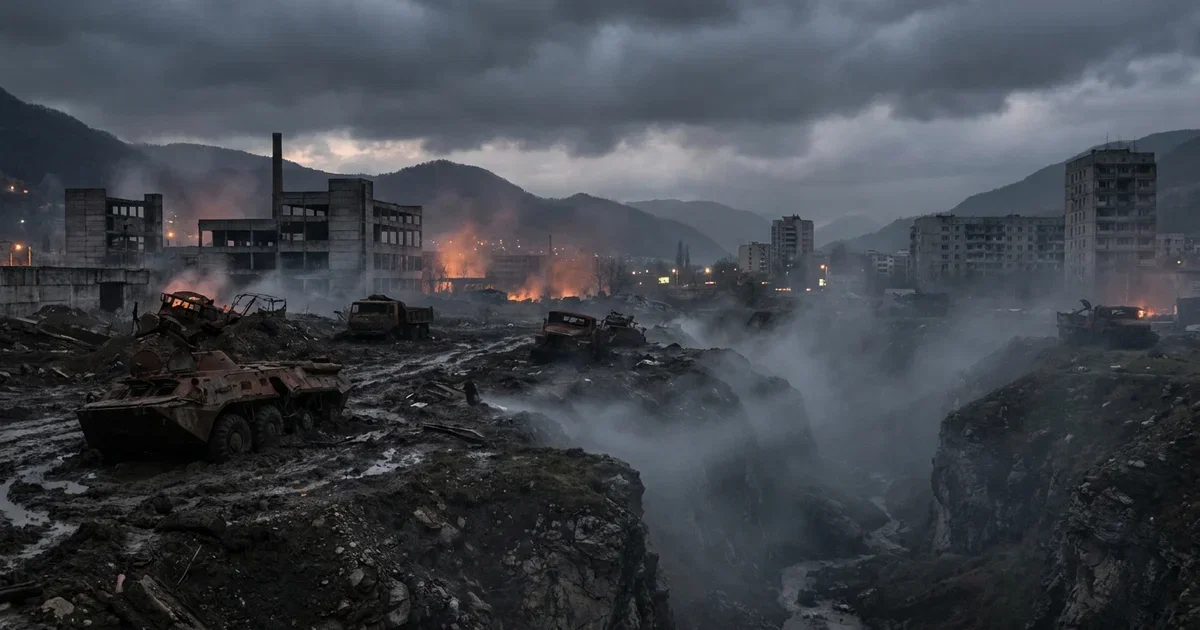
Wondernaut Studio is best known for Aspire: Ina’s Tale, a vibrantly colored narrative adventure that traded in warmth and wonder. Ironhive represents a dramatic departure. The palette has shifted to muted grays, browns, and ochres. The mood is post-apocalyptic, desperate, and determined. Humanity is picking through the rubble, and the player is responsible for the iron hive — a fortified settlement that must grow, adapt, and endure.
An Unlikely Marriage of Genres
The core premise of Ironhive is the union between the meticulousness of a city manager and the strategic depth of a deck builder. These genres rarely cross paths, but the idea emerged almost organically during a Game Jam at the BIG Festival in 2022. According to Bruno Klipel, the studio’s technology director, the concept came from a desire to try something new, and after the initial success in the competition, the team decided to turn the prototype into a full game.
What makes this fusion work is that the card system is not a layer on top of traditional city-building mechanics — it is the mechanic. There are no standard construction menus, no tech trees presented as static grids, no resource bars that fill automatically. Everything the player does is mediated by the cards in their hand. Resources, soldiers, buildings, and political actions all exist as cards. The system recalls modern board games where spatial positioning and hand management are critical. Soldier cards, for example, can be assigned to specific locations to extract resources, while building cards stack and expand within a limited area, forcing the player to plan every inch of their settlement.
This design choice does more than differentiate Ironhive from other city builders. It forces a constant state of strategic tension. The player cannot simply click to build a house and watch it appear. They must draw the right card, have the right resources, and place it in the right spot — all while managing an ever-ticking clock of survival needs.

How the Card System Shapes City Building
To understand Ironhive’s gameplay loop, it helps to think of each card as a bundle of possibilities rather than a single action. A soldier card is not just a unit; it is a worker who can be stationed at a resource node, a defender who can be placed on a wall, or a token of political influence that can be spent on council actions. A building card is not just a structure; it is a space that generates resources, provides housing, unlocks new technologies, or alters the board state in ways that ripple across future turns.
Resources in Ironhive are not abstract numbers that accumulate quietly. They are physical tokens on the board, and collecting them requires placing the right card in the right position. This introduces a spatial puzzle element to resource management. A lumber mill built too far from a forest is useless. A barracks placed too close to the outer wall risks being overrun during an attack. The placement decisions compound, and the limited area of the hive means that every square of space must earn its keep.
The deck itself grows and changes over time. Players acquire new cards through research, exploration, and completing objectives. This progression system means that a strategy that works in the early game — relying on a few basic resource cards and a handful of soldiers — will eventually become insufficient. The hive must evolve, and the deck must evolve with it. Discarding old cards, upgrading existing ones, and incorporating new ones are all part of the rhythm of advancement.
A Distinctive Visual Identity
Visually, Ironhive is striking. The art style is hand-drawn and heavily textured, with a sense of weight and wear that suits the setting. Buildings look like they have been patched together from salvaged materials. Characters are small but expressive, their movements deliberate. The ruined world beyond the hive is visible in the background — collapsed towers, skeletal trees, and the faint glow of distant fires. Every corner of the screen seems to tell a story about what happened to the world.
This visual richness serves a practical purpose as well. The card art needs to be immediately readable at a glance, and the interface needs to communicate complex information without overwhelming the player. The studio has clearly invested time in making sure that the game is as clear as it is beautiful. Icons are distinct, colors are used deliberately to indicate card types and resource states, and the board layout is designed so that the player can assess their situation quickly.
The atmospheric quality of the visuals also reinforces the game’s thematic core. This is not a cheerful reconstruction. The world has been broken, and the iron hive is a fragile attempt to hold back the dark. The art reminds the player of that stakes without hammering them over the head with it.
Legacy as a Design Pillar
One of the most interesting aspects of Ironhive is its emphasis on legacy. The player is not simply trying to survive the next turn or complete the next objective. They are preparing the ground for future generations — both literally and figuratively. The decisions made in the early game echo into the late game. A well-placed wall can protect the hive for dozens of turns. A poorly chosen research path can leave the settlement vulnerable to threats that could have been avoided.
This long-term perspective is reinforced by mechanics that allow players to compare the size and significance of their legacy with that of other players. The game encourages a kind of reflective competition — not about who can build the fastest, but about who can build the most enduringly. This is a subtle but important distinction. It shifts the focus from efficiency to sustainability, from speed to depth.
What does legacy mean in practical terms? It means that the hive is not just a collection of buildings. It is a statement of values, a record of choices, and a monument to the player’s priorities. A player who focuses on military strength will leave a very different legacy than one who focuses on culture or technology. The game does not judge these choices as right or wrong, but it does make them matter.
A Carefully Calibrated Learning Curve
The learning curve is a point that Wondernaut Studio is handling with great care. The studio’s stated goal is that even players who are not accustomed to hardcore strategy games can learn the rules, fall in love with the art, and enjoy sessions of about one hour. This is a delicate balancing act. The game needs to be deep enough to satisfy strategy enthusiasts while remaining accessible enough that newcomers do not bounce off it.

From the demo, it is clear that the studio has made smart choices in this regard. The tutorial does not dump all the mechanics on the player at once. Instead, it introduces systems gradually, letting each one settle before adding the next. The first few turns are about basic resource collection and building placement. Only after the player has a handle on those do new cards start appearing, new threats emerging, and new systems unlocking.
The pacing also benefits from the session length. One hour is enough time to feel like meaningful progress has been made but not so long that a single session becomes exhausting. This makes Ironhive a natural fit for players who want a deep strategy experience but do not have the time for multi-hour sessions that are common in the genre.
Survival, Progression, and the Weight of Time
Managing the hive involves balancing the accumulation of experience to unlock new technologies against the immediate management of resources to survive the passage of days. Time is an unrelenting adversary. Eventually, the game demands taxes and resources, and failing to provide what is needed can mean the end of the settlement. This creates a constant tension between short-term survival and long-term growth. Do you invest in a new technology that will pay off in ten turns, or do you stockpile food because the tax collector arrives in three?
To guide the player, Ironhive includes main and side missions as well as random events that deepen the narrative. These events are fundamental to immersion. They offer clues about what caused the apocalypse, introduce moral dilemmas, and keep the player invested in the journey of reconstruction. A random event might present a choice between accepting a group of refugees (which boosts population but strains resources) or turning them away (which preserves resources but costs the hive’s reputation). These are not trivial decisions. They have mechanical consequences and narrative weight.
The mission structure also provides a sense of direction. Without goals, a city builder can feel aimless — a sandbox without a reason to build. Ironhive avoids this by giving the player clear objectives that are tied to the story and to the legacy system. Completing missions unlocks new cards, new technologies, and new areas of the board. It also advances the narrative, revealing more about the world and the player’s role in it.
Release Outlook and Platform Strategy
Currently, Ironhive is in its final phase of polishing and adjustments. Although there is no exact release date, the expectation is that the game will arrive on PC via Steam in a few months. The decision to focus on PC is due to the strategic nature of the game, which benefits enormously from mouse input, although a future console release is not ruled out by the team.
From a market perspective, Ironhive enters a space that has seen increasing interest in hybrid strategy games. Titles that blend genres — city building with survival, deck building with roguelike elements, resource management with narrative — have found dedicated audiences in recent years. Ironhive’s particular combination of city management and deck building is still relatively unexplored, which gives it a potential first-mover advantage in that specific niche.
The Brazilian development scene has been producing increasingly ambitious and polished work, and Wondernaut Studio is part of that wave. Ironhive carries the weight of that context. It is not just a game; it is a statement about the range and ambition of Brazilian game development. It is also a statement about the creative potential of genre fusion. The most interesting games of the coming years will likely be the ones that refuse to stay in their lanes, and Ironhive is a strong candidate for that category.
Ironhive is not simply a card game or a city manager. It is a versatile and daring proposal from a studio that is unafraid to take risks. The card-based system is not a gimmick — it is the foundation of a deeply strategic experience that rewards planning, adaptability, and long-term thinking. The visual style is evocative and purposeful. The legacy mechanics give the game a philosophical weight that many strategy games lack. And the careful attention to the learning curve means that this is a game that wants to be played, not just studied. When it launches on Steam in the coming months, it will arrive as one of the most interesting strategy titles of the year — and a clear signal that the best ideas often come from the most unexpected places.