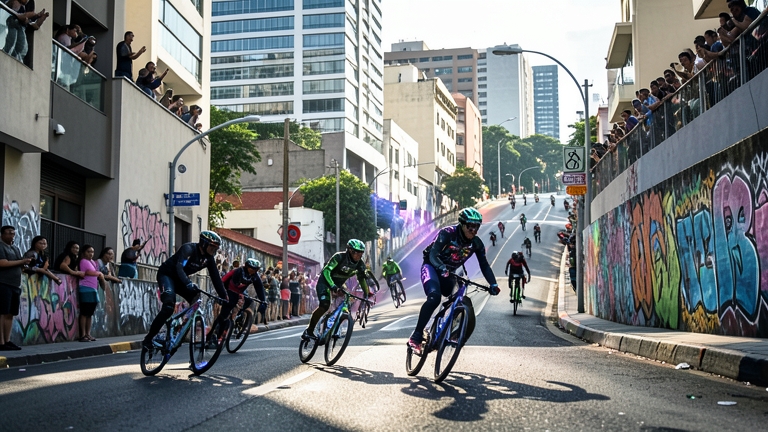
On November 15, 2026, São Paulo will host the most insane downhill race on the planet, as the Red Bull Ladeira Abaixo 2026 returns with its Geek Edition. This is not a simple gravity race; it is a collision of engineering, pop culture, and pure adrenaline, where 40 teams will push handcrafted, non-motorized carts down a steep urban course while navigating obstacles designed to test both creativity and control. The event, which drew 45,000 spectators in its 2024 geek-themed debut, has become a defining spectacle in Brazil’s cultural calendar, blending the competitive spirit of downhill racing with the vibrant imagination of the geek universe. For the uninitiated, the Red Bull Ladeira Abaixo is a global phenomenon: a downhill soapbox race that has been staged in over 150 locations worldwide, with Brazil hosting nine editions. The 2026 Geek Edition marks the second consecutive year the event has adopted a geek theme in São Paulo, solidifying the city’s reputation as a hub for both extreme sports and geek culture.
What Is the Red Bull Ladeira Abaixo? A Global Soapbox Phenomenon Reimagined in São Paulo
For those unfamiliar with the format, the Red Bull Ladeira Abaixo (Portuguese for “downhill”) is a gravity-powered race where teams design and build homemade carts that must descend a steep urban slope without any engine or motor. The carts are judged not only on speed but also on design, creativity, and thematic execution. Obstacles are placed along the course to add an extra layer of challenge, forcing teams to balance engineering savvy with artistic flair. In São Paulo, the 2026 edition will run along a route starting at Avenida Pompeia and passing through Estevão Barbosa, Afonso Bovero, and Guiara streets. The course is chosen to maximize visibility for thousands of spectators, who line the streets to watch the chaotic, often hilarious, and occasionally dramatic descents.
Why a Geek Edition? The Success of the 2024 Debut
The decision to theme the event around geek culture was made after the overwhelming success of the first Geek Edition in 2024, which drew an estimated 45,000 people to the streets of São Paulo. That turnout demonstrated a deep appetite for fusing competitive racing with the worlds of anime, video games, comic books, and film. The 2026 edition builds directly on that momentum. Teams are selected from across Brazil, with their projects inspired by characters from cartoons, movies, video games, and other pillars of geek culture. The selection process, which culminates in the final list of 40 teams, is managed through the official Red Bull website, where the public can already view the chosen participants. This community involvement—allowing fans to see who will race and what themes they are bringing—adds an extra layer of anticipation.
40 Teams, 40 Universes: The Competitors and Their Creations
Each of the 40 selected teams must design and build a cart that is both functional and visually striking. The builds range from faithful replicas of cartoon vehicles to original creations that mash up multiple pop culture references. Given that the race includes obstacles, the carts must also be structurally sound and capable of handling sharp turns and bumps. The teams come from different regions of Brazil, reflecting the country’s broad and diverse geek community. Some participants are hobbyists, others are professional artists or engineers. The common thread is a passion for bringing imaginary worlds to life on wheels. The 2026 Geek Edition promises a lineup of carts that draws from classic animated series, blockbuster films, and iconic video game franchises. While the full list of themes has not been disclosed, the association with brands like Free Fireaa—a massively popular battle royale game—hints that the race will feature prominently recognizable cultural touchstones.
Key Partners: Carrefour and Garena Bring Branded Carts to the Race
Corporate participation adds another dimension to the event. This year, Carrefour will field its own custom cart, while Garena, the developer of Free Fire, will enter a vehicle themed after the game. These branded entries are not just advertising stunts; they must meet the same engineering and design standards as any other competitor cart, and they will face the same obstacles. Their presence underscores the event’s ability to attract major sponsors while retaining its grassroots, DIY ethos. For Garena, the Free Fire cart is a natural extension of the game’s deep integration into Brazilian culture, where Free Fire remains a mobile gaming juggernaut. For Carrefour, it is a playful way to connect with younger, geek-oriented consumers. The inclusion of such partners also signals the growing mainstream appeal of the Geek Edition, which now serves as a marketing platform that bridges sports, entertainment, and pop culture.
How to Watch: Live Broadcast on ge tv and Street-Level Spectacle
The race will be commanded by hosts Fred Bruno and Sofia Miranda, who will guide viewers through the event via a live broadcast on ge tv. This marks a significant shift from previous editions, which were sometimes only available through online streaming. The partnership with ge tv, a major Brazilian sports network, ensures national visibility and a professional production. For those who want to experience the race in person, access will be granted through ticket pickup, though entry is subject to venue capacity. The organizers have indicated that more details about ticket distribution, scheduling, and programming will be released on official Red Bull channels in the lead-up to the event. Given the crowds attracted in 2024—45,000 people—early planning is advisable for anyone wishing to secure a spot along the course.
Obstacles and Challenges: What Makes This Race So Demanding
Unlike a simple downhill coast, the Ladeira Abaixo course is designed to test the mettle of both builders and drivers. Obstacles can include sharp turns, rumble strips, narrow chicanes, and even jump ramps. The 2026 Geek Edition is expected to incorporate obstacles that reference geek themes—perhaps a Mario Kart–style question block or a portal from a sci-fi universe. The goal is to force carts to slow down, maneuver, and sometimes crash in spectacular ways. Teams must anticipate these challenges when designing their vehicles. A cart that is too heavy or too fragile will not survive the course. This blend of creativity and practical engineering is what elevates the Ladeira Abaixo from a mere parade of costumes to a legitimate sporting competition. The event also has a strong safety component: organizers enforce rules about wheelbase, braking systems, and driver protection, ensuring that the spectacle does not come at the expense of participant well-being.
Historical Context: Red Bull Ladeira Abaixo in Brazil and the World
The Ladeira Abaixo series began as a Red Bull project to bring the fun of soapbox racing to urban environments. Over the years, it has been held in more than 150 cities globally, from Sydney to Vienna to Cape Town. Brazil’s first edition took place in 2013, and the country has since become one of the most enthusiastic markets for the event. The ninth Brazilian edition in 2026 reflects not only the longevity of the concept but also its ability to adapt to local culture. The Geek Edition, introduced in 2024, is a uniquely Brazilian twist: no other country has yet themed the Ladeira Abaixo around geek culture. This bespoke approach has paid off handsomely, creating a new tradition that draws younger audiences and generates significant social media buzz. The event also serves as a showcase for Brazilian creativity, with teams producing some of the most visually impressive carts in the sport’s history.
What Questions Do English-Speaking Audiences Ask About This Event?
How many teams participate in the Red Bull Ladeira Abaixo 2026 Geek Edition? Exactly 40 teams have been selected to compete. These teams come from various regions of Brazil, and their carts are themed around cartoons, movies, video games, and other geek culture references. The full list of selected teams is available on the official Red Bull website.
When and where does the race take place? The race is scheduled for November 15, 2026, starting at Avenida Pompeia in São Paulo and continuing through Estevão Barbosa, Afonso Bovero, and Guiara streets. The course is approximately 500 meters long and includes multiple obstacles.
Is the event free to attend? Attendance is free but requires a ticket, which must be picked up in advance. Entry is subject to capacity constraints, and tickets are expected to be in high demand given the 2024 turnout of 45,000 people.
Who are the hosts and how can I watch if I cannot attend? The event will be hosted by Fred Bruno and Sofia Miranda, with a live broadcast on ge tv. International viewers may need to check local availability, but the broadcast is expected to be accessible via the network’s streaming platforms.
Why is this called the Geek Edition? The Geek Edition is a themed iteration of the standard Red Bull Ladeira Abaixo, where all carts must draw inspiration from geek culture—such as comic books, anime, video games, and science fiction. It was introduced in 2024 due to the massive popularity of such themes among Brazilian audiences.
Strategic Significance: Why Red Bull Invests in Geek Culture Connections
Red Bull has long used extreme sports to build its brand identity, but the Ladeira Abaixo Geek Edition represents a strategic pivot toward lifestyle and entertainment crossovers. By aligning with geek culture, the company taps into a demographic that is highly engaged, digitally native, and passionate about immersive experiences. The event generates massive user-generated content on platforms like TikTok, Instagram, and YouTube, as teams and spectators share clips of wild crashes, creative builds, and cosplay. For the city of São Paulo, hosting the event reinforces its status as a global cultural capital, capable of staging world-class spectacles that blend sport and pop culture. The partnership with Garena (Free Fire) and Carrefour shows that major brands see this event as a valuable channel to reach younger consumers in an authentic, non-traditional way.
Looking at the 2026 Course and Obstacles: What Participants Face
The route through the Pompeia neighborhood offers a mix of steep downhill stretches and sharp turns. The specific obstacles for the Geek Edition have not been officially detailed, but based on previous editions, they are likely to include speed bumps, slalom courses, and “gates” that carts must pass through. Some obstacles may be designed to look like video game elements—for instance, a row of blocks reminiscent of Tetris, or a tunnel that mimics a wormhole from a sci-fi series. Teams must prepare for these challenges by testing their carts on similar terrain during the build phase. The 2024 edition featured obstacles that required drivers to slow down to navigate tight spaces, adding a tactical element to the race. Expect 2026 to raise the bar with even more creative and physically demanding features.

What the Future Holds for the Geek Edition and Ladeira Abaixo in Brazil
The success of the Geek Edition suggests that Red Bull may consider expanding themed races to other cities or even other countries. Brazil’s strong geek culture—fueled by massive events like CCXP and Anime Friends—makes it a natural testing ground. The 2026 event could set a template for other markets where nerd subcultures are similarly influential. Furthermore, the integration of gaming brands like Free Fire hints at potential esports tie-ins, perhaps leading to a virtual component where fans can race digital versions of the carts. As the Ladeira Abaixo series continues to evolve, it remains a powerful example of how a simple childhood activity—rolling down a hill in a homemade cart—can be transformed into a global, cross-media entertainment franchise. For São Paulo, November 15 will once again be a day of laughter, ingenuity, and controlled chaos. Those who miss it will have to wait until the 10th edition, which, if past trends hold, will be even bigger and more inventive.