Remedy Entertainment, the Finnish studio behind acclaimed narrative-driven titles like Control and Alan Wake, has officially concluded content development for its first live-service multiplayer venture, FBC: Firebreak. The studio confirmed that the recently released “Open House” update will serve as the game’s final major content package, marking a significant strategic pivot after the title failed to meet commercial and player engagement expectations.
The Decision to Sunset Live Development
In a statement to the community, Remedy attributed the decision to a combination of the game’s overall performance and a desire to preserve the existing player experience. The studio emphasized that while no new content is planned, the game’s servers will remain operational, and technical support will continue. According to director Mike Kayatta, the move reflects a pragmatic assessment of the project’s trajectory. “FBC: Firebreak was built by a team driven by passion and experimentation,” Kayatta stated. “We want to ensure those moments can continue for the players who are already here.”
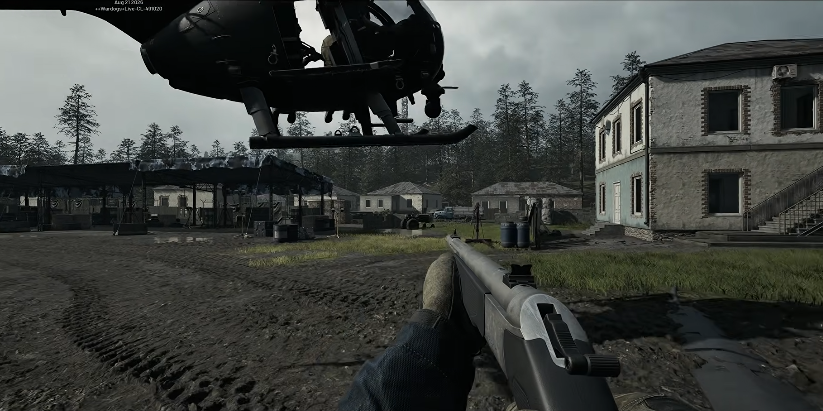
The announcement confirms industry speculation that began following the game’s muted launch. FBC: Firebreak represented a bold departure for Remedy, a studio synonymous with tightly crafted, single-player storytelling. The cooperative multiplayer shooter, set within the Federal Bureau of Control universe, was also the studio’s first self-published title, adding another layer of risk to the ambitious project.
A Final, Substantial Send-Off with “Open House”
Rather than abandoning the project outright, Remedy is delivering a robust final update designed to leave the game in a polished and enriched state. The “Open House” update is more than a simple patch; it is a comprehensive farewell package intended to reward the dedicated player base. Central to the update are five new maps for the Endless Shift game mode, each inspired by iconic locations from Control. This deliberate design choice serves to deepen the connective tissue between Firebreak and the broader Remedy Connected Universe, offering fans a tangible link to the Oldest House and other familiar settings.
Gameplay Overhauls and System Refinements
Beyond new environments, the update introduces a complete rework of the game’s Perk system. This overhaul grants players significantly more flexibility and power in crafting their character builds, addressing one of the core pieces of feedback from the community. The revision aims to increase build diversity and strategic depth, giving players new ways to engage with the game’s cooperative missions long after development has ceased. Accompanying this systemic change are numerous gameplay tweaks and balance adjustments, fine-tuning the core combat loop and enemy encounters to provide a more satisfying end-state experience.

Remedy’s Foray into Live Service: A Costly Learning Experience
In its communication, Remedy framed the entire FBC: Firebreak project as a “significant journey” and a “valuable learning experience.” This language underscores a critical reality for many traditional single-player studios: the transition to live-service development is fraught with unique challenges. The operational model requires not just launching a game, but sustaining it with a constant pipeline of engaging content, robust community management, and evolving meta-systems—all while competing in an intensely crowded marketplace.
For Remedy, the lessons are likely multifaceted. They encompass technical challenges related to server infrastructure and netcode, design challenges in creating compelling long-term progression and social hooks, and business challenges in marketing and retaining a player base for a service-based title. The studio’s statement expresses hope that players will continue to group up for cooperative missions, but the cessation of content development is a clear signal that the initial vision for the game’s growth and evolution has been recalibrated.
Infrastructure Built for Longevity on a Smaller Scale
A key concern for any player invested in an online game is server shutdown. Remedy has moved to directly address this anxiety. The studio confirmed it has made specific engineering adjustments to ensure the game’s relay servers can be maintained with a significantly reduced player volume. “We have performed engineering adjustments to ensure the maintenance of relay servers even with a lower volume of players,” the company stated, adding that it expects the servers to remain active “for many years to come.”
This is a crucial commitment. It means that while the game’s population may dwindle, the doors will not be officially closed. Players who own the game will theoretically be able to access and play it cooperatively for the foreseeable future, preserving the community’s investment. Furthermore, Remedy noted that gameplay patches and necessary bug fixes will still be released as needed, indicating a shift to a pure maintenance mode rather than complete abandonment.
Monetization Shifts to Sustain the Community
Recognizing that attracting new players is essential for the health of any multiplayer title, Remedy has implemented two major changes to the game’s commercial model. First, the studio has permanently reduced the base price of FBC: Firebreak. The standard edition now carries a lower price point, with an additional introductory discount available for a limited time. This price reduction lowers the barrier to entry for curious players who may have been hesitant at the original launch price.
The Friend Pass System: A Lifeline for Co-op
Perhaps the more impactful change is the introduction of a new, multiplatform Friend’s Pass system. This feature allows any player who owns the game to invite friends to play with them for free. The invited friends can join cooperative sessions without purchasing the title themselves. This system is a common tool in cooperative games like It Takes Two and is specifically engineered to combat the biggest threat to a niche multiplayer game: the inability to find a group. By allowing owners to easily bring their friends into the experience at no additional cost, Remedy hopes to facilitate sessions and keep matchmaking pools as active as possible.
The combination of a lower price and a free friend invite system represents a clear, player-friendly strategy to extend the game’s lifespan organically. It incentivizes current players to act as ambassadors and removes the financial friction that often prevents impromptu gaming sessions among friends.
The Future of Remedy and Multiplayer
The winding down of FBC: Firebreak does not necessarily spell the end of Remedy’s multiplayer ambitions, but it will almost certainly influence their approach. The studio is currently developing several high-profile projects, including Control 2 and the Max Payne 1 & 2 remakes, which are squarely in its single-player wheelhouse. The experience gained from Firebreak—in areas like online systems, cooperative design, and live operations—could prove invaluable for future projects that may incorporate online elements, even if they are not full-fledged live-service titles.
The industry is littered with examples of celebrated single-player studios stumbling in their first live-service attempts. What often separates a mere stumble from a catastrophic fall is how the studio manages the transition and treats its player community. Remedy’s approach with Firebreak—delivering a meaningful final update, guaranteeing server longevity, and implementing systems to help players stay connected—demonstrates a respectful and considered wind-down process. It honors the time and money invested by its players, even as it acknowledges the project did not achieve its intended scale. The true legacy of FBC: Firebreak may not be its player count or revenue, but the hard-won operational knowledge it imparts to one of gaming’s most distinctive storytellers as it navigates an evolving industry landscape.
The story of FBC: Firebreak is a modern industry parable about ambition, adaptation, and respect. It highlights the immense difficulty of breaking into the live-service arena, even for a studio with a sterling reputation. Yet, in its conclusion, Remedy has chosen a path that prioritizes the community it built, ensuring the lights stay on and the cooperative missions can continue. This final chapter, while marking the end of a dream for expansive growth, solidifies the experience as a foundational lesson—one that will undoubtedly inform Remedy’s future, whether in the eerie halls of the Oldest House or in entirely new worlds yet to be imagined.