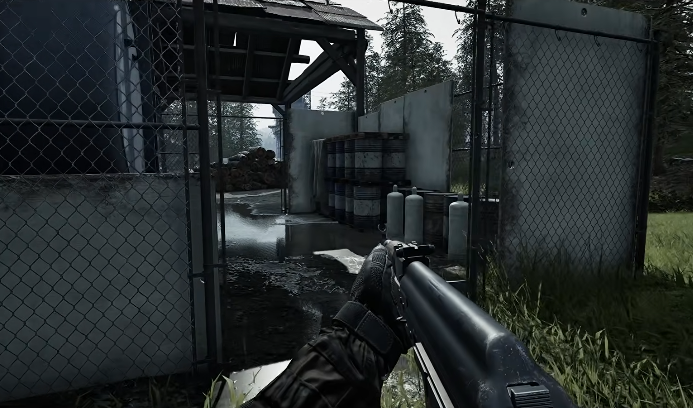
A comprehensive technical analysis of the newly released Resident Evil Requiem Port With Superior Image Quality To Xbox Series S”>Resident Evil Requiem Sets New Standard for PC Performance and Optimization”>Resident Evil Requiem has concluded that Capcom’s latest survival horror title establishes a new visual benchmark for current-generation console hardware. The deep-dive examination, conducted by the graphics experts at Digital Foundry, reveals that the updated RE Engine powering the game has undergone a qualitative transformation, delivering what is described as a “phenomenal” leap in rendering detail and photorealism.
The RE Engine Evolution: A Foundation for Visual Revolution
The core of Resident Evil Requiem‘s visual prowess lies in a significantly overhauled iteration of Capcom’s proprietary RE Engine. While the engine has been the backbone of critically acclaimed titles like Resident Evil Village and Street Fighter 6, the version deployed for Requiem represents its most substantial evolution to date. Digital Foundry’s analysis indicates that the engine’s core rendering pipeline, lighting systems, and asset streaming have been fundamentally reworked to push the boundaries of what is possible on PlayStation 5 and Xbox Series X hardware.
This is not merely an incremental update. The technical report highlights systematic improvements across multiple disciplines, from more efficient use of console memory bandwidth to advanced temporal upscaling techniques that maintain pristine image quality even during the most frenetic, particle-heavy sequences. The result is a consistently high resolution and stable frame rate that serves as the canvas for the game’s true graphical innovations: microscopic detail and material realism.
Character Rendering: A New Standard for Human Likeness
Where Resident Evil Requiem truly separates itself from its peers is in its character rendering, particularly for the returning protagonist Leon S. Kennedy and the new character, Grace. The Digital Foundry report singles out the character models as setting a “new standard” for the generation. The level of detail extends far beyond high-resolution textures, delving into subsurface scattering that accurately simulates how light penetrates human skin, and ultra-fine micro-displacement mapping that creates believable pores, wrinkles, and skin imperfections at an unprecedented scale.
Strand-Based Hair and Photorealistic Fabrics
Two specific technological implementations were highlighted as groundbreaking. First is the deployment of a fully realized, progressive strand-based hair rendering system. Unlike older techniques that used textured polygons or simplified alpha cards to simulate hair, Requiem‘s engine renders individual hair strands, complete with realistic physics, light absorption, and self-shadowing. This means Leon’s hair, Grace’s braids, and even the fur on creature models react dynamically to movement and environmental light, clumping, swaying, and catching highlights with a fidelity previously reserved for pre-rendered cinematic sequences.

Second is the achievement of what the analysts termed “photorealistic fabric simulation.” The game’s shaders for clothing materials are exceptionally complex. Digital Foundry noted the ability to distinguish between the dense weave of a tactical vest, the worn leather of a holster, the coarse cotton of a denim jacket, and the delicate, frayed threads on a character’s sleeve. These materials don’t just look different; they behave differently. They crease, stretch, and get wet with physics-based accuracy, and their interaction with the game’s advanced ray-traced lighting and global illumination system adds a tangible sense of weight and presence to every character.
Environmental Detail and Atmospheric Lighting
The technical marvels are not confined to the characters. The environments in Resident Evil Requiem are crafted with an obsessive attention to detail that supports the oppressive atmosphere. Geometry density is exceptionally high, eliminating the flat, simplistic surfaces common in even high-budget titles. Every brick in a decaying wall, every plank on a rotting floorboard, and every piece of discarded laboratory equipment is modeled with care. Parallax Occlusion Mapping is used extensively to give surfaces genuine depth, while decal and dirt accumulation systems ensure that environments tell a story of neglect and decay.
Lighting is the final, crucial piece of the puzzle. The game leverages a hybrid lighting model, combining pre-computed elements with fully dynamic, ray-traced reflections, shadows, and ambient occlusion. This allows for breathtaking moments where the flicker of a single flashlight authentically illuminates a rain-slicked corridor, casting long, dynamically soft shadows and revealing subtle reflections in puddles and glass. The volumetric fog and particle systems, used for dust, smoke, and bioplasmic mist, interact physically with these light sources, creating beams of light and pockets of deep shadow that are both visually stunning and strategically important for gameplay.
Performance and Optimization: Powering the Vision
Such graphical intensity naturally raises questions about performance. According to the analysis, Resident Evil Requiem offers two primary modes on current-gen consoles: a “Fidelity Mode” targeting a native 4K resolution with all graphical features enabled, locked at 30 frames per second, and a “Performance Mode” that employs advanced temporal reconstruction to deliver a dynamic 4K image at a targeted 60 frames per second, with some minor reductions in ray-traced effects and shadow quality. Notably, both modes were reported to maintain their target frame rates with remarkable stability, a testament to the optimized nature of the updated RE Engine.
This optimization extends to asset streaming, virtually eliminating texture pop-in and load screens during gameplay, and allowing for seamless transitions between vast, intricately detailed environments. The technical team’s ability to deliver this level of consistency while pushing graphical boundaries is, in itself, a significant achievement that other developers will likely study for years to come.
The Industry Impact: Raising the Bar
The implications of Resident Evil Requiem‘s technical presentation extend beyond the game itself. By demonstrating what is achievable with focused optimization and engine innovation on existing console hardware, Capcom has effectively raised the bar for visual fidelity in AAA development. It proves that the current generation of consoles still has substantial untapped potential, shifting expectations for what players should demand from flagship titles in terms of material realism, character detail, and atmospheric cohesion.
Future titles in the survival horror genre, and indeed in action-adventure gaming broadly, will now be measured against the standards set by Requiem‘s strand-based hair, fabric shaders, and environmental density. The game serves as a powerful case study in how technological advancement, when married to strong artistic direction, can deepen immersion and elevate storytelling. It moves beyond mere spectacle to use its graphical prowess as a tool for fear, tension, and narrative, proving that in the right hands, a new standard of visual fidelity is not just a technical achievement, but a creative one.
As players explore the haunted landscapes and face the grotesque creatures of Resident Evil Requiem, they are interacting with a milestone in real-time graphics. The meticulous work of the developers, as quantified by experts, has created an experience where every visual element, from a single strand of hair to the rust on a metal grate, is crafted to pull the player deeper into its terrifying world. This achievement redefines the ceiling for console visuals, establishing a target that will undoubtedly influence the design and ambition of the industry’s biggest projects for the remainder of this hardware generation and beyond.