The video game industry is facing a period of profound instability, with layoffs, project cancellations, and studio closures becoming a relentless norm. According to industry veterans John and Brenda Romero, this current crisis may be more severe than the infamous market crash of the early 1980s that nearly destroyed the gaming sector. In a stark interview, the couple described an industry in deep distress, where even commercial success no longer guarantees security.
Industry Veterans Sound Alarm on Unprecedented Turmoil
Brenda Romero did not mince words when assessing the state of the industry. “I feel like the industry is in a really horrible place,” she stated, drawing a direct comparison to the historical crash. “I mean, we went through the ’80s crash, and this is definitely worse. There are very few people who haven’t been affected, or whose partners have been affected, or who fear being affected. It’s a very difficult time.” This sentiment underscores a pervasive atmosphere of anxiety that extends beyond individual studios to touch nearly every professional connected to game development.
A Deepening Wave of Layoffs and Instability
The warning signs have been building for years. Following a pandemic-driven boom, the industry reached a critical inflection point in 2023 when over 16,000 developers lost their jobs. Contrary to hopes of stabilization, the wave of layoffs intensified throughout 2024 and 2025, with 2026 continuing the grim trend. What makes this crisis distinct, as highlighted by the Romeros, is its indiscriminate nature. Financial performance and critical acclaim are no longer shields against corporate restructuring.
Success No Longer Guarantees Survival
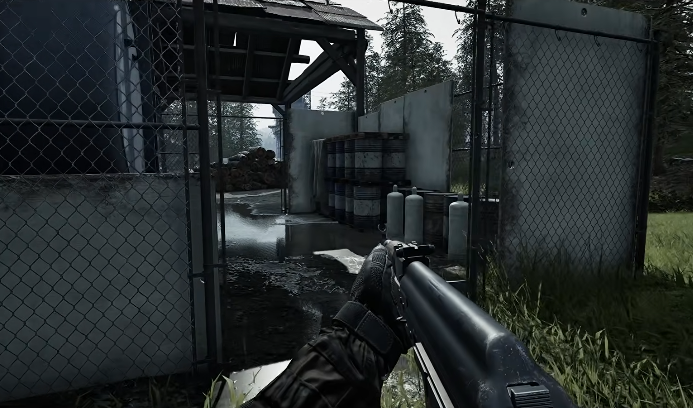
John Romero pointed to a telling example from 2025. Despite the strong performance of *Battlefield 6*, its publisher, Electronic Arts, proceeded with significant layoffs within the teams associated with the title. “I don’t understand what’s happening,” John admitted, capturing the confusion and frustration felt by many developers who see successful projects followed by staff reductions. This disconnect between product performance and job security marks a fundamental shift in the industry’s operational logic.
Direct Impact on Romero Games
The crisis is not an abstract concept for the Romeros; it has struck their own studio directly. Romero Games was severely impacted in 2025 when funding for a new project vanished overnight after a publisher withdrew support. The team had to be reduced drastically, forcing development to continue with what Brenda describes as a “micro-team.” While the project persists, its scale and form are a shadow of the original vision, illustrating how publisher volatility can instantly derail years of creative work.

Contrasting the Current Crisis with the 1980s Crash
The 1983 crash was primarily a market correction driven by a flood of low-quality games, consumer disillusionment, and the saturation of the home console market. It was a collapse of product trust and retail viability. The current crisis, however, is characterized by different, more systemic forces.
Corporate Consolidation and Shareholder Pressure
Today’s industry is dominated by publicly traded giants and multinational conglomerates under intense pressure to deliver constant growth and maximize shareholder returns. This leads to a focus on live-service models, blockbuster franchises, and aggressive cost-cutting measures, including layoffs, even in profitable quarters. The drive for endless growth clashes with the cyclical and risky nature of creative development.
The Role of Acquisition Sprees and Overextension
The recent years saw a frenzy of multi-billion dollar studio acquisitions. Companies like Microsoft, Sony, and Take-Two expanded their portfolios dramatically. Now, facing integration challenges, debt burdens, and a need to rationalize overlapping projects, many of these parent companies are cutting jobs to achieve “efficiencies.” The consolidation boom has created bloated structures that are now being trimmed, with human capital as the primary cost to cut.
Uncertainty Around AI and Market Evolution
Brenda Romero specifically highlighted the uncertainty surrounding artificial intelligence as a major concern. While some see AI as a tool for efficiency, many developers fear its potential to displace roles and further devalue artistic and technical labor. This technological ambiguity, combined with shifting market trends and platform economics, creates a landscape where long-term planning feels nearly impossible for studios of all sizes.
Navigating an Industry at a Crossroads
For developers trying to survive this period, adaptation and resilience are key. The strategies that worked a decade ago may no longer be viable, forcing a reevaluation of business models, team sizes, and creative approaches.
The Rise of Smaller, Agile Teams
The experience of Romero Games mirrors a broader trend. Many developers are being forced to operate with leaner, more flexible teams. This “micro-team” or indie-at-scale approach can foster creativity and reduce burn rate, but it also places immense pressure on a handful of individuals and can limit the scope of ambitious projects.
Exploring Alternative Funding and Distribution
Over-reliance on traditional publisher deals has proven risky. More developers are looking toward alternative models like early access, direct crowdfunding (Kickstarter, Fig), subscription services with fairer revenue splits, and even blockchain-based funding, despite its controversy. Retaining intellectual property and finding direct routes to audience support are becoming critical for sustainability.
The Enduring Need for Creative Vision
Amidst the corporate turmoil, the core driver of the industry remains: the creation of compelling interactive experiences. John Romero’s declaration, “I’m not going to stop making games,” resonates with the tenacity of creators. Brenda added with dark humor that his ideal end would be “being found dead in the chair, coding.” This commitment to the craft itself, separate from the industry’s financial machinations, is what continues to propel the medium forward.
The Path Forward Amidst Profound Uncertainty
When asked about the future, Brenda Romero expressed a sentiment likely shared by many: “This is one of those times when I just don’t know.” The path out of this crisis is unclear. It may require a fundamental restructuring of how games are funded, a correction in corporate expectations, or the emergence of new platforms and business models that distribute value more equitably. What is evident is that the industry cannot simply cut its way to health; it must rediscover a sustainable balance between art, commerce, and the well-being of the people who build its worlds. The lessons from the 80s crash were about quality control and market management. The lessons from this crisis will be about humanity, sustainability, and preserving the creative soul of an industry at a precarious juncture.