Amazon is dramatically tightening its grip on the logistics chain for third-party sellers in Europe. This week, the company is rolling out Amazon Warehousing & Distribution (AWD) across its five largest European markets: Germany, France, Italy, Spain, and the United Kingdom. The service, which launches on 20 August, allows sellers to store bulk inventory in Amazon distribution centers for extended periods, from which the company automatically replenishes stock at Fulfillment by Amazon (FBA) centers based on real-time demand. For the hundreds of thousands of small and medium-sized businesses that power the majority of Amazon’s European sales, this move represents both a powerful operational tool and a significant step toward deeper platform dependency.
What Is Amazon Warehousing & Distribution (AWD) and How Does It Work?
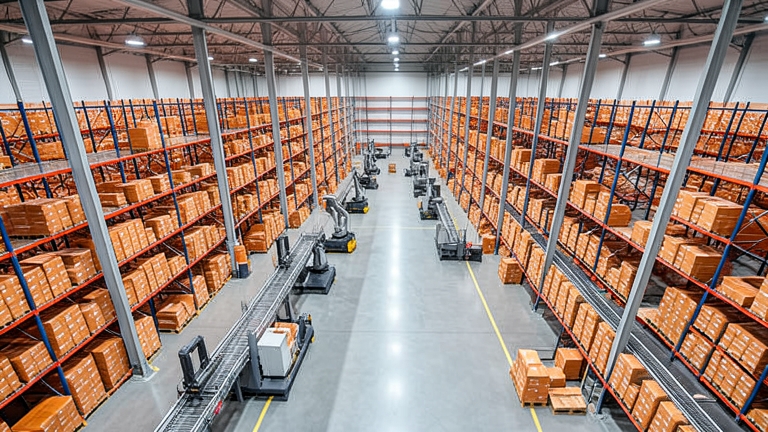
AWD functions as a bulk storage layer positioned between a seller’s supply chain and Amazon’s fast-moving FBA fulfillment network. Instead of sending inventory directly to FBA centers, where storage space is often constrained and comes with strict limits, sellers can ship larger quantities to Amazon distribution centers. Amazon then manages the transportation of goods from these warehouses to FBA centers as needed, using its internal demand forecasts to prevent stock-outs and reduce the need for manual restocking. Sellers pay a flat-rate storage fee for the long-term bulk storage, plus additional charges for processing and transportation to FBA centers.
The system addresses a chronic pain point for Amazon sellers: the tension between having enough inventory to meet peak demand and the capacity restrictions imposed by FBA. During events like Prime Day and Black Friday, sellers often face stock-outs because they cannot get enough product into FBA centers quickly enough. AWD’s auto-replenishment capability is designed to eliminate that bottleneck by maintaining a buffer of inventory in distribution centers that can be moved into FBA centers on short notice.
Which European Markets Are Getting AWD and Why These Five?
Amazon is launching AWD in Germany, France, Italy, Spain, and the United Kingdom starting 20 August. These five countries represent Europe’s largest ecommerce markets, and Amazon leads the market in each of them. The company has existing distribution infrastructure in all five nations, which it appears to be leveraging directly for the AWD service rather than building new facilities. The company told selling partners that AWD provides “flat-rate, long-term bulk storage in Amazon distribution centres with automated replenishment to Fulfilment by Amazon (FBA) fulfillment centres across Europe.”
The choice to launch in these markets first is strategic. Together, they account for the vast majority of Amazon’s European sales volume and host the largest concentration of third-party sellers. Over one hundred thousand sellers operate on Amazon’s European stores, and the majority of sales are generated by small and medium-sized businesses. By rolling out AWD in these five countries simultaneously, Amazon is offering a unified logistics solution across the continent’s core markets.

How AWD Changes the Game for Sellers: Storage Without FBA Restrictions
The most immediate benefit for sellers is the elimination of FBA capacity constraints. Under the standard FBA model, Amazon imposes strict limits on how much inventory sellers can send to fulfillment centers at any given time. These limits fluctuate based on demand, warehouse capacity, and seller performance, often creating uncertainty and making it difficult to plan for seasonal peaks. AWD offers what Amazon describes as “long-term bulk storage” without those restrictions, giving sellers the flexibility to stockpile inventory in advance.
The auto-replenishment feature is central to the value proposition. Sellers no longer need to manually monitor inventory levels and initiate transfers to FBA centers. Amazon’s system handles that automatically, based on demand signals. This reduces the risk of stock-outs during high-traffic periods and frees up seller time previously spent on logistics management. For sellers who experience sharp demand spikes during Prime Day or Black Friday, this could be transformative — provided the system works as advertised and the costs remain manageable.
A New Layer of Control: Amazon Tightens Its Grip on Seller Logistics
AWD introduces an additional link between a seller’s inventory and the FBA network. Sellers now send goods to Amazon distribution centers, which then feed into FBA centers, which then ship to customers. This extra layer gives Amazon more control over the entire logistics chain. The company already adjusted its fee structure last year to accommodate this expanded role, and the launch of AWD completes the picture: Amazon now manages the full pipeline from bulk storage to last-mile delivery.
For sellers, this increased control comes with trade-offs. AWD can simplify operations and reduce the administrative burden of managing inventory across multiple locations. It can also improve performance during peak periods by ensuring that FBA centers are consistently stocked. But it also deepens the seller’s dependence on Amazon’s infrastructure, pricing, and policies. Sellers who store inventory in AWD are essentially committing to Amazon’s replenishment logic and fee schedule, with limited ability to switch strategies quickly if costs rise or demand patterns shift.
Amazon has consistently positioned itself as an ally to European SMEs and a catalyst for their growth. The company’s European leadership has emphasized this message as regulators scrutinize its market power. AWD fits into that narrative by offering smaller sellers access to logistics capabilities that were previously available only to large enterprises. Yet the service also locks those sellers more firmly into the Amazon ecosystem, making it harder to diversify to other sales channels or fulfillment providers.
What AWD Means for the Over One Hundred Thousand European Sellers
More than one hundred thousand sellers operate on Amazon’s European stores, and the majority of sales are generated by third-party sellers, with a heavy concentration of small and medium-sized businesses. For these sellers, the launch of AWD presents both opportunities and risks. On the opportunity side, AWD can reduce stock-outs, simplify logistics, and provide storage capacity that is not subject to FBA limits. This can be particularly valuable for sellers who deal in seasonal products, high-volume items, or goods with unpredictable demand patterns.
On the risk side, AWD increases reliance on Amazon’s infrastructure and pricing. Sellers who use AWD are storing inventory in Amazon distribution centers, paying Amazon for storage and transportation, and trusting Amazon’s algorithms to determine when and how much stock to move to FBA centers. If Amazon increases storage fees or changes replenishment logic in ways that disadvantage sellers, those who have committed heavily to AWD will have limited recourse. The service also makes it more difficult for sellers to experiment with alternative fulfillment strategies, since their bulk inventory is already inside Amazon’s network.
The cost structure will be critical. Amazon charges a flat-rate storage fee for AWD, plus processing and transportation fees when goods are moved to FBA centers. Sellers need to compare these costs against the cost of storing inventory in independent warehouses, using third-party logistics providers, or managing their own fulfillment. For sellers who operate on thin margins — common in ecommerce — even small increases in logistics costs can significantly impact profitability.
How Does AWD Compare to the US Version?
Amazon launched AWD in the United States four years ago. The US version has evolved over time, and one key feature that has emerged there is the ability for sellers to use AWD to supply other sales channels beyond Amazon. In the US, sellers can store inventory in AWD and then have it shipped to fulfill orders placed on websites, marketplaces, or direct-to-consumer channels that are not part of Amazon. That capability is not included in the European launch, at least for now.
This difference matters. The ability to use AWD as a multi-channel fulfillment hub would give sellers greater flexibility and reduce the risk of being locked into Amazon’s platform. Without that option, the European version of AWD is more narrowly focused on feeding the FBA network, which reinforces Amazon’s role as both the storage provider and the sales platform. Whether Amazon eventually extends the multi-channel feature to Europe will depend on competitive dynamics, regulatory pressure, and seller demand.

Will AWD Expand Beyond the Five Largest European Markets?
Amazon has not announced plans to roll out AWD in additional European markets beyond Germany, France, Italy, Spain, and the United Kingdom. The company’s infrastructure in smaller European markets is less developed, and the density of sellers is lower, which may make the economics of AWD less attractive in those countries. Sellers operating in markets like the Netherlands, Sweden, Poland, or Belgium will need to continue relying on existing FBA arrangements or third-party logistics providers for now.
That said, if AWD gains traction in the core five markets, expansion to other countries is plausible. Amazon has a history of launching services in its largest markets and then gradually extending them to smaller ones as infrastructure and demand justify the investment. Sellers who operate across multiple European markets will want to monitor Amazon’s announcements closely, as the availability of AWD in additional countries could significantly reshape their supply chain strategies.
Strategic Implications: Why Amazon Is Pushing Deep Into Bulk Storage
Amazon’s expansion into bulk storage through AWD is not merely a convenience for sellers — it is a strategic move to capture more of the logistics value chain. By controlling inventory at the distribution center level, Amazon can optimize its entire network more effectively. The company gains visibility into long-term demand patterns, can balance inventory across regions, and reduces the need for expensive last-minute air freight or express shipping to prevent stock-outs. For Amazon, AWD is a way to reduce its own costs while increasing seller reliance on its services.
For sellers, the calculus is more nuanced. AWD can reduce operational headaches and improve performance during peak periods, but it also concentrates risk and reduces flexibility. Sellers who use AWD will need to carefully track costs, monitor Amazon’s fee changes, and maintain contingency plans in case the service does not meet their needs. The decision to adopt AWD should be based on a detailed analysis of inventory velocity, storage costs, and the seller’s appetite for platform dependency.
The timing of the launch is also significant. With Prime Day and Black Friday approaching, Amazon is offering sellers a tool to manage the seasonal demand spikes that often expose weaknesses in their supply chains. Sellers who adopt AWD now will have the opportunity to test the system during high-volume periods, but they will also be making a commitment that may be difficult to reverse quickly if the system underperforms.
What Are the Practical Next Steps for European Sellers?
Sellers in Germany, France, Italy, Spain, and the United Kingdom can begin using AWD from 20 August. For those considering adoption, the first step is to evaluate current inventory volumes and storage costs. Sellers who frequently hit FBA capacity limits or struggle with stock-outs during peak periods are the most likely to benefit. Sellers with stable, predictable inventory that fits comfortably within FBA limits may find less value in AWD.
Cost analysis is essential. Sellers should compare the flat-rate storage fees for AWD against what they currently pay for FBA storage, third-party warehousing, or self-storage. They should also factor in the processing and transportation fees that Amazon charges for moving goods from distribution centers to FBA centers. If the total cost of AWD is lower than the combined cost of current storage and the labor or software costs associated with manual replenishment, it may be worth adopting. If the costs are higher, sellers need to weigh those costs against the potential benefits of reduced stock-outs and simplified operations.
Finally, sellers should consider the strategic implications. AWD makes it easier to do business with Amazon, but it also makes it harder to do business outside of Amazon. Sellers who are building multi-channel sales strategies or who value the flexibility to switch fulfillment providers should approach AWD with caution. Those who are heavily committed to Amazon as their primary sales channel and are looking for ways to streamline operations will find AWD a natural fit.
Amazon’s launch of bulk storage across Europe’s five largest ecommerce markets is a significant escalation in the company’s logistics ambitions. For sellers, the service offers real benefits in terms of storage flexibility and automated replenishment. But it also deepens the integration between sellers and Amazon’s infrastructure, making it harder to diversify and easier to become locked in. The most successful sellers will be those who use AWD strategically — as one tool in a broader logistics toolkit — rather than those who treat it as the only option for managing inventory in Europe.