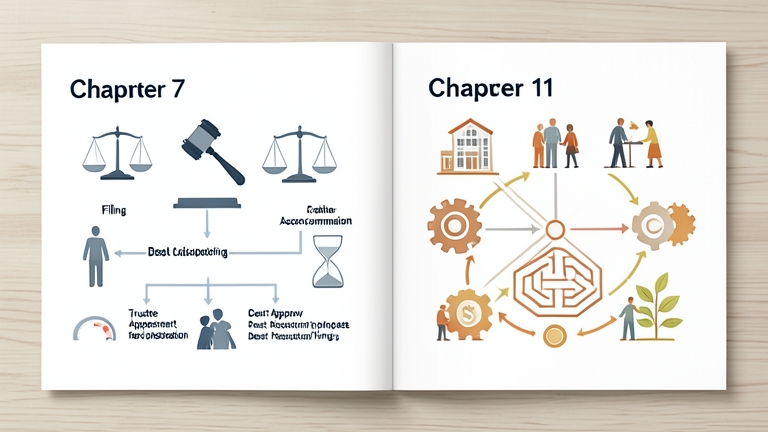
When a business or individual faces insurmountable debt, the choice between Chapter 7 and Chapter 11 bankruptcy can determine whether they walk away empty-handed or retain control of their enterprise. Both options are powerful legal tools under the U.S. Bankruptcy Code, but they serve fundamentally different purposes. Chapter 7, often called “liquidation bankruptcy,” involves selling off non-exempt assets to pay creditors, effectively shutting down the business. Chapter 11, known as “reorganization bankruptcy,” allows the debtor to restructure debts while continuing operations under a court-approved plan. Understanding the Chapter 7 vs Chapter 11 difference is critical for anyone considering bankruptcy, whether you are a struggling corporation, a small business owner, or an individual with significant debt. This article breaks down the key distinctions in process, eligibility, cost, control, and outcomes, so you can make an informed decision about which path aligns with your financial goals.
What Is Chapter 7 Bankruptcy?
Chapter 7 bankruptcy is the most common form of bankruptcy in the United States, designed for individuals and businesses that have limited income and cannot realistically repay their debts. Under Chapter 7, a court-appointed trustee takes control of the debtor’s non-exempt assets, liquidates them, and distributes the proceeds to creditors. Once the process is complete, most unsecured debts are discharged, meaning the debtor is no longer legally required to pay them. For businesses, Chapter 7 typically results in the permanent closure of operations. The entire process usually takes three to six months, making it a relatively fast resolution compared to other bankruptcy chapters.
Eligibility Requirements for Chapter 7
Not everyone can file for Chapter 7. Individuals must pass a means test, which compares their income to the median income in their state. If your income is above the median, you may be required to file under Chapter 13 instead. Businesses, including corporations and LLCs, can file for Chapter 7 without a means test, but they must demonstrate that they have no viable path to reorganization. Additionally, individuals who received a Chapter 7 discharge within the past eight years are ineligible to file again.
The Liquidation Process in Chapter 7
Once a Chapter 7 petition is filed, an automatic stay goes into effect, halting all collection activities, including lawsuits and wage garnishments. The trustee then reviews the debtor’s assets to determine which are exempt under state or federal law. Exempt assets may include some home equity, a vehicle, and personal belongings up to certain limits. Non-exempt assets—such as a second home, luxury vehicles, or investment accounts—are sold, and the cash is distributed to creditors in a priority order. Secured creditors are paid first, followed by unsecured creditors. Any remaining unsecured debt is discharged at the end of the process.
What Is Chapter 11 Bankruptcy?
Chapter 11 bankruptcy is primarily used by businesses that want to continue operating while restructuring their debts. Unlike Chapter 7, there is no liquidation of assets. Instead, the debtor remains in possession of their property and business operations as a debtor in possession (DIP). The debtor proposes a reorganization plan that outlines how creditors will be paid over time, often by extending payment terms, reducing principal amounts, or converting debt to equity. The plan must be approved by creditors and confirmed by the bankruptcy court. Chapter 11 is complex, expensive, and lengthy, often taking months or even years to complete.

Who Can File for Chapter 11?
Chapter 11 is available to individuals, partnerships, corporations, and LLCs. While it is most commonly associated with large corporations, small businesses and even high-net-worth individuals can file under Subchapter V of Chapter 11, which offers a streamlined process for entities with debts below a certain threshold. Unlike Chapter 7, there is no means test for Chapter 11, making it accessible to debtors with substantial income who need to restructure rather than liquidate.
The Reorganization Process in Chapter 11
The Chapter 11 process begins with the filing of a petition and the imposition of an automatic stay. The debtor continues to operate the business under court supervision and has the exclusive right to propose a reorganization plan for the first 120 days. The plan must classify claims into secured, unsecured, and priority categories and specify how each class will be treated. Creditors vote on the plan, and if a majority approves, the court can confirm it even if some creditors object—a process known as a cramdown. Once confirmed, the debtor must execute the plan, which may involve selling underperforming assets, renegotiating leases, or securing new financing.
Key Differences Between Chapter 7 and Chapter 11
The Chapter 7 vs Chapter 11 difference can be summarized by a single distinction: one involves liquidating assets to pay creditors, while the other reorganizes debts to allow continued operations. However, the implications of that difference affect every aspect of the bankruptcy process, from cost and control to the final outcome for the debtor and creditors.
Control Over Assets and Operations
In Chapter 7, the debtor surrenders control of all non-exempt assets to the trustee. Business owners lose the ability to make operational decisions, and the business is typically shut down. In Chapter 11, the debtor retains control as a debtor in possession, continuing to run day-to-day operations while the court oversees the restructuring. This makes Chapter 11 the preferred option for business owners who want to save their company and maintain a management role.
Cost and Complexity
Chapter 7 is relatively inexpensive and straightforward. Filing fees are around $338, and legal fees are generally affordable, especially for straightforward cases. Chapter 11, by contrast, is one of the most expensive legal processes available. Legal fees can range from $50,000 to several million dollars, depending on the complexity of the case. The need for financial advisors, accountants, and expert witnesses adds to the cost. For small businesses, Subchapter V has reduced some of these costs, but Chapter 11 remains a resource-intensive option.
Timeline and Duration
Chapter 7 is designed for speed. Most cases are resolved within three to six months. The trustee liquidates assets quickly and distributes proceeds, and the discharge is granted soon after. Chapter 11 is a marathon. Simple cases may take six to twelve months, while complex corporate reorganizations can drag on for years. The timeline depends on the size of the debtor, the number of creditors, and the complexity of the reorganization plan.
Impact on Credit and Future Borrowing
Both Chapter 7 and Chapter 11 remain on a credit report for up to ten years. However, the practical impact differs. Chapter 7 often leaves the debtor with no assets and a fresh start, but rebuilding credit takes time and discipline. Chapter 11 allows the debtor to preserve assets and income streams, which can make it easier to secure post-bankruptcy financing, especially if the reorganization plan restores cash flow and reduces debt loads.
Discharge of Debts
In Chapter 7, the discharge is broad and final. Most unsecured debts, including credit card balances, medical bills, and personal loans, are wiped out. Certain debts, such as student loans, child support, and most tax debts, are not dischargeable. In Chapter 11, the discharge is narrower and conditional. The debtor must complete the reorganization plan, and debts are discharged only to the extent specified in the plan. Creditors may retain claims against the debtor if the plan is not fully executed.
Which Option Is Best for Your Situation?
The choice between Chapter 7 and Chapter 11 depends on your financial goals and the nature of your debt. If you have no viable path to profitability and want to walk away from your debts quickly, Chapter 7 may be the best solution. It provides a clean break and allows you to start over, though you will lose non-exempt assets. If you have a business that can be turned around or significant assets you wish to protect, Chapter 11 offers the opportunity to restructure debts while retaining control. Individuals with high incomes and substantial debts that cannot be discharged under Chapter 7 may also benefit from Chapter 11, especially if they have a steady income to fund a reorganization plan.
Considerations for Small Business Owners
Small business owners face unique challenges when choosing between these two bankruptcy chapters. Chapter 7 means the end of the business, but it can relieve personal liability if the owner guaranteed business debts. Subchapter V of Chapter 11, introduced in 2019, provides a more affordable and streamlined reorganization option for small businesses with debts under $7.5 million. Under Subchapter V, the debtor works with a trustee to develop a plan over a shorter timeline, and the process is less adversarial than traditional Chapter 11. For many small business owners, Subchapter V offers the best of both worlds: the opportunity to restructure without the prohibitive cost of a full Chapter 11 case.
When Individuals Choose Chapter 11
While rare, some individuals file for Chapter 11 instead of Chapter 7 or Chapter 13. This typically happens when the individual’s debts exceed the Chapter 13 limits (currently under $2.75 million) or when they have complex assets, such as multiple properties or business interests, that cannot be easily liquidated. Chapter 11 allows individuals to propose a repayment plan that spreads payments over several years, often at reduced amounts. However, the cost and complexity make it a last resort for most individuals.
How Creditors Are Affected in Each Chapter
Creditors experience the Chapter 7 vs Chapter 11 difference in very direct ways. In Chapter 7, secured creditors are paid first from the liquidation proceeds, while unsecured creditors typically receive only a fraction of what they are owed, and often nothing. In Chapter 11, creditors have a say in the reorganization plan and may receive more favorable treatment, especially if the business survives and generates ongoing revenue. Secured creditors in Chapter 11 may retain their liens and continue to receive payments under the plan, while unsecured creditors may receive less than full payment but more than they would in a liquidation scenario.
The Chapter 7 vs Chapter 11 difference ultimately comes down to the fundamental choice between liquidation and reorganization. Chapter 7 offers a swift, cost-effective exit from overwhelming debt at the cost of losing assets and business operations. Chapter 11 provides a pathway to survival for businesses and individuals who have the resources and determination to restructure their financial obligations. Each path carries distinct legal, financial, and operational consequences, and the right choice depends on your specific circumstances. If you are considering bankruptcy, consult with an experienced bankruptcy attorney who can evaluate your situation and guide you toward the chapter that best aligns with your long-term financial health. Understanding the difference between Chapter 7 and Chapter 11 is the first step toward regaining control of your financial future.