In an industry where development costs regularly spiral into hundreds of millions, a veteran-led studio has delivered a technical blueprint for efficiency. Embark Studios, founded by former EA and DICE executive Patrick Söderlund, has developed its debut competitive shooter, Arc Raiders, using what Söderlund describes as “a quarter of the budget” of a typical AAA production. The revelation challenges entrenched industry assumptions about the relationship between budget, team size, and game quality, pointing to a strategic combination of proprietary technology and lean, empowered development teams as the new competitive edge.
The Budget Conundrum in Modern Game Development
The AAA gaming sector has long operated under a simple, escalating formula: bigger teams, longer timelines, and exponentially larger budgets yield better, more profitable games. Titles like “Call of Duty,” “Grand Theft Auto,” and recent “Final Fantasy” entries are routinely reported to have budgets exceeding $200 million, with marketing costs often doubling that figure. This model creates immense financial pressure, forcing studios to chase record-breaking sales to merely break even, often at the cost of creative risk. The result is a market saturated with sequels, safe bets, and live-service models designed to extract maximum player value over time.
Patrick Söderlund, having steered franchises like “Battlefield” during his tenure at DICE, is intimately familiar with this high-stakes environment. His decision to found Embark Studios in Stockholm was, in part, a reaction to it. “We wanted to question everything,” Söderlund explained in a recent interview. “The standard playbook says you need 500 people and half a billion dollars to make a world-class game. We started by asking if that was truly the only path, or if it was just the most well-trodden one.”
Embark’s Foundational Bet: The Proprietary Tech Stack
The cornerstone of Embark’s budget-defying strategy is not merely a lean team—though that is a factor—but a heavy, upfront investment in proprietary development tools. Before a single line of game code for Arc Raiders was written, Embark’s engineers spent years building a suite of internal technologies, including the bespoke game engine and a suite of AI-assisted content creation tools.
Revolutionizing Asset Creation with AI
One of the most significant cost centers in modern game development is asset creation. Building the high-fidelity 3D models, textures, animations, and environmental details that players expect requires armies of artists working for years. Embark tackled this bottleneck head-on by developing AI tools that dramatically accelerate the process. For instance, an artist can sketch a rough concept for a weapon or piece of scenery, and an AI tool can generate multiple high-resolution, game-ready versions in minutes, which the artist then refines. This doesn’t replace human creativity but augments it, allowing a smaller art team to produce a volume and quality of assets that would traditionally require a team three or four times the size.

The Engine Advantage
While many studios opt for established engines like Unreal or Unity to save time, Embark chose the more arduous path of building its own. This decision, Söderlund argues, pays dividends in long-term efficiency and creative control. “An off-the-shelf engine is built to solve everyone’s problems, which means it’s optimized for no one’s specific vision,” he stated. “Our engine is built from the ground up for the types of games we want to make—games with vast, seamless environments, complex physics, and a unique visual identity. It removes layers of abstraction and allows our developers to work closer to the metal, which means faster iteration and fewer performance headaches down the line.”
Operational Philosophy: Small, Senior, and Autonomous
Complementing its tech-first approach is Embark’s operational structure. The studio has deliberately remained relatively compact, with a team of seasoned developers rather than a sprawling hierarchy. This fosters a culture of autonomy and ownership. “When you have a small, senior team where everyone understands the full picture, decision-making is incredibly fast,” Söderlund noted. “There’s no need for weeks of meetings and approvals across multiple departments. If a designer has an idea, they can prototype it, get feedback, and iterate within days, not months.”
This approach mitigates one of the great hidden costs of AAA development: bureaucratic inertia. In massive projects, changes become exponentially more expensive and time-consuming as development progresses. Embark’s lean model is designed to maintain flexibility, allowing the team to pivot, refine, and polish core gameplay loops without triggering budget-busting delays.
Arc Raiders as Proof of Concept
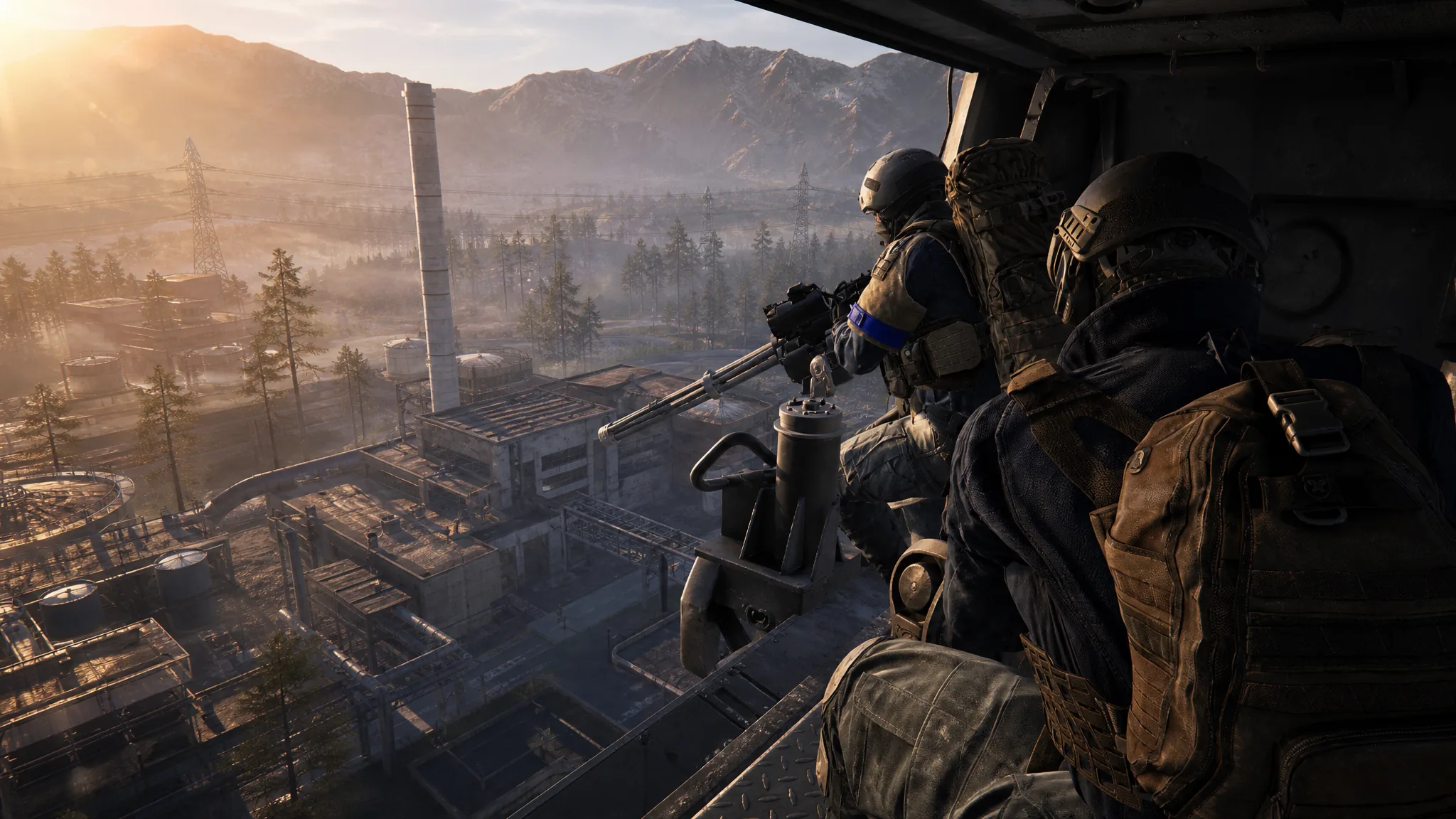
Arc Raiders itself serves as the tangible proof for this methodology. The game is a free-to-play, third-person shooter where players band together as Raiders to defend against waves of mechanized invaders, the ARC. Early previews highlight its striking visual style, combining a retro-futuristic aesthetic with realistic lighting and physics, and its dynamic, cooperative gameplay. The scope and polish are demonstrably AAA, belying its reportedly modest budget.
The game’s development cycle has been notably transparent and community-focused, another benefit of a less frantic financial runway. Without the pressure of a $200 million hole to dig out of, Embark has been able to take its time, run multiple beta tests, and genuinely respond to player feedback—a luxury often unavailable to studios operating on razor-thin margins dictated by publisher expectations.
Implications for the Broader Gaming Industry
Embark’s success with Arc Raiders, should it prove a commercial hit, could signal a shift in the industry’s economic model. It presents a viable alternative for established developers and new studios alike: invest deeply in tools and technology upfront to unlock sustainable, scalable production downstream.
A New Path for Mid-Size Studios
This model is particularly compelling for the so-called “AA” or ambitious independent studios. It offers a roadmap to achieving AAA-quality production values without needing the backing of a mega-publisher or undertaking crippling financial risk. The emphasis shifts from brute-force manpower to strategic technological leverage.
Challenges and Considerations
The approach is not without its challenges. Building a proprietary engine and toolset requires significant initial capital and technical expertise, a barrier to entry for many. It also carries the risk that the technology may not work as intended, potentially sinking the studio before a game is even made. Furthermore, the model relies on a rare combination of veteran talent—developers who are both highly skilled and comfortable with a high degree of autonomy and responsibility.
The Future of Game Development Economics
Patrick Söderlund’s revelation is more than a corporate brag; it’s a case study in disruptive thinking. In an era where rising costs threaten to stifle innovation and consolidate power among a few giant publishers, Embark Studios demonstrates that efficiency and creativity are not mutually exclusive. By prioritizing powerful, purpose-built technology and a lean, empowered team structure, they have decoupled production quality from budgetary bloat.
The true legacy of Arc Raiders may not be its gameplay or its success on the charts, but the precedent it sets. It proves that the future of top-tier game development might not lie in ever-increasing budgets, but in smarter, more focused investment in the tools and cultures that enable creators to build their visions effectively. As other studios scrutinize Embark’s model, the entire industry may begin to recalibrate its understanding of what it truly costs—and what it truly takes—to make a great game.