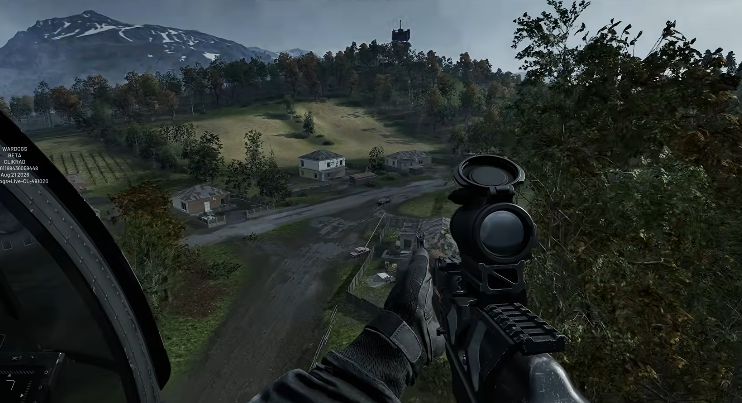
Independent developer Perfect Random has released the substantial Scholar’s Update for its acclaimed retro first-person shooter Sulfur, delivering three new weapons, two spectral enemy types, and sweeping balance changes across the game’s arsenal and progression systems. The update represents one of the most comprehensive gameplay revisions since the title’s launch, directly responding to community feedback and analytics to refine the core shooting and crafting loop that has earned the game thousands of positive reviews.
New Arsenal and Ethereal Adversaries Expand Combat
The headline additions are three new firearms: the Chat-Pardeur 98, the Songbird, and the notably named Warpig. Each weapon is designed to fill distinct combat niches, offering fresh tactical options for players navigating Sulfur’s challenging, procedurally generated levels. The Warpig, in particular, has sparked immediate interest within the community for its evocative name and implied heavy firepower.
Accompanying the new guns are two new enemy types designed to test player adaptability: the Poltergeist and the Apparition. Described as “ghostly threats with unique ghostly behaviors,” these foes likely introduce new attack patterns and movement mechanics that deviate from the game’s existing bestiary, forcing veterans to adjust their strategies.
A Deep Dive into the Meta Shift: Oils and Attachments Rebalanced
The most impactful component of The Scholar’s Update is not the new content but the extensive reworking of the existing systems. The patch notes detail over 150 changes to Oils and Attachments, the game’s primary mechanics for customizing weapon behavior and stats.
The stated goal is to “make more builds viable and interesting.” Previously, certain Oils or Attachments may have been considered mandatory or entirely useless. This rebalance aims to flatten that power curve, encouraging experimentation with previously overlooked combinations. For instance, numerous silencers have had their flat spread reduction removed and replaced with critical chance bonuses and recoil reduction, fundamentally altering their role from accuracy tools to stealth-focused modifiers.

Weapon Value and Statistical Adjustments
Beyond the new items, the update makes significant numerical adjustments to the existing arsenal. Weapons like the Deathstar, M11A2 Fisk, and Longboy have seen substantial increases to their in-game value (measured in SULF), which may correlate with their power level or rarity. Stat tweaks are also prevalent; the Augusta’s spread has been doubled, the Arbiter’s durability has been corrected to its intended 1800, and the Scroll of Thunderbolt enchantment has received a less severe attack speed penalty.
These changes indicate a meticulous review of player data, aiming to bring underperforming weapons up to par and ensure that high-value gear feels appropriately powerful. The adjustments to bullet speed, spread, recoil, and durability across dozens of Oils suggest a concerted effort to give each modifier a clearer, more defined role in a player’s loadout.
Quality of Life and Technical Improvements
The Scholar’s Update goes beyond balance, introducing numerous refinements to the user experience and game stability. A new inspection feature (with detailed tooltips promised for the next update) allows players to press ‘L’ to view their current gun build visually. This addresses a key piece of feedback regarding the opacity of complex weapon modifications.
Performance and Gameplay Polish
Technical optimizations are a key focus. Players now have control over “gib quantity settings,” allowing them to manage performance when enemies explode en masse. The update also fixes an issue where overlapping puddle effects from enchantments could hinder performance. Gameplay fluidity is enhanced with changes like reloads now interrupting firing animations, preventing frustrating delays with slow-firing weapons, and the addition of input buffering for reloads.
Progression and Economy Tweaks
The game’s economy and progression have been fine-tuned. Ammunition in the player’s inventory is now capped, with excess automatically sent to the stash, preventing inventory clutter. Several bosses, including Desert Clause, the Emperor, and the Witch, now award significantly more Weapon XP upon defeat, speeding up progression in later game stages. An on-screen low-health effect has been added as a vital visual cue, and an exploit with the Bulk Ammo Shop has been sealed.
Level Design Refinements and Bug Fixes
The update demonstrates Perfect Random’s commitment to polish, addressing a wide array of level-specific bugs and glitches. Across all major zones—Caves, Town, Sewers, Castle, Forest, Bridge, and Fortress—issues like overlapping geometry, broken collisions, enemies spawning inside walls, and stuck player positions have been resolved. A new chunk has been added to the Caves, expanding the explorable area.
The Endless mode receives particular attention with the addition of new bosses (Terrorbaum, Desert Clause & Witch) and fixes to geometry that previously hindered player movement. These changes ensure a smoother and more predictable experience in Sulfur’s most demanding game mode.
The meticulous nature of The Scholar’s Update, from its major balance overhaul to its countless bug fixes, underscores Perfect Random’s development philosophy. Rather than resting on the game’s positive reception, the studio is actively engaging with its systems, refining mechanics, and expanding content based on how players interact with their world. This update transforms Sulfur from a complete package into an evolving one, signaling to fans that their investment is met with ongoing support and thoughtful iteration. The promise of a detailed inspection tooltip system in the next update further confirms that this cycle of refinement is set to continue, ensuring that the gritty, gun-crafting heart of Sulfur keeps beating stronger with each new patch.