The latest major installment in the storied James Bond franchise is on the horizon, promising to redefine the interactive spy thriller. 007 First Light, developed by the acclaimed studio behind the Hitman series, leverages a deep pedigree in stealth to craft an experience that places player ingenuity at its core. Rather than funneling the player down narrow corridors of prescribed action, the game is built from the ground up to be a sandbox of espionage, where observation, planning, and a diverse arsenal of tools empower individuals to craft their own legendary missions.
This philosophy was illuminated by the recent “Rules of Spycraft” gameplay video, which serves as a masterclass in the game’s systemic design. The footage shifts the focus from a simple origin story to a practical exploration of the tools at an MI6 agent’s disposal. It presents a world where every mission can be approached through a blend of stealth, social deception, or direct confrontation, with the game’s mechanics encouraging players to blend these approaches on the fly. This isn’t merely a choice between “loud” and “quiet” at a mission’s start; it’s a dynamic, moment-to-moment calculus where a single misstep can escalate a surgical infiltration into a chaotic firefight—and vice versa.
The Foundational Framework of the Agent’s Toolkit
At the heart of 007 First Light is a sophisticated gadget system designed not just to offer solutions, but to generate possibilities. These tools are instruments of player creativity, each with multiple functions that interact with the environment and enemy AI in predictable yet expansive ways. The Q Lenses act as the agent’s primary information hub, scanning and highlighting interactive objects, hackable security systems, patrol routes, and key environmental storytelling details. This technology essentially provides the player with the raw data needed to formulate a plan, turning the entire level into a puzzle box of potential approaches.
Beyond intelligence gathering, the gadgets offer active means of manipulation. The laser device is a quintessential example of this multi-role design. It can be used silently to cut through locks or reinforced glass, creating new, unexpected pathways. Its secondary function as a non-lethal weapon can incapacitate a guard from a distance, while its ability to superheat objects creates environmental distractions—overloading a control panel to cause a sparking commotion, for instance. Similarly, the phone dart provides a silent, long-range takedown option, perfect for surgically removing a guard from a choke point without alerting others. Smoke capsules and blinding explosive mines further expand the toolbox for controlling enemy sightlines and creating windows of opportunity, whether for a silent takedown or a tactical retreat.
The crucial distinction here is that these gadgets are not single-use “win buttons.” Their effectiveness is governed by player positioning, timing, and an understanding of enemy behavior. Using a smoke grenade in a wide-open hallway may offer brief concealment, but using it at a narrow doorway can create a perfect bottleneck for ambushing pursuing guards. This systemic interplay ensures that mastery comes not from memorizing gadget locations, but from internalizing their principles and applying them creatively to novel situations.
The TacSim: A Laboratory for Mastery
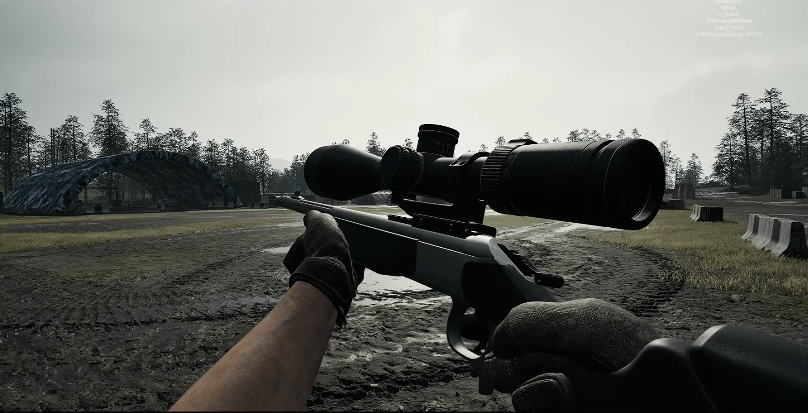
Understanding that such an open-ended system benefits from a dedicated space for experimentation, 007 First Light introduces the Tactical Simulation mode, or TacSim. This isn’t a simple training arena or a glorified menu. It’s an integrated gameplay loop designed to deepen engagement and reward mastery. After completing story missions, players can access specific simulation scenarios that challenge them to perfect their techniques or accomplish objectives under new constraints, such as time limits, limited tools, or heightened security.
The value of TacSim is multifaceted. Practically, it allows players to test theories and gadget combinations in a controlled, consequence-free environment, building the muscle memory and strategic confidence needed to execute more audacious plans in the main campaign. From a rewards perspective, it significantly boosts the game’s replayability. Successfully completing these simulations grants experience points used to unlock cosmetic variants for weapons and gadgets, and also unveils new, optional missions. Perhaps most compelling for collectors and lore enthusiasts is the inclusion of a gallery of unlockable collectibles, rewarding thorough exploration and proficiency with new narrative insights and artifacts from the Bond universe.
This structure transforms the progression system from a linear grind into a curated journey of skill development. Players are incentivized to revisit levels not just to find a missed item, but to truly master the interconnected systems, approaching familiar spaces with a more sophisticated understanding of their possibilities.
Infiltration and the Rhythm of the Spy
Where the gadgets provide the “how,” the core stealth gameplay provides the “when” and “where.” Infiltration in 007 First Light is presented as a patient, observational ballet. Players are encouraged to eavesdrop on conversations, which can reveal vital mission details, passwords, or hints about patrol patterns and vulnerabilities. Identifying these opportunities for stealth is a key skill, turning seemingly secure areas into webs of manageable risks. The game’s level design appears to favor verticality and multiple entry points, encouraging players to scout from vantage points, use their Q Lenses to tag enemies, and plan a route that minimizes exposure.
The enemy AI is built to facilitate this cat-and-mouse dynamic. Guards operate on believable patrol routes and react to disturbances in a graduated manner—a suspicious noise might prompt an investigation, a found unconscious body will trigger a search, and direct visual contact will lead to a full-scale alert. This tiered response gives players a chance to recover from minor mistakes, correct course, or choose to escalate the situation deliberately. The line between stealth and action becomes a permeable membrane, and the most satisfying moments will likely come from navigating that tension, using a gadget to cleverly reset an alert status or silently eliminating a search party to return to the shadows.
When Stealth Fails: The Dynamics of Combat
While stealth is a privileged path, 007 First Light acknowledges that sometimes the mission goes loud. The developers have drawn inspiration from kinetic, flow-state combat systems seen in titles like the Batman: Arkham series and Uncharted. This suggests a move away from clumsy, cover-based shooting toward a more fluid and responsive style. Expect a focus on melee takedowns, counter-attacks, and the use of the environment during fights—disarming an enemy, using their weapon to suppress others, or triggering an explosive canister in the heat of battle.
This combat philosophy serves two purposes. First, it provides a thrilling and visually spectacular fail state, ensuring that a blown stealth attempt doesn’t simply result in a punishing game-over screen but transitions into a different, equally engaging type of challenge. Second, it allows for hybrid playstyles. A player might orchestrate a perfect silent infiltration for 90% of a mission, only to choose a dramatic, confrontational finale. The system is designed to support both the meticulous ghost and the devastatingly efficient action hero, and all the shades in between.
The forthcoming limited-edition DualSense controller, themed around the game, hints at how this sensory experience will be enhanced on PlayStation 5. The advanced haptic feedback and adaptive triggers could provide tangible cues for gadget use—feeling the subtle pull of a bowstring on the phone dart or the focused vibration of a laser cutting through metal—deepening the immersion in both quiet infiltration and chaotic firefights.
The Narrative Context for a Rookie 007
All these mechanics are framed within the narrative of Bond’s early career. This “first light” period is the perfect setting for such a systems-driven game. As a rookie agent, the player is learning the tools of the trade, making mistakes, and developing their personal style. The game’s structure—with its emphasis on player choice, experimentation, and mastery through the TacSim—directly mirrors the journey of a spy honing their craft. The inclusion of an original theme song performed by Lana Del Rey further underscores the project’s commitment to marrying cinematic Bond atmosphere with interactive depth, promising a tone that is both classic and fresh.
The promise of 007 First Light is the promise of becoming Bond, not just watching him. It moves beyond the linear set-pieces of earlier adaptations to offer a playground of espionage where creativity is the ultimate weapon. By combining IO Interactive’s proven expertise in systemic stealth with the rich lore and style of the Bond universe, the game is poised to deliver an experience where every player can author their own unique, legendary spy story. The mission begins on May 27th for PlayStation 5, Xbox Series X|S, and PC, with a release on Nintendo Switch 2 to follow later in the summer.