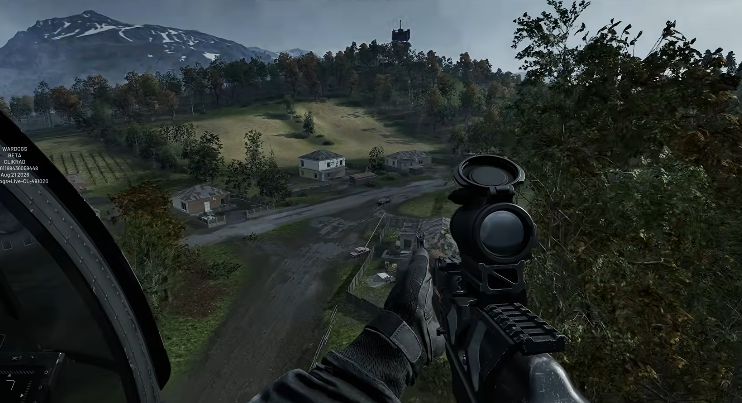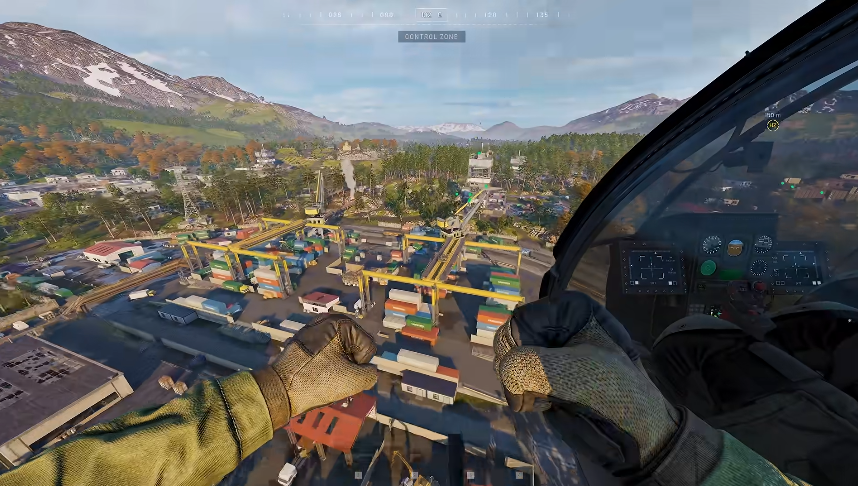
In a candid revelation that has sent ripples through the competitive gaming community, Alex Graner, a senior level designer recently laid off from Wildlight Entertainment, has identified the studio’s foundational commitment to a demanding 3v3 competitive structure as the primary catalyst for Highguard’s player retention struggles and the subsequent withdrawal of financial backing by Tencent.
The Competitive Pivot That Isolated the Casual Base
Graner, who worked on the free-to-play shooter from its inception, described a development trajectory that increasingly leaned into high-stakes competitive play. “We really leaned into the competitive side over the course of development, and that was always one of my biggest fears as a player,” Graner stated. This creative direction, he argues, built inherent barriers that alienated a significant portion of the potential player base seeking a more accessible experience.
The intense spotlight following Highguard’s high-profile reveal at The Game Awards created immense pressure, but Graner insists the internal design philosophy proved more damaging. The choice to center the experience around 3v3 “duos” created what he describes as the most labor-intensive version of any game mode.
Why 3v3 Became a Prohibitive Bottleneck
“3v3 duos is always the most ‘laborious’ version of anything—battle royale, objective modes, wingman, whatever,” Graner explained. “It demands a very high level of team communication and coordination, which doesn’t leave much room for casual play. I think that was the biggest thing that drove a lot of players away from Highguard.”
This structural decision created a dual-layered challenge for new players. First, the game required precise mechanical skill in movement and aiming, a considerable entry barrier in itself. Second, and perhaps more critically, it demanded immediate proficiency in complex team-based tactics with minimal room for individual error or experimentation, a environment often hostile to newcomers.

A Tale of Two Launches: Simplicity Versus Complexity
Graner drew a stark comparison to the record-breaking launch of Respawn Entertainment’s Apex Legends. He noted that Apex arrived as the battle royale genre was still ascending and was “very easy to understand after one match.” Its core loop—drop, loot, survive—was immediately graspable, even as its depth revealed itself over time.
Highguard, in contrast, presented players with a dense rule set and multi-stage objectives from the outset. “Highguard has all these rules and different stages—you want to loot, then you need to chase an objective, plant another one, go into overtime… It works very well at a very high level, but for someone coming in new, it’s a lot to absorb,” Graner admitted. The game failed to provide an intuitive onboarding ramp, instead asking players to master its intricate systems while simultaneously performing under the pressure of a small-team format where each player’s impact is magnified.
The Financial Aftermath: Tencent’s Swift Withdrawal
The consequences of this player exodus were severe and immediate. Parallel to Graner’s disclosures, a report confirmed that Tencent, the Chinese gaming and social media giant, withdrew its funding from Wildlight a mere two weeks after Highguard’s launch. Employees were summoned to an all-hands meeting and informed of layoffs, as the game had apparently failed to meet the key performance metrics stipulated by the investor.
Wildlight publicly acknowledged the staff reductions without specifying numbers, stating that a core group of developers remains working on the title. Industry estimates suggest the team now consists of fewer than 20 people, a fraction of its original size. The scale of the cuts indicates a rapid reassessment of the project’s viability by its primary financial supporter.
The Shadow Investor: Tencent’s Covert Involvement
Adding another layer of intrigue to the story, Tencent’s role in Highguard’s development was reportedly kept under wraps until days after the layoffs, when the outlet Game File confirmed the company’s involvement. The reasons for this discretion surrounding one of the world’s most prominent gaming conglomerates have not been clarified. This secrecy raises questions about the nature of the partnership and whether the pressure to perform was amplified by the involvement of such a significant, yet hidden, stakeholder.
The sequence of events—launch, poor retention, funding pull, mass layoffs, followed by the revelation of a secretive major investor—paints a picture of a project that failed to find its market fit at a critical moment. The developer’s post-launch statement, committing to continue work with a skeleton crew, suggests an attempt to salvage the project, but the path forward remains uncertain without the original financial engine.
Lessons from a High-Profile Stumble
The Highguard case study serves as a potent reminder for live-service game development, particularly in the crowded shooter genre. It highlights the precarious balance studios must strike between cultivating a competitive scene and maintaining a healthy, broad player base. A game can be expertly tuned for high-level play, but if its core loop is perceived as inaccessible or punishing for the average player, its ecosystem can collapse before a competitive community ever has a chance to solidify.
Furthermore, the incident underscores the volatile nature of publisher-developer relationships in the modern era, where metrics-driven decisions can lead to abrupt course corrections. The fact that Tencent’s evaluation period lasted only two weeks demonstrates the intense scrutiny and immediate performance expectations placed on live-service titles in a saturated market.
Graner’s reflections point to a fundamental tension in game design: the conflict between depth and accessibility. Highguard prioritized depth and competitive integrity, building a game that demanded commitment. In doing so, it may have overlooked the initial hook—the simple, compelling joy—that convinces players to make that commitment in the first place. The industry continues to grapple with this challenge, as the most successful titles often manage to mask their complexity behind an elegantly simple first impression, allowing mastery to unfold gradually rather than presenting it as a prerequisite for enjoyment.
The story of Highguard is not merely one of a game struggling to find its audience; it is a narrative about the risks of designing for an idealized, highly-skilled player at the expense of the broader community that sustains a live service. It questions whether a pure, uncompromising competitive vision can thrive without the fertile ground of a larger, more casual player base to support it, fund it, and ultimately, aspire to join its ranks. As studios worldwide dissect this case, the legacy of Highguard may well be as a cautionary tale about the perils of building walls where there should be gates.