Here’s the thing nobody’s saying out loud: The Blood of Dawnwalker and Kingdom Come Deliverance 2 look like they’re fighting for the same audience. Same general time period. Same Eastern European developer DNA. Same “medieval realism” marketing language. But they’re not competing. They’re complementary opposites. One wants you to feel like a peasant who earns every scrap of competence. The other wants you to feel like a monster who has to manage what you’re losing to stay human.
And that gap is massive.
Let me show you exactly where these two games diverge, where they accidentally overlap, and why choosing between them is like choosing between a hammer and a scalpel. Both tools. Both medieval. But you wouldn’t swing one at the other’s job.
The Setting: History Versus Myth
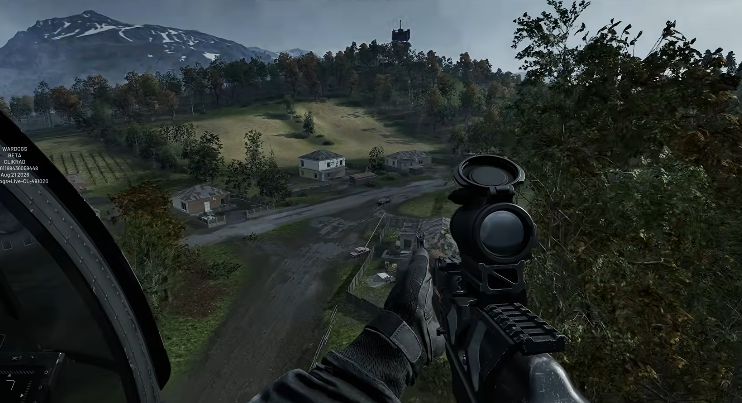
Kingdom Come Deliverance 2 is a historical simulator with a fantasy filter stripped clean. Warhorse Studios built 15th-century Bohemia with obsessive accuracy — real castles, real political factions, real armor thickness measured against real historical records. You’re Henry, a blacksmith’s son, and your biggest supernatural encounter is a bad hangover after too much mead. The game actively punishes you for treating it like a fantasy RPG. Swing a sword like you’re in Skyrim and you’ll get slaughtered by a farmer with a pitchfork who knows how to hold his guard.
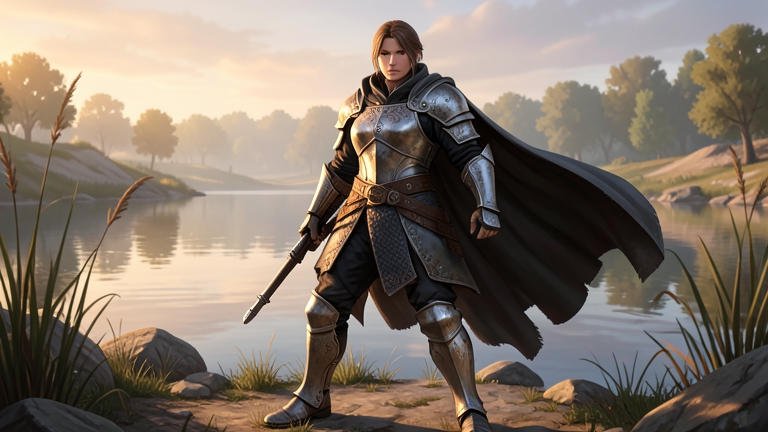
The Blood of Dawnwalker sits in 14th-century Europe too. But Rebel Wolves isn’t interested in historical accuracy. They’re interested in historical texture — the mud, the stone, the candlelit gloom — as a backdrop for something much darker. Vampires won their war. You’re not a blacksmith’s son. You’re a Dawnwalker, a hybrid between human and vampire, cursed and gifted in equal measure. The world is a dark fantasy painting that happens to wear medieval clothes.

Here’s the practical difference: in KCD2, the most dramatic weather event makes the roads muddy and slows your horse. In The Blood of Dawnwalker, fog changes who can see whom first, which means it changes who survives a fight. Weather isn’t cosmetic there. It’s tactical.
That one design choice tells you everything about the two games’ priorities.
Combat: Realism Versus Rhythm
Let me be direct. Kingdom Come Deliverance 2’s combat is a commitment. Five direction zones for strikes. Master strikes that require frame-perfect timing. Stamina management that means three swings and you’re gasping. Fighting multiple enemies isn’t just hard — it’s a tactical puzzle where positioning matters more than reflexes. The game made directional combat famous, then watched half its audience bounce off because it felt like a fighting game dressed in chainmail.
Now here’s where The Blood of Dawnwalker makes its smartest move.
Rebel Wolves built an optional directional combat system. You can play with it — choose your swing direction, aim your blocks, treat it like KCD2’s historical fighting. Or you can toggle it off. Turn on Omniblock and Omniattack. Your character automatically chooses swing directions and block angles. The combat becomes faster, more fluid, closer to a character action game than a medieval simulator.
That’s a huge deal. The original Blood of Dawnwalker trailers got hammered by people who saw the directional combat and assumed they were getting KCD2-with-vampires. A lot of those players lost interest. Rebel Wolves listened. They didn’t double down. They made it optional.
The result is a combat system that doesn’t gatekeep its own audience.
KCD2 says: learn our system or fail. The Blood of Dawnwalker says: want to learn directional combat? Here’s your training wheels off. Want to just fight vampires and werewolves without studying fencing manuals? Here’s a normal control scheme.
Both valid. But one respects your time more.
The Protagonist: Blacksmith’s Son Versus Accursed Hybrid
Henry in Kingdom Come Deliverance 2 is a zero-to-hero story executed with brutal patience. You start barely able to read, barely able to swing a sword without hitting yourself, and socially clueless. Every skill must be ground. Every reputation earned. Every piece of gear a milestone. By the end, Henry is competent, but he never stops being human. He bleeds. He tires. He can’t jump off a two-story building and walk away.

Coen in The Blood of Dawnwalker starts already broken in a different way. He’s been turned. He’s something between man and monster. His power comes with a cost — your humanity erodes over time based on choices you make. The game doesn’t let you grind your way to a happy ending. It asks you to decide what you’re willing to sacrifice.
The vampire-meets-werewolf transformation abilities (that wolf form in the gameplay footage is no joke) give you verticality and speed Henry could never dream of. You traverse differently. You fight differently. You solve problems differently because you can literally bite an enemy and use their blood to cast hexes.
Here’s the trade:
KCD2 makes you feel small in a big, unforgiving world. The Blood of Dawnwalker makes you feel powerful in a world that’s actively corrupting you. KCD2 is about earning respect. Dawnwalker is about managing damnation.
Progression: Survival Sandbox Versus Timed Power Fantasy
Kingdom Come Deliverance 2 is a marathon. You will spend hours learning to read. You will agonize over which armor piece to repair first. You’ll save up for a horse like it’s a down payment on a house. The game respects your patience by giving you a world that doesn’t care about you at all.
The Blood of Dawnwalker has a timer. Not a real-time clock counting down to game over, but a narrative structure where every side quest is also a main quest. The developers said it directly: every quest you take is your quest. There’s no “optional” content that doesn’t affect the story. The world has a rhythm. Brencis, the main antagonist, can be confronted as soon as you finish the prologue — but you’ll get destroyed if you rush.
That locked regional difficulty system is key here. When you enter a new area, its difficulty level locks based on your current level. The ceiling sets. You can’t over-grind and trivialize everything. But you also can’t wander into a zone that’s suddenly impossible because you skipped the right gear.
The developers at Rebel Wolves are promising 50 to 70 hours for a comprehensive playthrough. But you can’t see everything in one run. The consequence-based story means your choices lock out entire content branches. Manual saves are available — but the developers encourage you to live with your losses.
KCD2 lets you save-scum with potions and beds. Dawnwalker wants you to commit.
The Missing Elements: What One Has That The Other Doesn’t
Here’s where the comparison gets weirdly specific.

Kingdom Come Deliverance 2 has mini-games. Dice. Fist-fighting. Alchemy that’s basically a puzzle game. It simulates medieval life, including the boring parts, and expects you to find those boring parts interesting.
The Blood of Dawnwalker has no mini-games. None. Zero. The developers explicitly said Coen has no time for leisure activities. His family is in danger. The villain is breathing down his neck. Why would he stop to play dice?
That’s a design philosophy difference that cuts deep. KCD2 wants you to inhabit a world. Dawnwalker wants you to experience a pressure cooker. One is a vacation house. The other is a thriller.
And that extends to the quality-of-life features. Dawnwalker has advanced adjustable difficulty settings — sliders, not just easy-medium-hard. You can tweak combat, probably adjust damage numbers, maybe make enemy AI less aggressive. KCD2 has one difficulty mode and dares you to master it.
The manual save mention from the source material is telling. The developers know players panic about losing progress. But they also know that permanent consequences are what make the vampire transformation feel real. They split the difference. Save manually when you need to. But don’t reload every bad outcome.
The Real Question Nobody’s Asking
Here’s what I think matters most.
Both games are launching within months of each other. Both are asking for your money and your time. Both are from Eastern European studios making ambitious open-world RPGs in medieval settings. The surface similarities will confuse marketing algorithms and consumer attention spans.
But the real question is: what kind of player are you?
If you want to simulate being medieval — learn skills, struggle against a world that doesn’t care, feel the weight of iron and mud and exhaustion — Kingdom Come Deliverance 2 is your game. It’s patient. It’s punishing. It rewards the stubborn.
If you want to live a medieval dark fantasy — feel powerful, make agonizing choices, watch your humanity slip through your fingers while you save the people you love — The Blood of Dawnwalker is your game. It’s faster. It’s more forgiving in its mechanics and less forgiving in its story.

KCD2 is a novel you read slowly. Dawnwalker is a novel you can’t put down.
Both are valid. Both will probably be great. But pretending they’re interchangeable because they share a century and a sword is like saying GTA and Forza are the same because both have cars.
The Edge Case Nobody’s Talking About
One scenario where the comparison breaks completely.
Kingdom Come Deliverance 2’s realism creates a unique problem for players with limited gaming time. If you can only play two hours a week, you will spend that entire session learning to read, fighting one bandit, and saving your game. You will never reach the power fantasy. You will feel like a failure.
The Blood of Dawnwalker’s accessibility options and faster pace make it the better game for time-crunched adults. The sliders, the optional directional combat, the 50-hour max instead of the 100+ hour epic — these aren’t design compromises. They’re recognition that not everyone has 12 hours a week to learn a fictional medieval economy.
But that same accessibility comes with a hidden trap.
The time mechanic — the sense that every action pushes the story forward — creates anxiety for some players. The kind of anxiety that makes you freeze. What if I make the wrong choice? What if I fail a quest because I took too long? KCD2’s slower pace lets you breathe. Dawnwalker asks you to feel the pressure.
For players who hate being rushed, the vampire timer isn’t immersive. It’s stressful.
That’s the nuance. The Blood of Dawnwalker is more accessible in its controls and difficulty. But it’s less accessible in its emotional demand. It asks you to embrace discomfort, not escape it.
Choose accordingly. Or play both. There’s room. Just don’t expect one to fill the other’s shoes.